
Tomo Križnar and Bojana Pivk Križnar
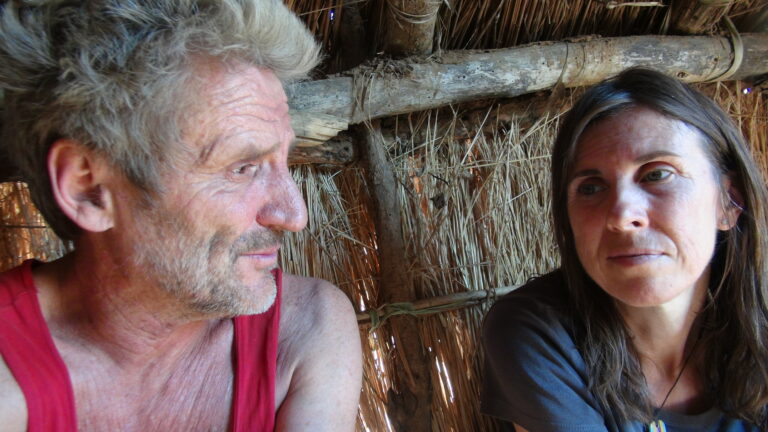
Tomo Križnar
Tomo Križnar (born in 1954 in Jesenice, Slovenia) holds degrees in economics and mechanical engineering. In 1985, he resigned from his position as project manager for IBM relations at Iskra—then the largest technological corporation in Yugoslavia—and embarked on a seven-year journey around the world by bicycle.
He documented his experiences and encounters with people across the globe in numerous books and documentary films. Since then, he has never returned to regular employment, remaining true to himself—propelled forward on his bicycle as a modern-day nomad.
As an independent author and publicist, he has spent decades searching for the “original Human”—indigenous communities threatened by technocratic and economistic systems, wars, and the mass-media machinery of stupefaction. His work focuses on raising awareness, documenting realities, and providing tangible assistance to the world’s most endangered peoples.
Documentary Films
In collaboration with director Maja Weiss, he has produced several internationally recognized and award-winning documentaries:
- Lonely Footprints (1995)
- Nuba: Pure People (2000)
- Nuba: Voices from the Other Side (2001)
- Dar Fur – War for Water (2008)
- Eyes and Ears of God – Video Surveillance of Sudan (2012)
- Decay 2022 (2022)
These films compelled international organizations to address covert genocidal policies targeting indigenous peoples in the Sahel, particularly in Sudan.
Activism and Humanitarian Work
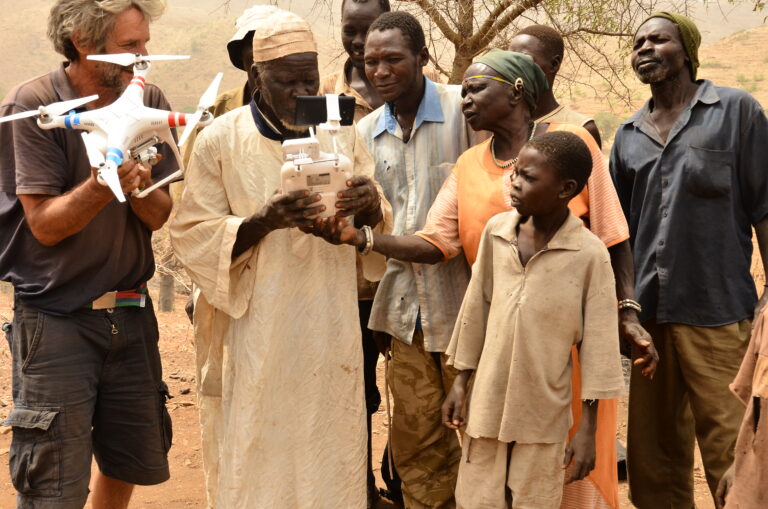
In the past decade, his efforts have expanded to direct assistance—providing information technology and surveillance drones to indigenous communities in the Nuba Mountains and Blue Nile Province. Together with his wife Bojana, he advocates for the establishment of transnational natural cultural habitats, enabling indigenous populations to remain on their ancestral lands and avoid displacement to refugee camps.
Since 2017, their focus has been on aiding communities that, without support from international organizations, face a resurgence of leprosy due to wars over water, land, and mineral resources.
Books
- Around the World by Bicycle (1990)
- Shambhala: By Bicycle to Tibet (1994)
- Lonely Footprints (1995)
- Mana: By Bicycle Among Native Americans (1996)
- Nuba: Pure People (1999)
- Oil and Water (2008)
Media Contributions
- Articles in all major Slovenian newspapers: Delo, Dnevnik, Večer, Primorski dnevnik
- Regular contributor to Radio Slovenia and TV Slovenia
- Independent multimedia lectures in cultural institutions across Slovenia
Awards and Honors
- Honorary Doctorate, University of Carthage, Italy (2010)
- Citizen of Europe (2015)
- Delo Personality of the Year (2000)
- Slovenian of the Year – Dnevnik (2001)
- Naša žena Award (2002)
- Multiple awards for Best Documentary Film at international festivals (Portorož, Graz, Telluride, Krakow, Prague, Durban, Kathmandu)
- Two Viktor Awards for documentaries in collaboration with Maja Weiss
Bojana Pivk Križnar
Bojana Pivk Križnar (born in 1969 in Logatec, former Yugoslavia, now Slovenia) is a teacher at the Primary School Osnovna šola 8 talcev in Logatec, a journalist for Radio 94 in Postojna, the mother of a 21-year-old daughter, and a key collaborator as well as the driving force behind the Tomo Križnar Foundation.
Her work transcends the boundaries of conventional teaching. In 2010, together with her pupils, she published a collection of fairy tales entitled In the Little House in the Heart of the Forest, released in print, audio format, and Braille. In November 2013, alongside her husband Tomo Križnar, she smuggled the first 100 kilograms of school supplies into schools in the Nuba Mountains—a region UNICEF had declared inaccessible due to war.
Since then, Bojana has reported for various media outlets on the atrocities of war and genocides in Africa:
- 2014: On the war for coltan in the Democratic Republic of Congo and the extermination of the Pygmies.
- 2015: On the mass annihilation of indigenous peoples in Komoganza, Sudan.
- 2016: On the covert war against the Toposa and Turkana peoples in South Sudan and Kenya.
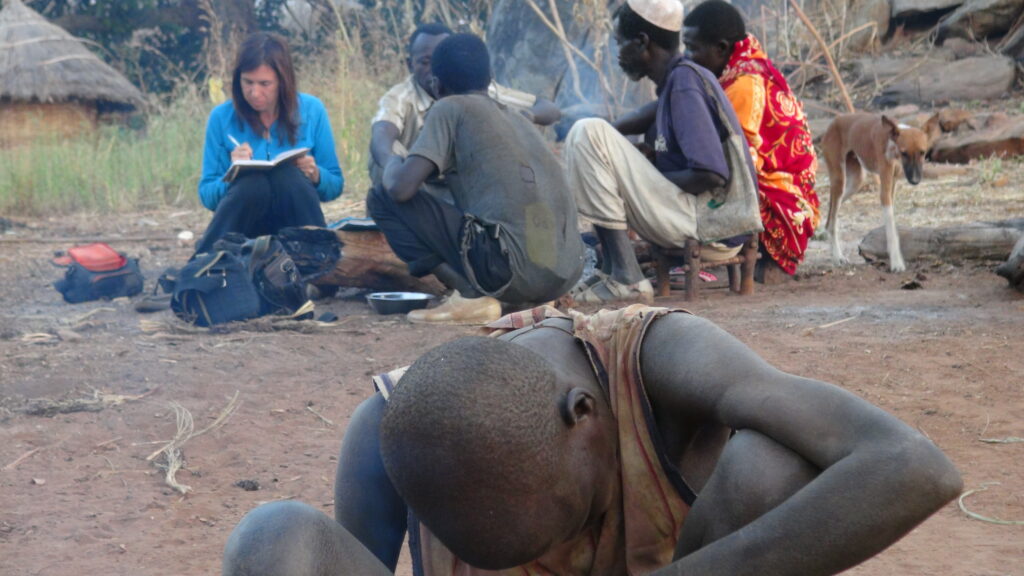
In December 2017, she first encountered leprosy patients in the Lomon and Acheron mountains. From that point onward, she has spent every Christmas, New Year’s Eve, and winter holiday documenting victims of resource wars and the spread of Mycobacterium leprae. Between these missions, she returns to Europe to lead public awareness campaigns and lobby politicians, governments, and NGOs to assist the most vulnerable.
Documentary Films
Bojana is the author, director, and screenwriter of several short documentaries:
- Drone Filming in the Nuba Mountains (2013)
- Flight over the Yida Refugee Camp (2014)
- Toposa (2016)
Together with her husband Tomo Križnar, she co-wrote and co-directed:
- Leni Riefenstahl Nuba 2013 (2013)
- With Schoolchildren in the Nuba Mountains (2014)
- Bombing of Tamatingo Village (2015)
- Leprosy in the Nuba Mountains (2017)
She is also the co-author of the demanding 55-minute documentary Decay 2022, a project that spanned a decade, contributing filming, scriptwriting, and direction.
Exhibitions
Children’s Drawings: Feel What the Innocent Feel
- European Parliament, Brussels (2014)
- Rotovž Cultural Center, Ljubljana (2015)
Photography Exhibitions:
- Africa in Piran (with Tomo Križnar) – Runa Gallery, Apollonia Palace, Piran (2021)
- Among Viruses and Bacteria – Decay 2021 – Salsaverde Gallery, Izola (2021)
Further Reading
Her work, courage, and dedication have been featured in numerous interviews and articles (in Slovenian language):
- RTV SLO – Mislim, da se bo v Afriki zgodila velika katastrofa
- Delo – Zakonca Križnar kmalu spet med gobavce
- Radio Krka – Po zemlji se širi trohnoba
- Osnovna šola Dobravlje – Obisk Toma in Bojane Križnar
- Gimnazija Škofja Loka – Sporočilo Toma Križnarja
- Delo – Človeška sočutnost postala smrtonosno orožje
- Zal.si – Večer s Tomom Križnarjem
- BC Naklo – Dogodek s Tomom in Bojano Križnar