
I am convinced that we can all agree that the ideas of health for all cannot be closed into the Sanatorium, as described in the “Magic Mountain” by Thomas Mann. We cannot defend health in a giant underground bunker from the Second World War. Neither a disease can be isolated and closed into medieval leprosy asylums, in which no one enters healthy and from which the sick cannot leave.
But right now, in this same world that we all share, this is happening.
We are closing the borders of our Sanatorium and we are pretending not to see the hardship of refugees which have been forced to escape to survive. We are putting wires on our borders and are using out-dated methods from previous wars; hoping to defend the quality of life in our privileged part of the planet.
But is it not that quality of our lives depends on the quality of lives of people living in all other parts of the World?
The epidemics of diseases and endless violence, the suffering beyond the wires of “the others and the different from down there” as we often label them – affect also our health and lives, and our future – the future of our privileged world.
Those “others and different” cannot be closed into the TV screens, the contemporary asylums for lepers from which catastrophic and meaningless wars and their consequences cannot escape into our homes.
***
You, that gathered here today, are committed to public health. Your mission is a humanitarian one. Your role is to promote and work for the public good, for the well-being and prosperity of mankind of us here; and of the “others and different down there”.
In Slovenia, we have a strong National Institute of Public Health. We have people who live and work for public health, who contribute as dedicated professionals, politicians or devoted individuals.
Our former president of state, Dr Janez Drnovšek, was one of them. Before he passed away of cancer he sent me in 2006, as his special envoy, to pick up the hot chestnuts from the embers of Darfur.
Due to his initiative that was called the “World for Darfur”, people became aware of the happenings in that most geo-strategically confusing, neurotic and, devastating enclave of the World. He did not succeed to stop the spread of the cancer of Darfur, the illness has expanded throughout Sudan, Sahel, Africa and the whole planet. It is now threatening us here, in our beautiful country on the sunny side of the Alps.
With my wife Bojana we are visiting the most marginalized areas in Africa and reporting about what we have seen and heard. We are drawing attention to those, responsible for the increasing fear and horror and for the collective apathy and depression on the Earth.
On the screen you can see the people that we have accompanied with a camera on our expeditions to southern edge of Sahara. For many decades, I have been lisening to these “others and different” when they talked about and struggled to understand what and why is happening to them. They became my friends, my family. The two of us w are trying to capture and translate to our world, our sentiments when sharing the fate with the people who are abandoned, sick, forgotten, oppressed and deprived of all the basic human rights.
I would like to share with you what shocked us the most during our last expedition to Nuba people and to people of the Blue Nile, Sudan. It was not the war or the persistent genocide or hunger… This time it was a disease: the unbelievable spread of a new epidemic of leprosy that affected and disabled all generations alike. What has stricken us the most was the unacceptable neglect of the right to health, to dignity and to access to medicines and health services.
We were confronted with the essence of health inequity; inability to control a dangerous communicable disease and to perform effective public health in these besieged, isolated and impenetrable provinces. There, a new civil war is undergoing after the proclamation of the new state of the Republic of South Sudan. In this abandoned part of the World the values, actions and the measures that will be discussed in the next few days during this conference, have no place.
On the screen you can see portraits of people depressed but not running away. They have no intention to leave their territory. They are the indigenous people of the Nuba Mountains and the Blue Nile and not used to migrating. This is the autochthonic population that has, due to displacement and marginalization, adapted to the survival in nature. They are the farmers, attached to their land whose wisdom they cannot transfer to other parts of the world. They would prefer to die, to be extinct; rather than to migrate and lose their land with which they identify themselves and which is fundamental for their culture, morality and ethics.
Now they are dying and can extinct because the World is depriving them from their rights to health and treatment.
The epidemic of leprosy is expanding very fast for several reasons. Because of the the draughft the local people can no longer produce enough food, therefore they are starving. Even worst They are in a constant stress between the airborne military attacks and attacks from the ground. Their immune system is put under a huge pressure.
You know better than I do, that where leprosy is still present, antimicrobial resistance has been developed. Leprosy evolves slowly and patients progressively lose their independence and dignity. The Nuba population has no sanatoriums or asylums for leprosy. Patients live together with healthy people, often taking care of orphan children as long as they can.
The Nuba and the Blue Nile populations are not reached by international organizations and international aid, they have no medicines, nobody knows how many patients are infected, and nobody knows the rate of resistance to the antibiotics. All, that to our world is so important and normal, is inaccessible to them.
From February this year, we were trying to help these victims of the war in Sudan. Through our public health institute and with the help of the ministry of health we have asked for the assistance of the World Health Organization (WHO). On the occasion of the World Health Assembly the former Minister of Health met with the WHO Director-General Dr Tedros in Geneva and informed him on the situation and called for action. On the 1st of October, a WHO representative was expected to come to the meeting in Ljubljana to agree upon how the WHO will use 20.000 EUROs of Slovenia`s contribution to prevent the spread of leprosy in the Nuba Mountains and blue nile. Until now, two months later, the meeting has not yet been scheduled. No comment is needed.
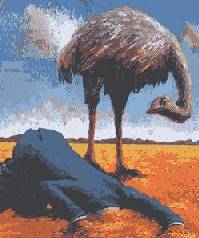
Yet, so much could be done and very quickly arranged. Some of us are ready to leave the comfort and security of our homes and go to the unsafe and most endangered areas. Local people know and accept us. In the vicinity, outside the most dangerous area, but yet close enough, exists a German field hospital that could help us . The World Health Organization could, therefore, use this small amount of money and with its experts provide training for local people and assure medicines from their stocks. I see the indigenous in Sahel rotting in front of my eyes.
And I see how our values and conscience is rotting at the same time. We have antibiotics that can prevent and treat this disease and improve the situation in a short period of a year. However, we delay the action for to me unacceptable reasons. We consciously let those “others and different” rotting and with no support, arguing that it is politically complicated and dangerous.
I call upon you, public health professionals, to counteract the predatory foreign policies and the perverse and sick neglect of the developed World of this health threatening situation.
In two weeks, we will try to return to Nuba Mountains; to this altar of sacrifice of the World. We will document everything we will find there a year after our last visit. That is what we can do.
We would love to bring with us appropriate antibiotics against leprosy; we would love to arrive to Nuba with the instructions on how to address the leprosy; with hope and the message that the world has not abandoned them. Your conference is an opportunity to talk about this health catastrophe. It is also an opportunity to strengthen ties among us, public health professionals, philanthropists and civil society. Together we could succeed. The world is one and we are all its citizens. We have to work together to overcome this unjustified situation and assure that no one is left behind, not even Nuba and the people of the Blue Nile.
If it is in your competences, please, help us with antibiotics and the knowledge. At the exit, copies of calendars of the Institutions Tomo Križnar and H.O.P.E. from 2019 are available. You are invited to take your free copy.