
Author name: Gregor

Video clips made on our last mission to Sudan (11. September 2012)
Video clips made on our last mission to Sudan (11. September 2012)
Interview with Rudwan Dawood Cis, young sudanese activist, cofounder of griffna movement. We meet him in Juba just before he went to Khartoum to support demonstrations against Sudanese government in Khartoum. He was arrested there just because he attended peaceful protests…but now after 44 days in prison they released him! His work is great inspiration to many young people in Sudan and South Sudan!
Video clips made on our last mission to Sudan (11. September 2012) Read More »
Sudan testimonies – Križnar’s latest visit to endogenous areas (11. August 2012)
Sudan testimonies - Križnar's latest visit to endogenous areas (11. August 2012)
Sudan testimonies – Križnar’s latest visit to endogenous areas (11. August 2012) Read More »
‘SHALL WE STAY OR SHALL WE GO?’ In the footsteps of Miss Leni Riefenstahl
'SHALL WE STAY OR SHALL WE GO?' In the footsteps of Miss Leni Riefenstahl
Report from the Nuba Mountains
Todoro village, near Rekha, 8 July 2012. On one side of the shade cast by a gigantic breadfruit tree opposite the remains of a bombarded mosque, women in gowns, colourful as tropical birds – on the other side, men in white Arab clothes. Big, strong and shiny eyes like those of the Nubian kings who, a thousand years ago, ruled from Egypt and the entire Nile to the Great Lakes in Uganda. Firm features on scarred faces accustomed to the mountains of granite and black, greasy soil. Tough limbs used to hard work in the most demanding natural conditions…
People from the Nubian tribe Mesakin Quissayr are physically still superhumanly strong and similar to the Nuba I met during my first visit in 1979 when some special photographs of naked black Olympic athletes drew me to the Todoro village in the Nuba Mountains, in the central Sudan province of South Kordofan. However, they are not naked anymore. And they are skinny. Very, very skinny. And emaciated…
‘Last year they built a mosque for us; however, this year they demolished it. Can you, havadja, explain why?’ addressed the young mayor of the village, Mohamed Ali, in the local Arab. This was the most pressing question in the minds of everyone who gathered under the breadfruit free.
‘Why do havadja make planes and fly with them and throw bombs from them?’ they asked me in the Todoro village thirty years ago. ‘Why do havadja like death? We like to sing and dance and make children…’
Todoro is the village where, 50 years ago, Hitler’s director Leni Riefenstahl took photos for her luxurious book ‘Die Letzte von Nuba’. This book is still frequently exposed in the bookstores of important galleries and on the bookshelves of cult rebels in world metropolises. The woman who, during the Third Reich, experienced the power of which women nowadays can only dream, wrote that she was the happiest among these ‘nude savages’. Pablo Picasso claimed that the paintings and scarves on the nude Nuba bodies was some sort of cubism. Andy Warhol was also completely enchanted…
Havadja means foreigner, a non-Nuba. Havadja is everyone from the external world who is not Nuba. Havadja are Arab hunters on slaves, Ottoman Turks and also colonial Brits as well as Americans and Chinese people; in other words, everyone who is now fighting for land, water and other natural sources in their mountains.
‘Havadja, what do you think. What should we do? Should we stay or should we go?’ Mohamed Ali asked. The women and men silently and thoughtfully nod to him.
I do not recognize anyone. Not even from the copies of Leni’s pictures, or my own memory. No one remembers me. Todoro is located on the south of the Nuba Mountains and represents a connection with fellow SPLA fighters in Dinka, Nuer and other tribes on the south of Sudan – the government forces viciously attacked and arabized these places.
Does anyone in the world still care about the Nuba, now that the people of the Todora village have been muslimized. Does any pop icon even care what is happening now in the villages of the Nuba Mountains?
During the last month that I spent among more than a million rebel locals in the area, the size of about five territories of Slovenia, controlled in the South Kordofan by the freedom fighters of the north Sudan People’s Liberation Army (SPLA), I haven’t met any representatives of any of the UN agencies. No observers of any mission. The hybrid between the African Union and the United Nations (UNMIS), which, similarly as in Darfur, did not obtain a mandate from the Security Council to protect the civilians in the Nuba Mountains, but has been carrying out only the task of observing and reporting, left the Nuba Mountains three weeks after the beginning of the new war on 1 July last year when its mandate had expired. The mandate was never extended, since the new accommodation was, according to an official report, too dangerous for soldiers. Since then no official reports have been released from these mountains.
They immediately told me that the world community did not entirely fail after all; namely, three non-governmental organisations did not follow the exterminators in Khartoum and are helping the hungry and sick Nuba. When I found the white people hidden in inaccessible gorges in the mountains, they were scared of me. I had to give them my word that I would maintain that I had never seen them and that I would never mention their names to any organisation.
Only Rayan Boyette, a young American, who, right before the declaration of independence of South Sudan, did not listen to the order of his Samaritan’s Purse stating that he, along with all foreigners, must leave the Nuba Mountains until the declaration of independence of South Sudan on 9 July, is not hiding anymore. In March of this year, he appeared in two 10-minute video contributions by George Clooney, who was the first famous person, ten years after Leni Riefenstahl (Leni returned to the mountains in 2000 with our film ‘Nuba, clean people’), to visit the Nuba with the members of the Enough Project; moreover, following his return, he demanded in US Congress that the Obama administration begin finding a solution for the indigenous people in South Kordofan, together with China. On 4 May, Sudan air forces attacked Rayan’s house near the Kurchi village, where he found a home with his beautiful pregnant wife from the Tira tribe; the six bombs of the Antonov bomber luckily missed their main objective.
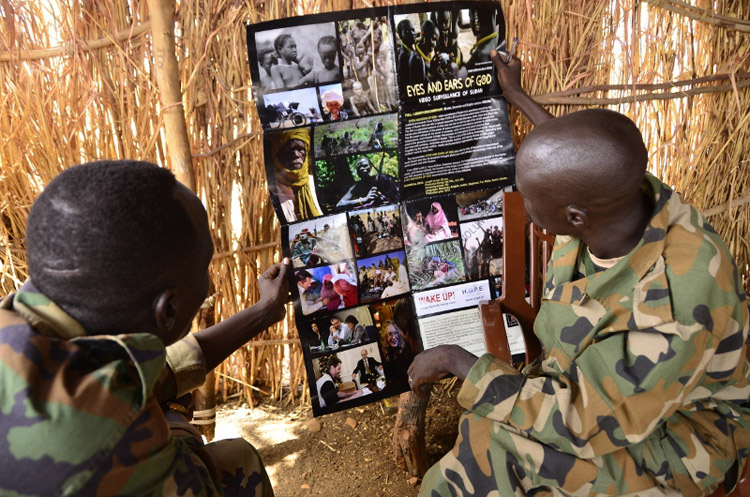
‘What struck me the most was the fact that someone actually woke up this morning with the wish to kill me!’ was the message Rayan sent, via our satellite modem in the system ‘Eyes and Ears of God’, to the US Ministry of Defense and tens of thousands of others who regularly receive photographs and reports about attacks of the Sudan army and militia on the innocent civilians in the Nuba Mountains.
This time I did not arrive in the Nuba Mountains on a donkey and naked, as the first time in 1979, not even with a bicycle like when I returned in 1998, nor in an airplane with Father Kizito from Italian organisation Amani and Stane Kerin from the Slovenian Karitas, as in 2000 and 2003, but in an off-road vehicle of the Nuba Relief, Rehabilitation and Development Organisation (NRRDO). This is a Nuba organisation for self-aid financed by a diaspora in the European Union and America – and also by activist friends, some in very important government positions. Ten years ago, with reports, books and films about the previous, hidden, Sudan war, just like the current one, friends of the Nuba managed to get the then special Bush delegate for Sudan, Protestant pastor John Danforth, to visit the Nuba Mountains. When he returned, he proposed that the US congress ‘solve the Sudan problem’ from the centre, the Nuba Mountains, and not from the south from where the USA had fairly unsuccessfully financed the SPLA rebels of John Garang, who started a 21-year war three years after the American firm Chevron discovered large supplies of the highest-quality oil in 1979. John Danforth was the one who helped organise negotiations between the SPLA of the commander Abdel Aziz in the Nuba Mountains and the Sudan government in January 2002 in Switzerland; these negotiations finished with a truce that lasted until last year. The Americans, British and Norwegians expanded this peace to the south of Sudan and orchestrated it until the signature of the Comprehensive Peace Agreement (CPA) in 2005, which also meant the end of the war with the south. However, the same CPA also sacrificed the Nuba Mountains and the Blue Nile province to the Arabs in exchange for the promised referendum on the secession of the South Sudan and Abyei province; this was about to happen on 9 January 2011, after six years. The indigenous people in the Nuba Mountains and the Blue Nile, who had fought 21 years with their fellow fighters in the south of Sudan within the framework of the Garang’s SPLA were sacrificed to the Arabians in exchange for South Sudan, soaked with oil, water and good soil. The fellow fighters in these provinces achieved only a right for registration, elections for a province governor and some sort of mystical public consultations with which, instead of a referendum for the right to stay or leave, they would, after six years, only have the right to express their expectations on the relationships that they would have within the remains of old Sudan. The migrated Arabians in the Nuba Mountains and the Blue Nile obtained more seats in the local administration than the indigenous people; in other words, it was immediately clear that the arabization would continue. This was exactly the situation against which the Nuba and the indigenous people in the Blue Nile region rebelled in 1985.
In May 2010, the dictator Omar Hassan al Bashir was re-elected in the presidential elections, while Mohamed Haroun, the butcher from Darfur, whom Bashir gave the position of minister for human rights to the scorn of the world, won the elections for governor of South Kordofan.
Jim Carter, former US president and nowadays a ‘big friend of Sudan’, said that the elections weren’t really up to international standard, but that we must accept them.
‘If you will not accept the results of the voting boxes, we shall replace them with ammunition boxes’, said Harun.
‘We will scrape you from your mountains, hunt you down with horses and chop you up with swords!’, were the words the SPLA commander Abdel Azis who should have become governor according to the expectations of the experts recorded with our 20-dollar mini camera in the rage of Omar Bashir: ‘Leave none wounded! Kill them all!’
The first cameras of the Eyes and Ears of God were brought to the Nuba Mountains last January before the referendum, when Bashir declared that in the case of the South’s secession he would finally arabize the rest of Sudan and use the ‘Ein Land, ein Folk, ein Fuhrer’ tactics in order to prevent foreigners from continuing to dismember Sudan with further incitement of those indigenous people who would keep faith in the referendums and independence declarations that were to follow.
During each vote of the Security Council for a resolution that would enable access to the sacrificed civilians in the largest hidden humanitarian catastrophe on Earth on the border between the two Sudans, the Russians and Chinese, who provide the junta of Omar Bashir with Antonov and Mig airplanes as well as tanks, vote against the resolution every time and prevent the agencies from helping; namely, the agencies cannot provide help without accusing the generals of the biggest crime against humanity, including genocide. However, three organisations are still operating in the Nuba Mountains despite the bans and the opposition, proving that ‘where there’s a will, there’s a way’.
The conditions in the territories controlled by the SPLA are safe for the access of humanitarian organisations; I went there on my own during the three weeks in the last two months during which, using a 125cm3 motorbike borrowed from the NRRDO, I travelled practically everywhere around the Nuba Mountains without having any problems other than those connected to the new rainy season, such as mud and water. An Antonov appeared above me only three times; however, it never threw any bombs. No sign of bandits who otherwise ravage Darfur, no fighters of the government militia who otherwise prevent such journeys in the Blue Nile region. The government army is present only in larger towns, such as Kadugli, Dilling, Talodi, Kortala, or Delami where they are virtually surrounded from all sides with newly recruited or newly trained SPLA soldiers. The government troops cannot leave, especially not now when, during the rainy season, the black soil turns into greasy slime that prevents any use of heavy army mechanisation. Armoured vehicles, tanks and transporters simply lean over or sink into the mud, which is like quicksand, where they stay until they can be dug out after the rainy season in October or November.
The only people I met were hungry people. Hundreds, thousands and hundreds of thousands of hungry people who could not harvest their food in the fall because they did not plant last June. They didn’t plant because they didn’t believe they would be able to harvest. Now they wander around, seeking food and asking the same question:
‘Shall we go – or shall we stay?’
The indigenous people, wearing colourful necklaces, waved from the terraces on the fields on the top of their mountain fortresses and ran down to the paths winding among the fantastic layers of red and black granite. I could stop and listen to anyone who walked toward me or to whom I caught up.
‘I’m hungry. Please, havadja, give me something to eat!’, they said, raising their shirts and gowns and showing hollow stomachs and wrinkled skin where there should have been some layers of fat.
Old people crumbled like stumps on the common. Grandmas and grandpas looked like crusts of old bread. But also young, intelligent, ambitious people, their eyes glowing when they saw that I was breaking down and my eyes were becoming misty.
‘Morale fog!’, they glowed and laid hands on my heart, bowing as their ten thousand year old tradition demands.
Fog means up in Arabian. Up with the morale! The morale is up; the morale is high.
As during the largest challenges in the past, the Nuba have again presented themselves as enthusiasts and idealists. No hatred against the Arabians is apparent, but more so, pity.
‘What are they doing?’, they held and shook their heads, laughing at the same time. ‘These Arabians just don’t get it …’
‘Mishkila! It’s O.K.! We’ll manage!’, they explained to me coming from the spoiled world, used to comfort…
These are people from granite. Granite has protected them during all attempts of slave hunters until now. Granite provided protection; moreover, with the iron ore among the layers, they learned to melt iron and turn it into steel, which they used to help them defend themselves against the attacking havadja. However, after the rainy season, there always comes the drought. And now, the havadja have more sophisticated weapons than the halberds and sabres.
In the most northern part of the free territory, in the Kowalib mountains near the mechanized government farms Delami and Kortale, populated by the eponymous tribes, I found some one thousand locals who escaped from the attacks of the government garrisons to the cavities at the foot of the mountains. Without food, without medicine, without any aid of the international community, totally dependent on only the support of their local hosts who also had nothing. No sorghum, which represents the majority of their diet. In the village markets, it was only possible to get sugar, coffee, tea, soap and cigarettes that have been smuggled from the north by the Arabian nomadic tribe Baggara who are ‘sometimes friendly to us and sometimes not’.
They told me that Bashir shot two such smugglers. ‘Now they even shoot their own people’.
With the help of tribe leaders, we selected three children aged from ten to thirteen years and recorded a day in their lives. From waking up in the cave among the snakes and scorpions where they still hide in panicked fear of bombardments from Antonov airplanes to the sweeping, carrying water in cans from a dry river bed an hour away, where water must virtually be dug out from sand, to making fire, preparing breakfast of grass and bark, to planting and weeding of sorghum in the fields not far away in the savannah, to afternoon games with a ball made from old plastic bags, until the evening when they go to sleep, night after night in hunger and forgotten, without any mosquito nets, covered only by their ragged clothes. I was mostly moved by a girl who resembled my daughter Maja; namely, when I asked her what she wanted in life, what she wanted to become, a doctor or teacher, she just bowed her head, covered her face and began a flood of tears…
What future? What dreams? There are no schools here. The simplest village schools built with mud and hay and without any equipment have been abandoned since the beginning of the war last year. Teachers from Kenya and Uganda have all escaped back home. After all, it is too dangerous to gather under those roofs. Some local enthusiasts, such as Kristo in Sarafat Jamous, are still persistent and teach in the shade of colossal trees, without chalk, without books, without pencils or paper…
‘Shall we stay or shall we go?’, the locals repeated in every village. In every tea place. And with typical gestures begging for food along their way.
‘Will white people finally come to help us? Or will you leave us to die of hunger?’
‘This is only the beginning of the big hunger’, said the mayor Mohamed Ali in the Todoro village on 8 July. ‘Will you foreigners help us and send food up here to the mountains – or should we go to Yida. Will you finally be able to negotiate humanitarian corridors with Omar Bashir, against whom a warrant has been issued by the International Tribunal at the Haag accusing him of genocide. Will you perhaps start throwing food from airplanes? Or is it best that we all immediately go to… Yida?’
Yida is a refugee camp south of the Nuba Mountains on the border between South Sudan and what remains of old Sudan after the secession on 9 July. More than 65,000 Nuba have already escaped to the bushes in the swamp, two days walking from the last mountains in the south. Lines of indigenous people from all ends of South Kordofan are, as naturally as water, flowing to this area.
Americans from Samaritan’s Purse were the first who helped with food, typical blue plastic canvasses, doctors, drinking water and hygiene. This was all supposedly by courtesy of Rayan Boyett, whose decision to stay with the Nuba in the toughest times could not be overlooked even by his superiors.
Initially, the United Nations High Commissioner for Refugees (UNHCR) did not want to support the fast growing camp, claiming that it was formed on the border, too close to the country in war. The bureaucrats requested that the refugees walk at least fifty kilometres away from the border if they wanted to obtain the services of the UNHCR. These are the rules and the UNHCR achieved this with the refugees from the Blue Nile region. Last month I was in the Upper Nile region in South Sudan and witnessed that the MSF or other non-government organisations obey these rules and did not help the families who lagged behind after weeks of walking if they lacked only one metre for the necessary fifty kilometres. They had to walk that one metre, then they were loaded onto trailers and driven by tractors to the Jamam camp along the Malakal Bunch road. In the swamps during the rainy season, they fish directly from their tents and contract malaria on a massive scale. The UN administrators have no talent for the natural. Important decisions are made in the constructed minds in constructed building far away from the next victims.
However, where there’s a will, there’s a way! In the case of Yida, they formed a camp at a location naturally chosen by the people; they stopped forcing children, the elderly and women deep into the swamps in Nyal close to Bentu, where the UNHCR camps were prepared with huge delays. The border between the Sudans has not been determined anyway and no one actually knows where it will run.
Although the African south and the prevailing Arab north had six years from the signature of the integral peace agreement in 2005 until the referendum and declaration of independence, both sides obviously made false promises. They did not agree on the border or on the transport price of oil that remained in South Sudan through oil pipelines to the refineries that remained on the north side. After the referendum and declaration of independence, the north requested a price 50x higher than usual for services of this type. In January this year, South Sudan stopped the oil pumping. The pipelines and relationships turned into asphalt road. The economies of both Sudans started to collapse catastrophically. Some experts believe that South Sudan will first go bankrupt, since it received 90 per cent of all its income from exported oil. Others say that Sudan will fall first; a place where the Sahara prevails and food can be produced only along a one-kilometre belt on each bank of the Nile. Moreover, the rise in prices will finally lead to a new Arab spring that will overthrow the generals in Khartoum.
The last protests and student demonstrations in Khartoum and other northern towns bring hope to some people in the Nuba Mountains, the Blue Nile, Abyei and Darfur that they will not have to leave their homes after all.
However, after leaving Sudan in 1956 the colonial Brits left the power to the Arabians. Every party that came to power in Khartoum throughout history was a racist one. After the secession of South Sudan following an agreement orchestrated by foreigners and signed without them by Arabians from the north and Dinka, Nueri and other tribes from the south, the Africans have been aware that, even after an overthrow, which must eventually happen in Khartoum, young new Arabians with power will not lead any other policy against them.
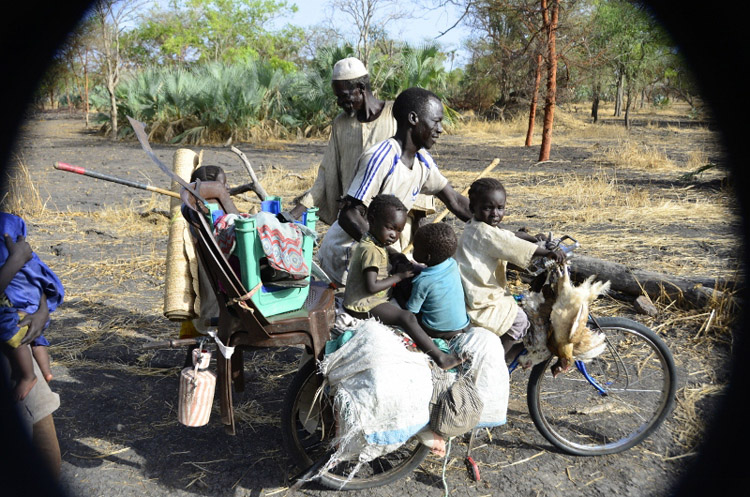
During the last day on my bike on a terribly flooded road towards Yida, I listed at least 2,000 refugees. Almost all of them were walking. Tractors and trucks immediately got stuck in the mud after descending from the mountains to the swamps. Domestic animals were eaten. Some carried a chicken or goose in their baskets, but they mostly carried children. Older children carried younger children…
Only some groups of refugees were walking in the opposite direction back towards the mountains. They said that they would plant sorghum, since they did not want to be dependent on aid. Moreover, they said that people couldn’t return anymore since others have populated the fields where the ancestors of their tribe planted and harvested in the past. It looks like the great Arab plan is being realised. And the havadja are interested only in oil – this damned blood of the planet.
‘How do you feel in such a camp?’, I asked the men and boys without work, who escaped the draft and training in the SPLA units, who prepare in the mountains in almost every village for the time after the rainy season.
‘It is O.K.’, at least one hundred refugees in Yida said. ‘Look, children are playing!’
‘It’s not how they say it is!’, shouts Karen, a doctor from the Samaritan’s Purse. ‘You know the Nuba culture: they never push you down. They do everything to boost you up. However, it is a fact that children are dying because of dysentery as a consequence of terrible hygienic conditions in the camp. Thirty per cent of children that reach me after a few weeks of marching with their parents from the mountains are underfed. Normal children die from diarrhea and vomiting in four days, underfed children in two days.’
‘There will be no airdrops!’, said in Juba Peter from the Danish Church Aid, a non-government organisation that has received the most video footage on the events in the regions of the Blue Nile and Nuba Mountains; therefore, it is also the most self-sacrificing…
‘Why not!?’
‘Because the airdrops are too expensive!’
‘In 1998, during the last war, the Hercules’ threw food worth 2 billion dollars to the territories of the SPLA rebels in South Sudan. Why not send at least a fraction of this to the Nuba Mountains and the Blue Nile region where at least half a million people are internally displaced in each province, according to the estimations of the UN? Medical ethics do not leave a patient, even when there is no chance left for his/her recovery. The humanitarian principle demands the same.’
‘All this is just a job!’, shrugs the American Taylor in the Garden Club , the best of the best, a mechanic who repaired every broken vehicle he saw in the Nuba Mountains until the rain drove him away. ‘There are many things we don’t stick to anymore in the humanitarian business.’
‘For example?’
‘For example, we shouldn’t just distribute aid only to the areas in which we have political interests. Now, it’s all just strategy and tactics!’
And how many children will die until the end of your vacation?
“Experts” do not even dare to make an estimate.
Tomo Križnar
Leni Riefenstahl in Nuba mountains

‘SHALL WE STAY OR SHALL WE GO?’ In the footsteps of Miss Leni Riefenstahl Read More »
July 2012: To whom it will make sense?
July 2012: To whom it will make sense?
To whom it will make sense.
After two months I have just safely returned from the sacrificial altar in Sudan. Here is my message for you.
THE GIST OF THE MESSAGE:
Nowhere else on Earth in 2012 does the international community sacrifice more than on the sacrificial altar in the Blue Nile, the Nuba Mountains, Abyei and Darfur.
Nowhere else are the global powers engaged in such a secret fight for the control of the natural resources on the backs of the cheapest slaves.
Nowhere else have the mainstream media and the independent reporters along with UN agencies and non-governmental humanitarian organisations failed to fulfil their mission to such an extent than here.
Nowhere else on Earth has the aggressive dictatorship been accused of more crimes against humanity, including genocide, than here.
Nowhere else have the exterminated natives preserved more ancient and indigenous culture living in symbiosis with nature than in the areas between the largest desert Sahara and the biggest swamps in the world. Therefore, their wisdom may be useful against all world crises.
THE SOLUTION:
Because due to the rainy season all land connections have become impassable and because it is too late to use the trucks from South Sudan, food and medical supplies must be airdropped immediately.
UN agencies and non-governmental organisations have to immediately reach an agreement for the airdrops with Omar Hassan al-Bashir.
The means are available, logistics is in place, but the most critical is time. Do not wait for the European and American vacations to end.
Two million indigenous people are trapped in the Nuba Mountains and the Blue Nile, and most of those who will die will die from starvation and dysentery (now they are eating trees and grass) even before the first ripening of plants towards the end of August.
During the Olympic Games the media and the pressure from the public will be the most effective.
If “dropping food and medicines from the air will really be too expensive”, it is necessary to do everything that in the new game of the superpowers after the end of the rainy season the African families won’t be sacrificed completely and forever.
Tomo Križnar, Naklo, Slovenia
July 2012: To whom it will make sense? Read More »
19. July 2012 – Report after return from Sudan
19. July 2012 - Report after return from Sudan
The Slovenian humanitarian organization Hope and Tomo Križnar Foundation have succeed in bringing in a new shipment of cameras for documenting the hidden war to the Sudanese provinces of Blue Nile and Nuba Mountains, just before the peak of the rainy season. When South Sudan declared independence last July, these provinces were left to fend for themselves, even by former comrades in the 21-year war that has taken two million lives in South Sudan.
In the war zones around the still undefined border between the new state of South Sudan and what is left of old Sudan, more than 600 cameras now lie in wait, helping the African natives, together with laptops and satellite modems, to compensate the almost complete absence of the world media and professional observers of the international community.
The world establishment has still not succeeded in forcing the Sudanese military dictatorship of Omar Hassan al Bashir, indicted by the International Criminal Court in the Hague on charges of the worst crimes against humanity, including genocide, to stop the bombardments by Russian Antonov and Chinese Mig planes. Access to the victims, trapped in mountains, caves and forests in war areas, has also not been negotiated and humanitarian corridors for distributing food and medicines have not been established.
The Slovenian camera distribution initiative, resulting in footage of atrocities, recorded by local volunteers, succeeded in attracting the limelight of global journalism, and even the heavenly glow of the stars. George Clooney visited the Nuba Mountains illegally in February, testified in Congress and let himself be arrested in front of the Sudanese embassy.
The cameras stay with the natives even when darkness falls again.
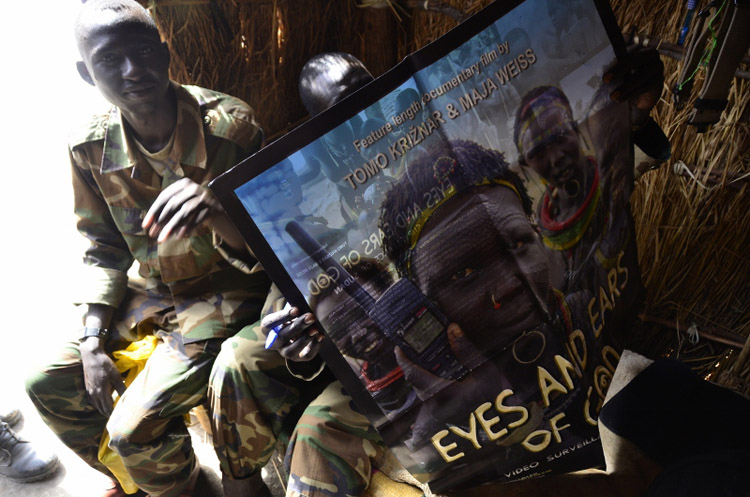
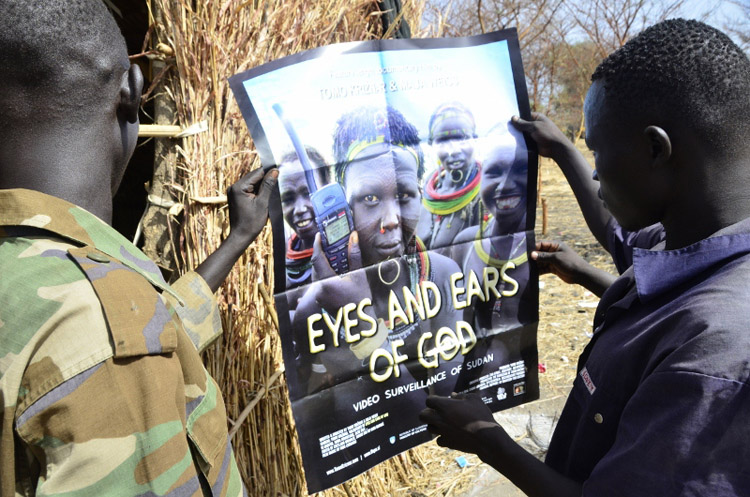
The means to equip indigenous volunteers have so far been obtained exclusively from individual donations, without any support from institutions. The majority has been contributed by readers of Križnar’s book »Oil and Water« and viewers of the documentary »Eyes and Ears of God – Video surveillance of Sudan«. This is now the third movie made in cooperation with director Maja Weiss, Bela Film and RTV Slovenia, successfully activating the love of humanity and lobbying for the survival of indigenous people of Africa.
The humanitarian organization HOPE, founded by Klemen Mihelič and sympathizers in December 2009, after returning with Križnar from Darfur, is collecting funds on the principle of full transparency and without any costs for itself. Every contribution becomes immediately visible at the Web page www.hope.si. Everything collected is used for equipment, nothing is lost on wages, insurance, travel costs …
Križnar and Mihelič crossed the border from South Sudan to the Sudanese province Blue Nile at the end of May. They met with members of the SRF (Sudan Revolutionary Front) that now connects fighters against the regime in Khartoum along the entire frontline from Darfur in the west, across the central Nuba Mountains, to Blue Nile in the east. They visited the indigenous tribes Komo and Ganza in the south of the »inaccessible territory«. These tribes are being denied help by UN agencies and even non-governmental humanitarian organizations because they are – in their own words – »afraid that the Sudanese Air Force will bomb them like the natives«.
In the middle of June, Križnar was joined by his niece Živa Ozmec, executive producer of the documentary »Eyes and Ears of God«. They tried to reach the Nuba Mountains, but the advancing rain season stopped all vehicles and prevented access to the border. Križnar was successful only when it stopped raining for a few days and the black soil dried up just enough to permit crossing the border in an all-terrain vehicle belonging to one of the three humanitarian organizations that covertly provide help to the Nubas. He distributed cameras and equipment, trained volunteers and then, on a borrowed all-terrain motorcycle, spent three weeks filming tens of thousands of refugees from the mass starvation that befell the mountains because the natives could not plant enough sorghum due to incessant intimidation and persecution.
Fresh rains delayed Križnar’s return for two weeks. Everybody knows that when the rains stop, sometime in October, the biggest attack by the government army will follow. The Africans in Sudan do not expect that the Arab spring of protesters in Khartoum will save them. All Arab governments have been racist. Thus, only one solution remains: attack on Khartoum.
Križnar flies home with footage of the dying of besieged people on the altar of the world. He will use it to enrage the Europeans and activate them to prevent the greater suffering on the horizon at the end of the rainy season.
Tomo Križnar, for Tomo Križnar Foundation and Hope. Cairo, July 18.th 2012, 17.09.pm

19. July 2012 – Report after return from Sudan Read More »
31. May 2012 – 3rd Report from Blue Nile
31. May 2012 - 3rd Report from Blue Nile
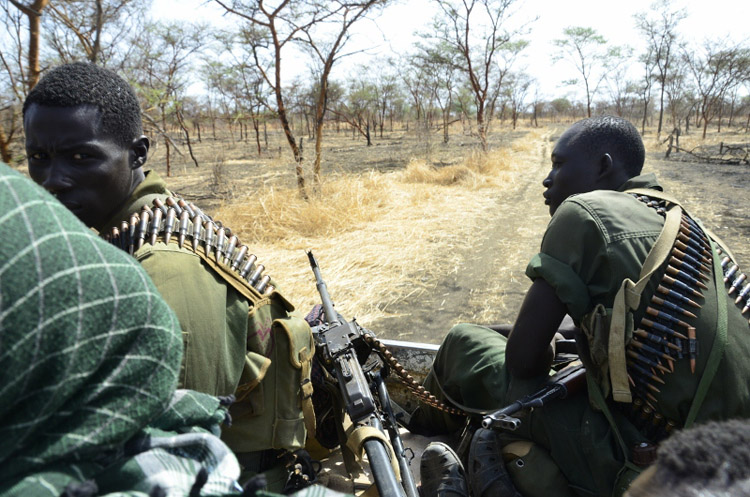
Since breakfast we have been listening to the thundering in the distance. The commander of the 10thSPLA division, Ahmed Omda, explained that government forces are rocketing SPLA positions near the town ofMada. Last week his fighters took over Mada, and now the government fighters are trying to retake this strategically important position in the Ingassana hills.
The Ingassana hills are situated in the central part of Blue Nile near El Damazin, whose hydroelectric power station provides the capital of Khartoum with electricity. The governor of the province, elected last year, supreme commander of the alliance of all Sudanese rebels who stayed in Sudan, from the Nuba mountains to Darfur, Malik Agar, and general Omda – both come from the Ingassan tribe.
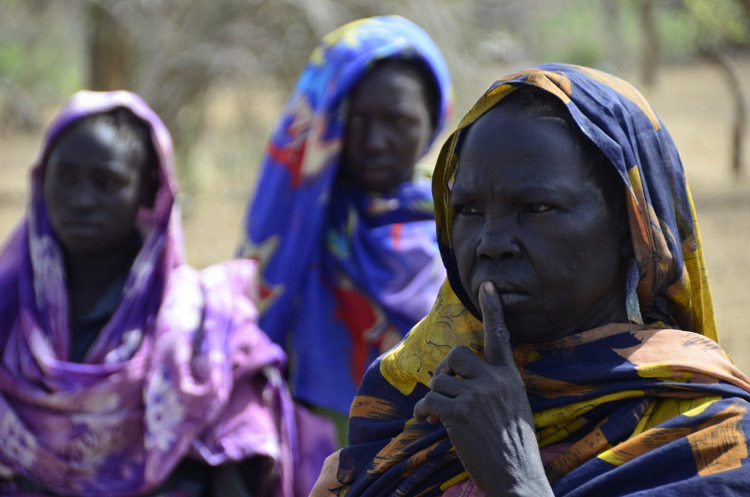
Lines of refugees are rushing by us and our empty bowl of millet porridge. Each and every one of them repeatsinto the camera that they trusted the UNO agencies to the very end that they will negotiate humanitarian corridors with the Sudanese government in Khartoum, allowing them to receive food and medication from the global community. And also achieve closure of the air space. They were waiting since September 1.st, when the war began. They were waiting and telling themselves that they will not have to leave their homes for more than six months. Now they have no hope anymore. Such large waves of refugees are only now gushing from Blue Nile province because it’s the time just before the first rain, which will soften the black soil that is so characteristic of Blue Nile.
“It never occurred to us that the UN and even non-governmental organizations would let us down. But if we don’t get out now, then in a week or two, when the black soil is soaked through, making it even harder to walk, we will probably never be able to get out. It is too late now for delivering aid by trucks from any direction. In such conditions,all machinery sinks into mud.”
They say that several hundred thousand natives remained only because roads are blocked by government forces and their militia of recruited janissaries. And that they are hiding around mountain peaks, in caves and forests. If government bombers will not killthem, hunger and diseases will.
The only thing left to the solidary world public, if it wants to help innocent victims,areair drops of food and medicines.
I can tell you that video footage by volunteer Eyes and Ears made the UN base in Nairobitoday call the SPLA humanitarian coordinator in Blue Nile, Hashim Orto, for talks.
“Maybe we will get the mastodon to move after all!” says general Ahmed Omda.
The fact remains that decisions in the UNare made by members of the Security Council, which have more shared interests with the Sudanese military dictatorship than with innocent victims in the native tribes, who are fighting to survive in regions rich with natural resources.
The video footage, of course, has no effect on them.
Until now, there has also been no reply to the footage and reports sent to the Office of the current President of the Republic of Slovenia, Dr. Danilo Türk.
Tomo Križnar, Blue Nile, 31 May 2012, 10.08


31. May 2012 – 3rd Report from Blue Nile Read More »
2nd Report from Blue Nile – 28. maj 2012
2nd Report from Blue Nile - 28. maj 2012
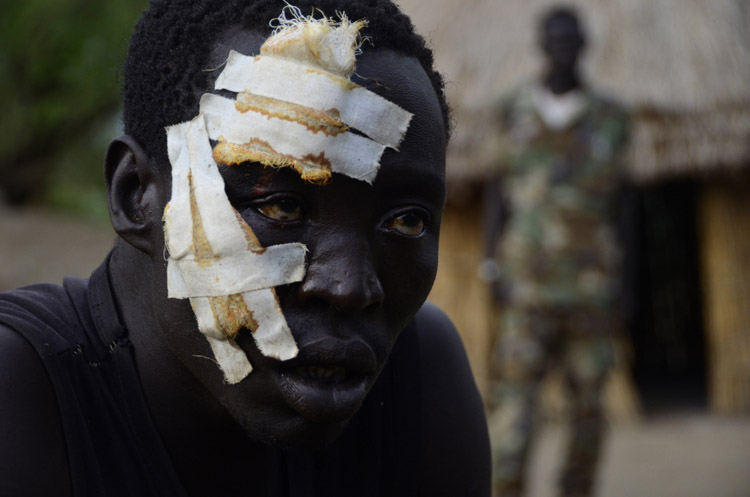
His face is swollen. Blood drips from his bandaged head. His eyes are distant – he must suffer unbearable pain. He makes a grimace each time the Landrover wheel hits a rock or a pothole in the cart track. A comrade on the opposite seat grabs him by the shoulders with both hands. He tries to prevent him from collapsing.
There are no painkillers in Blue Nile!!!!
States of the European Union, the United States of America, the United Nations… the whole world, united in the fight against the victims of world politics in Blue Nile and the Nuba mountains still won’t allow the new, 193rd member of the UNO, South Sudan, to support its African fellow-fighters, who, after the secession of South Sudan on July 9thlast year, remained beyond the northern side of the undefined border,in what was left of Sudan. No military aid, no humanitarian aid is allowed to be supplied to the victims of world politics, so there are no painkillers in Blue Nile.
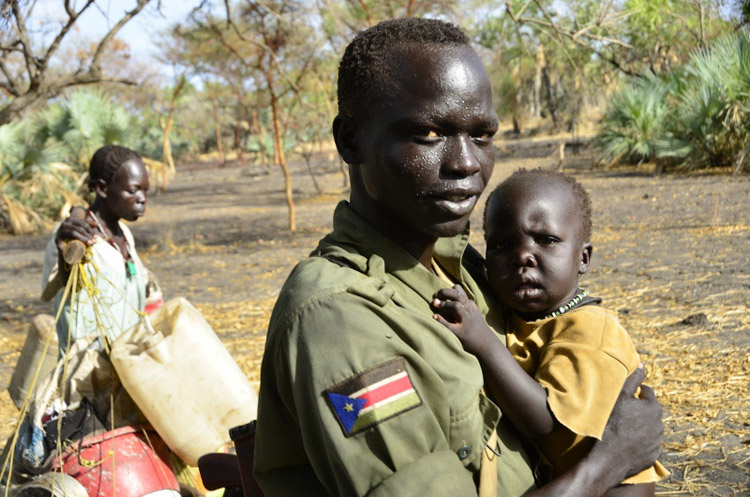
That is why Mahmud Ismail, an SPLA North soldier, who was wounded in the head yesterday during the government bombing of the front line, three hours away in the hills of Ingassan, is in so much pain now, so that the people in the vehicle, struggling to make its way through the disastrous track through the bush, are afraid he will lose consciousness.
The Blue Nile province in Sudan is the only province on the planet where pain cannot be controlled in the year 2012.
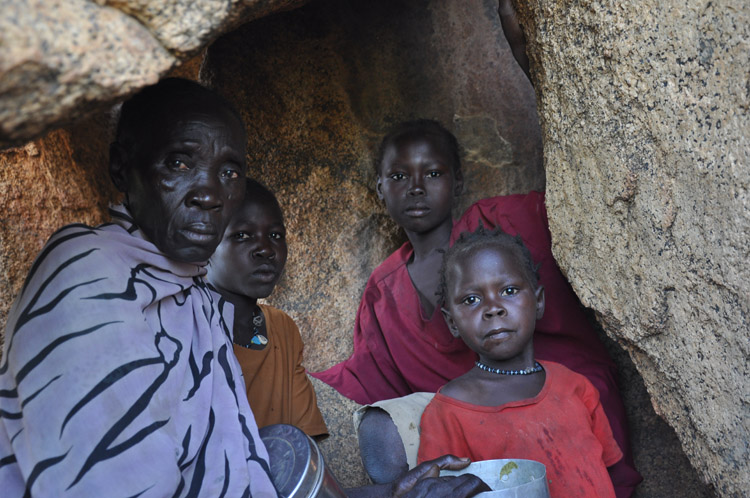
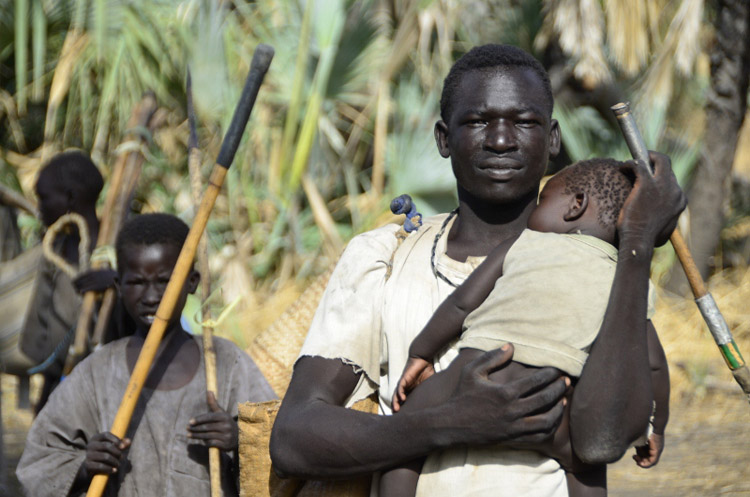
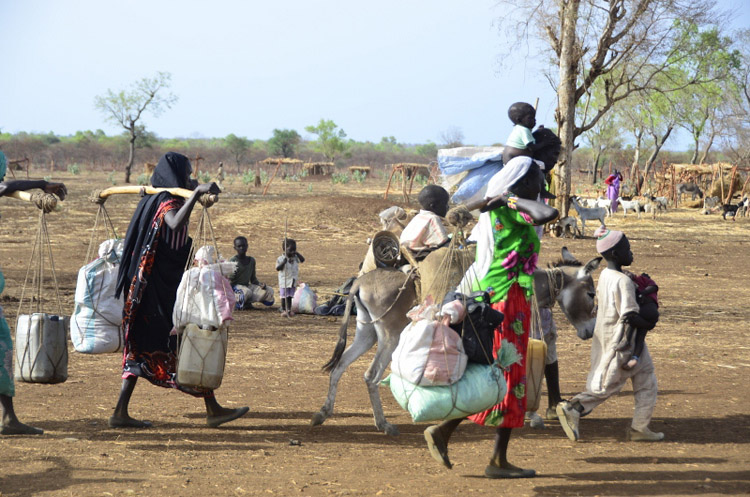
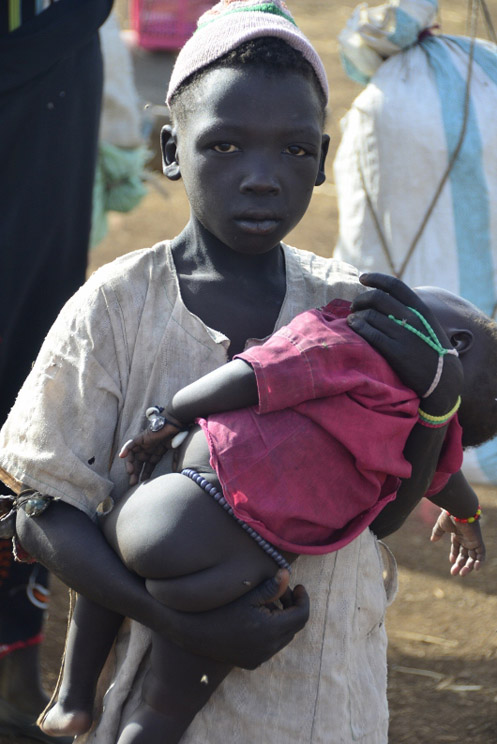
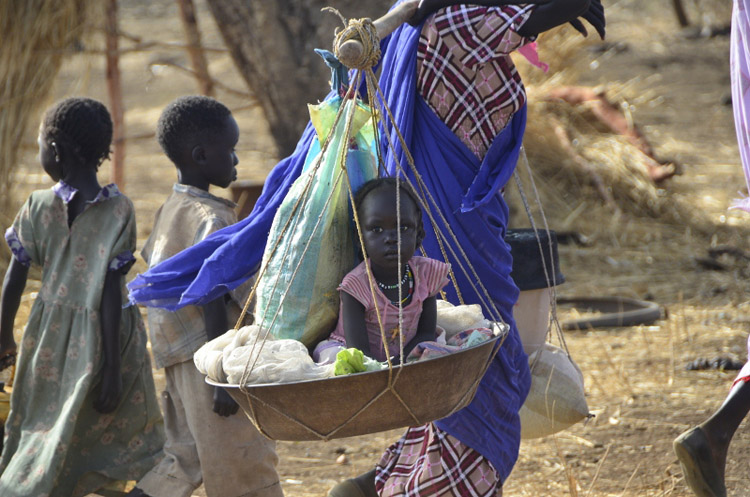
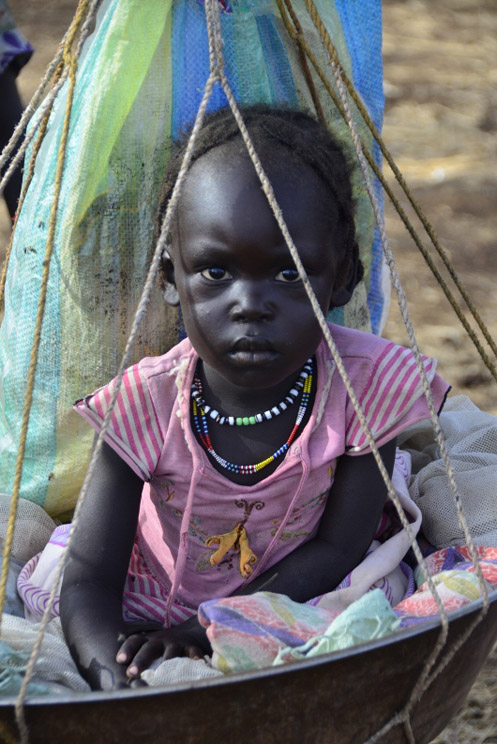
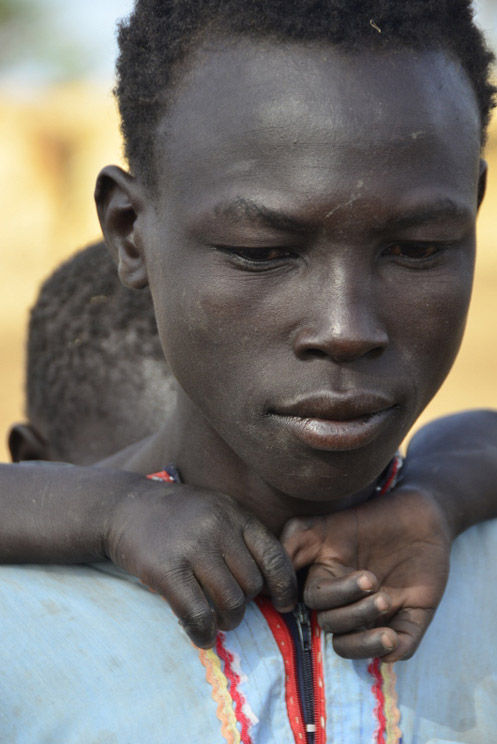
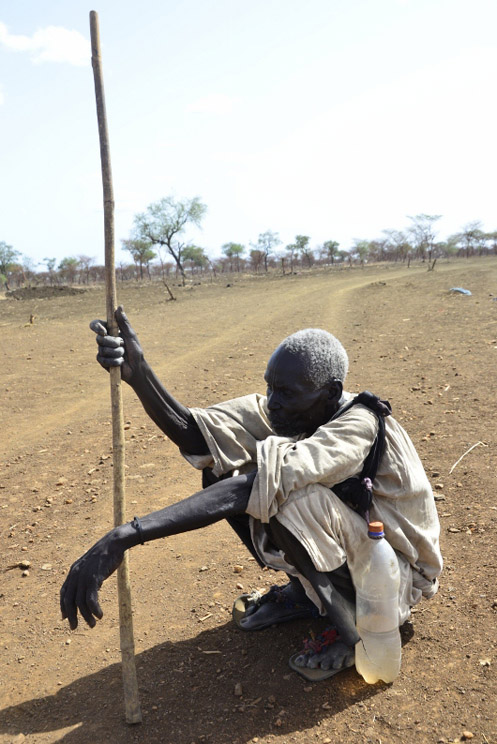
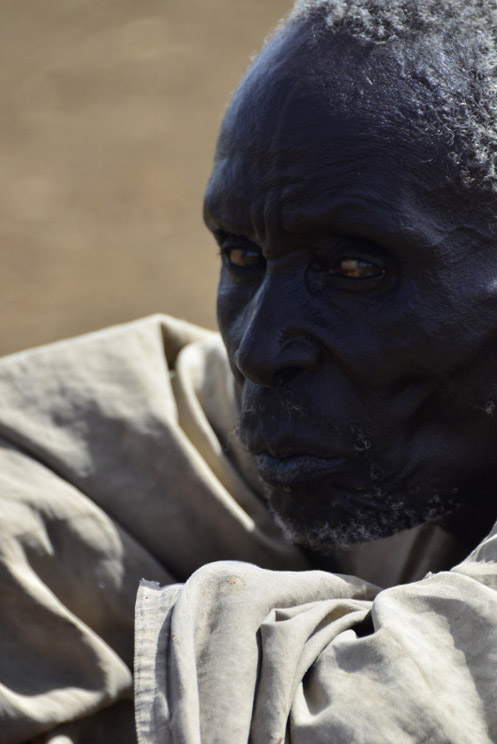
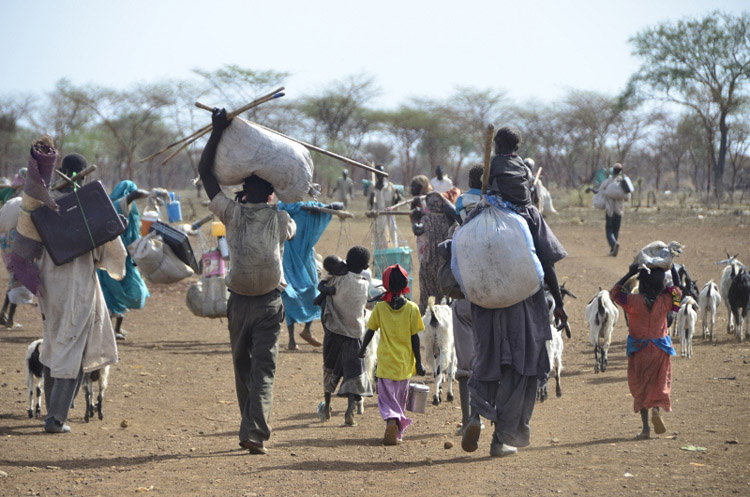
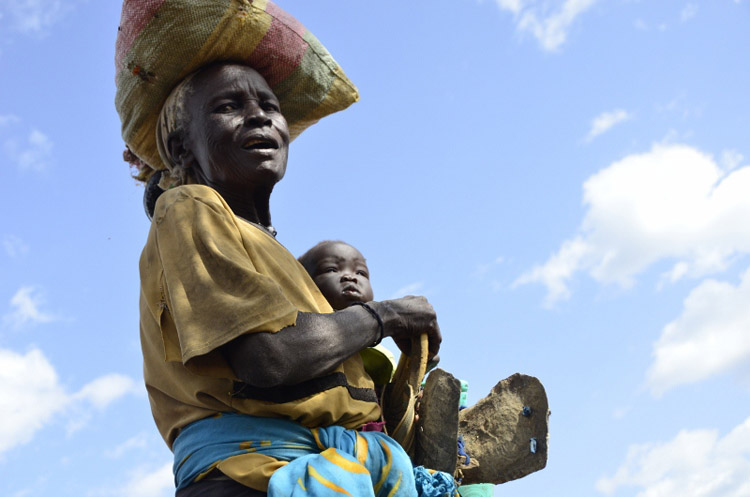
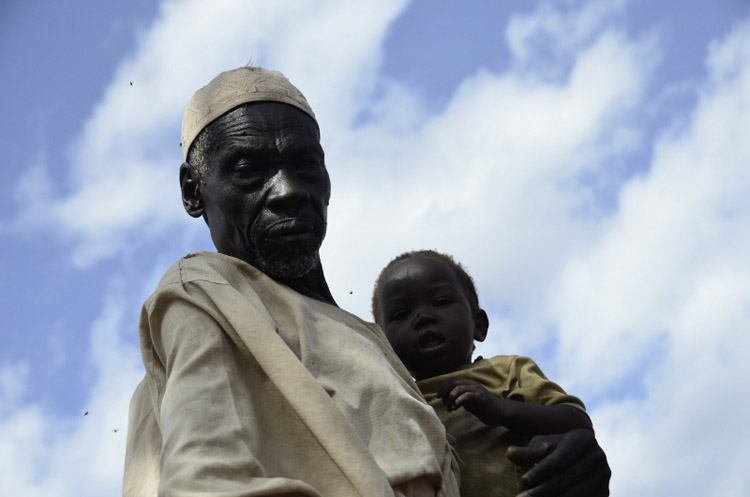
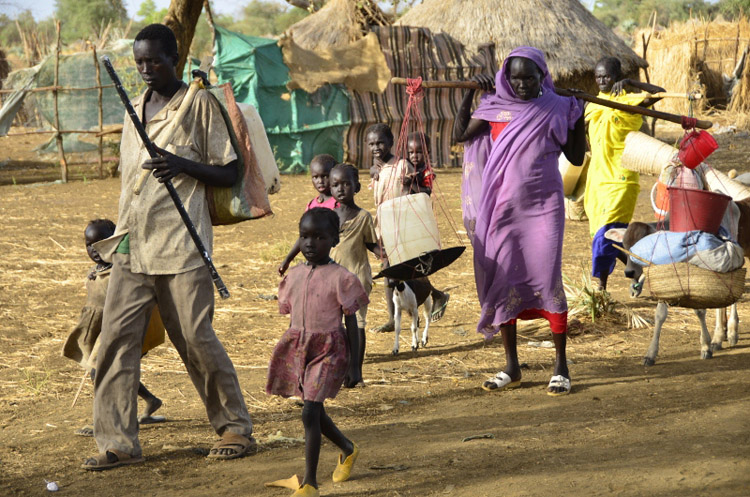
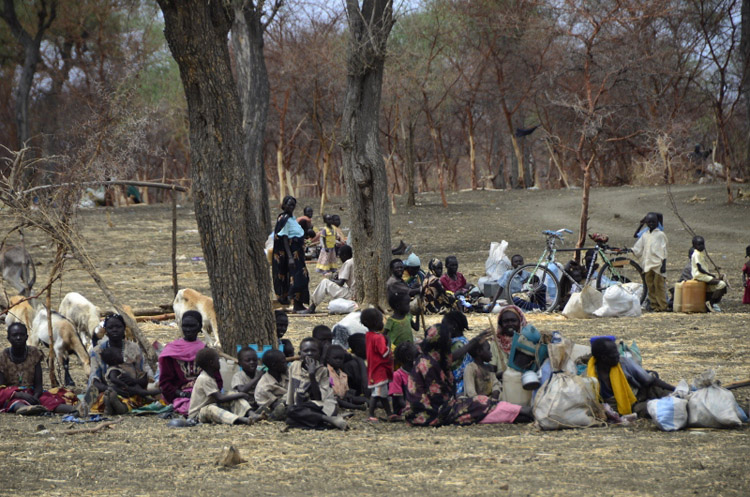
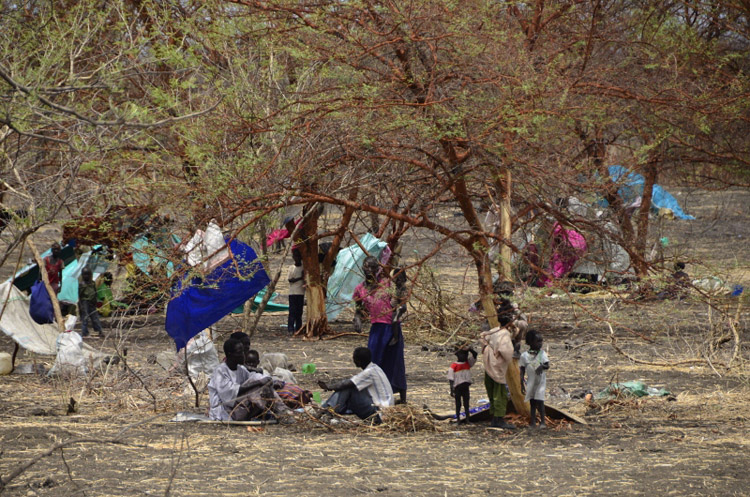
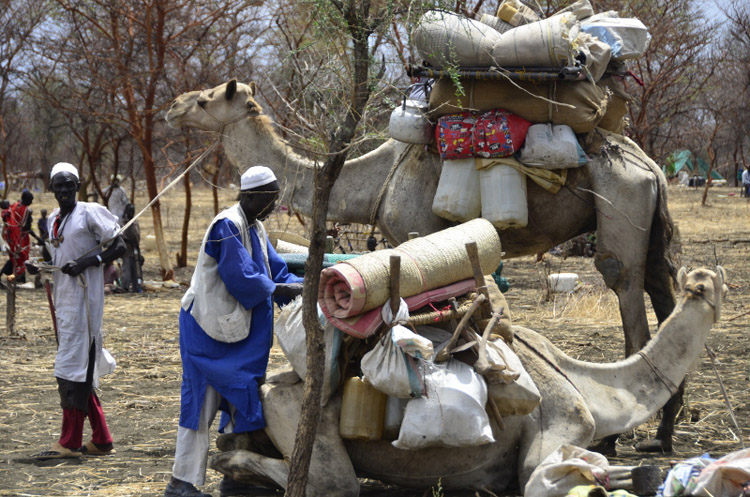
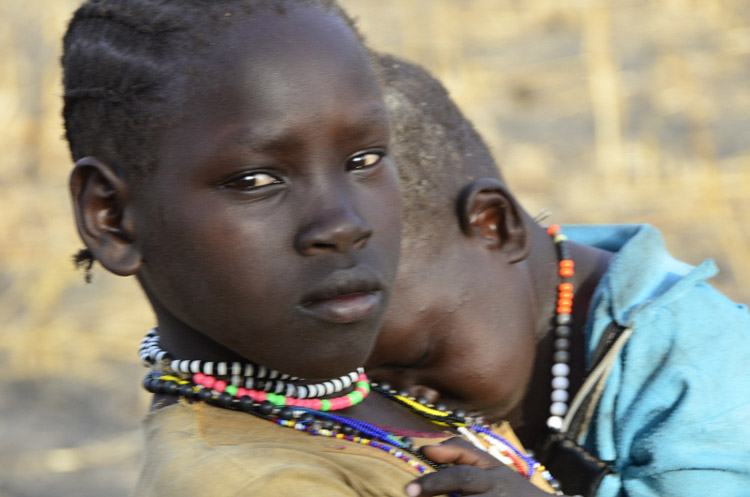
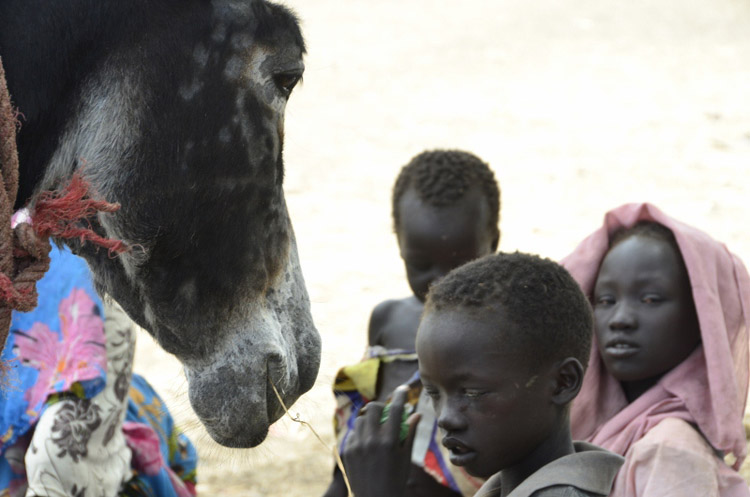
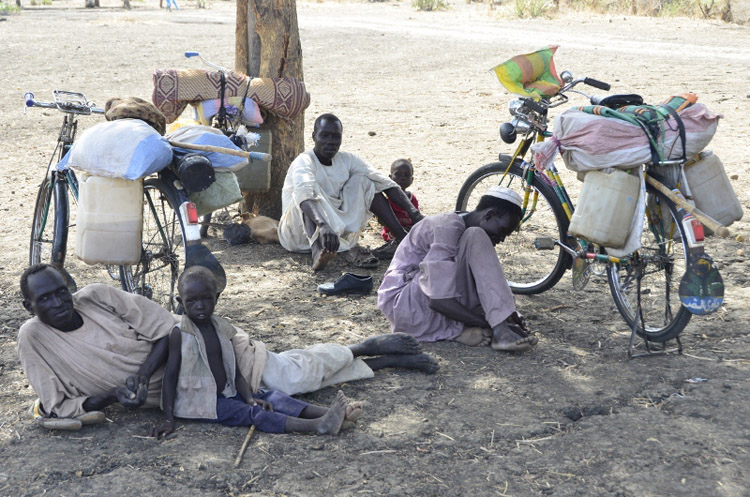
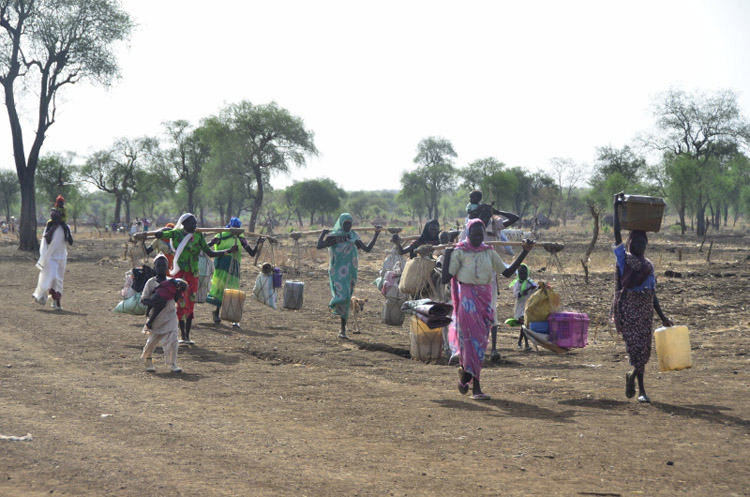
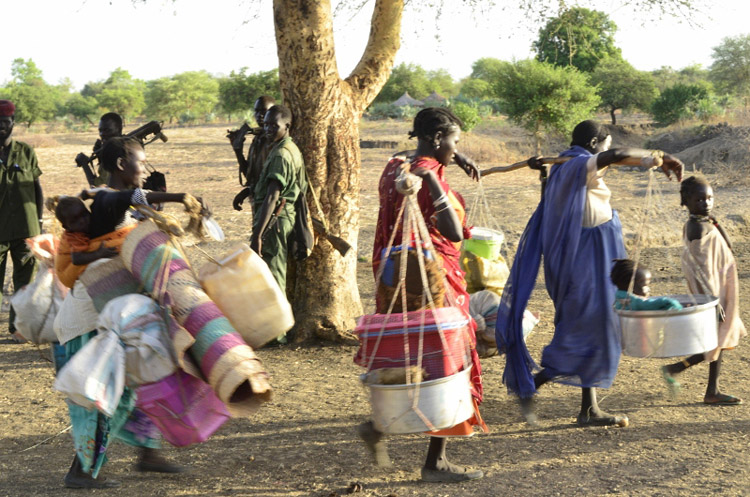
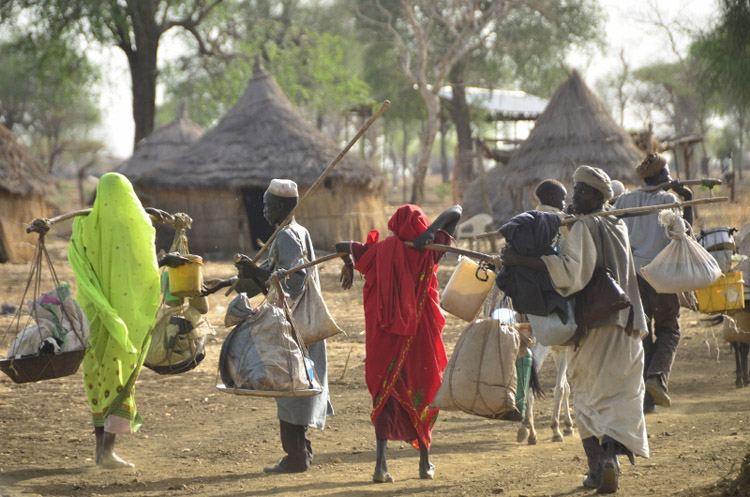
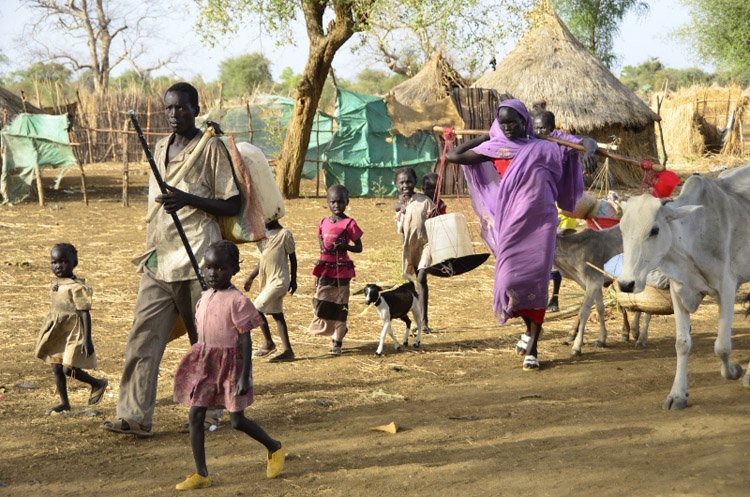
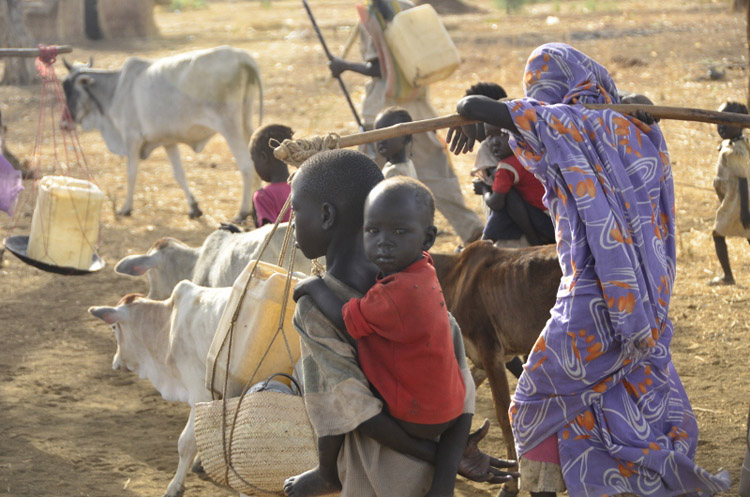
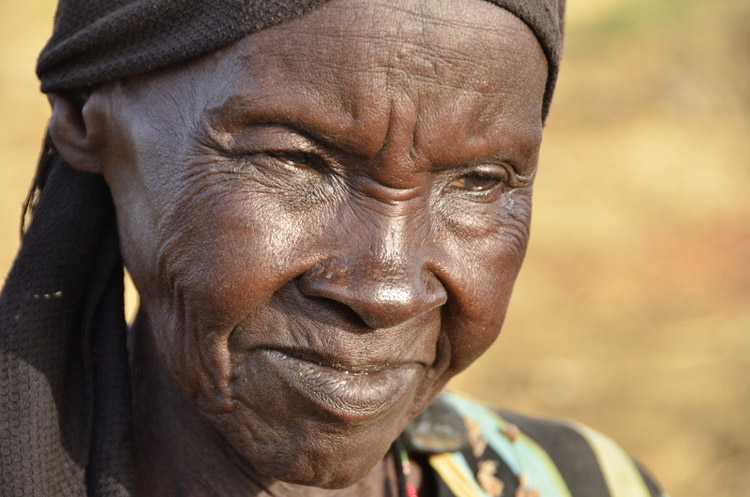
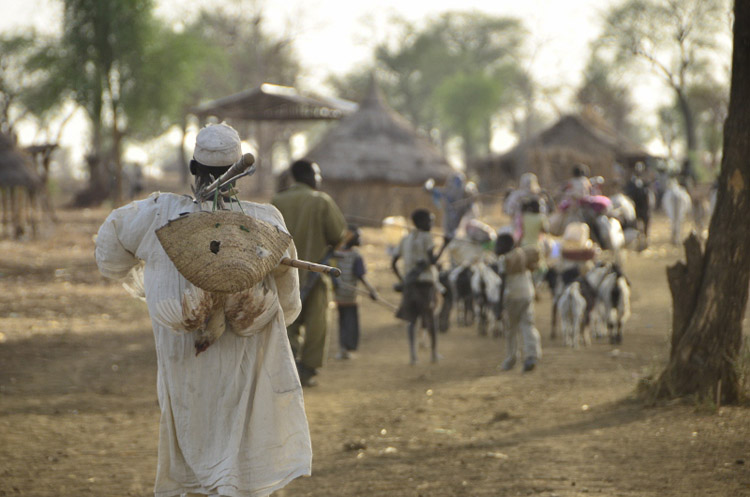
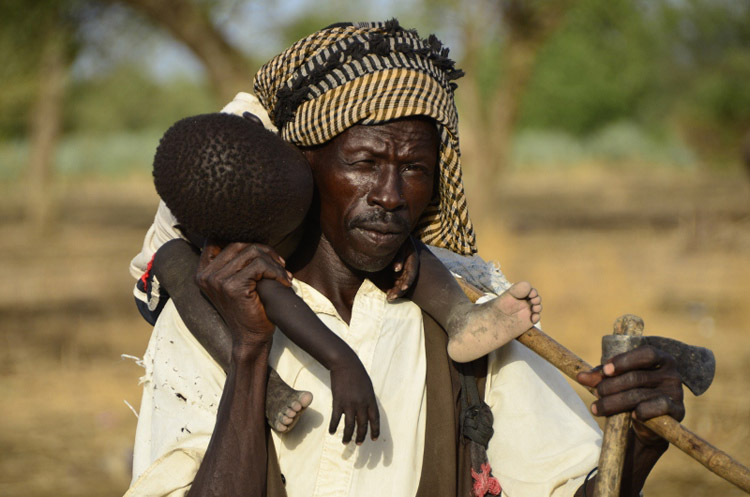
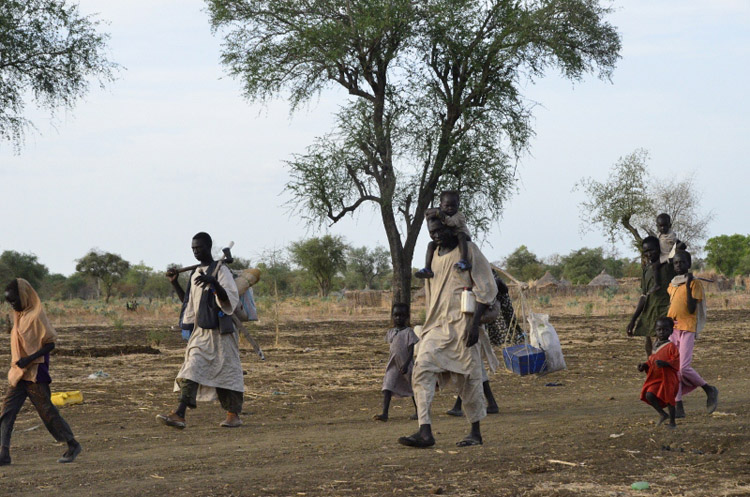
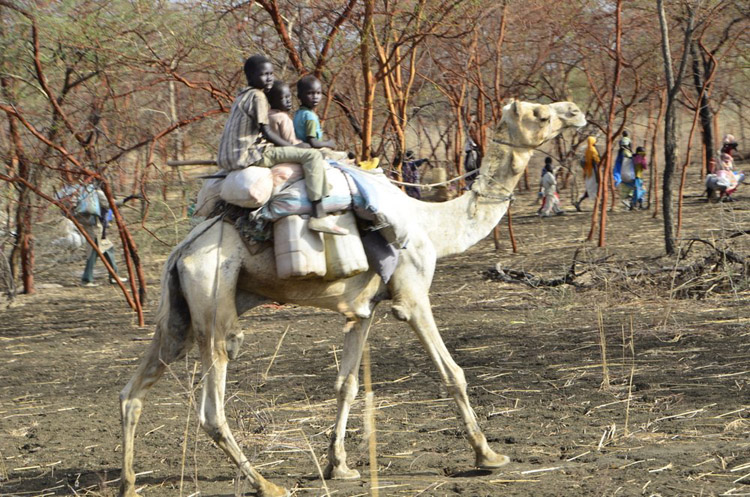
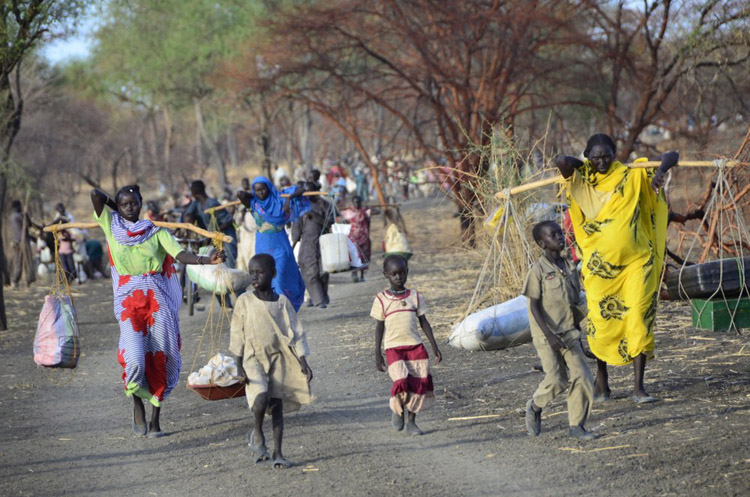
Refugees are hurrying outside. Wearied, exhausted faces stare at us through the car windows, coated with mud in order to prevent them from reflecting light to Russian-made Antonov bombers. Young women with children on their backs, fathers with children on their hands, old women lurching, old men barely moving. Some are lagging behind. Many are crouching under the trees. They are stretching out their emaciated limbs, or holding their heads. With closedeyes, drooping eyelids, begging us to take them along…
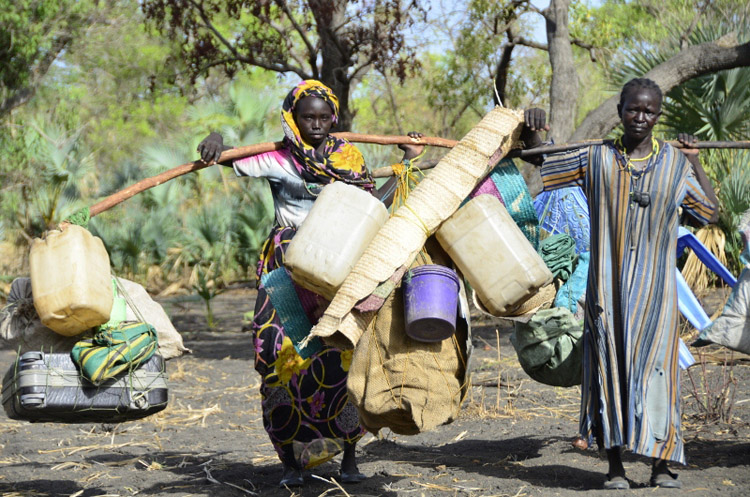
Sorghum bags. Water canisters. A couple of pots, a couple of chicken, an occasional lamb, all hung on sticks in the traditional way and carried on shoulders, rocking along in a panic run towards the border. This is everything they managed to grab hold of. In fact, they didn’t own much more. They left behind their burning huts and fallow land. Ever since September 1st, when war began in Blue Nile, following the attack of government forces on the stronghold of the SPLA commander in Kurmuk, Malik Agar – they have been waiting for the moment when the bombs and the fire will reach them too. Now they have.
One after another, they sigh into the camerathat they have been walking for a week. Some even two.
They didn’t want to leave home, they persisted till the very end. And the end came when the village was hit by grenades from one of the garrisons of the advancing government army. Or bombs fell on them from government bombers.Others escaped when the village was attacked by the militia, recruited from nomadic Arab tribes such as the Felata.
Everyone has lost someone.
Most are running away because of hunger. Fearing attacks, this rainy season they did not dare to leave the mountains and caves to plant the traditional sorghum. So, now the whole country is hungry, desperately hungry, hungry. And thirsty. The new rainy season is slow to arrive…
In the columns of tensof thousandsof hungry, thirsty and fatigued people there are hardly any boys and men. The Sudanese army has caught many of them and is now abusing them as janissaries. Now they are killing their own people, in a “kill a slave with a slave” tactic.
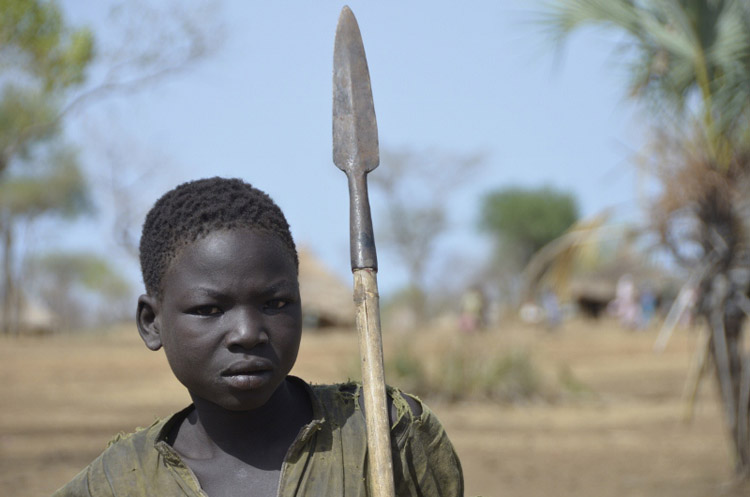
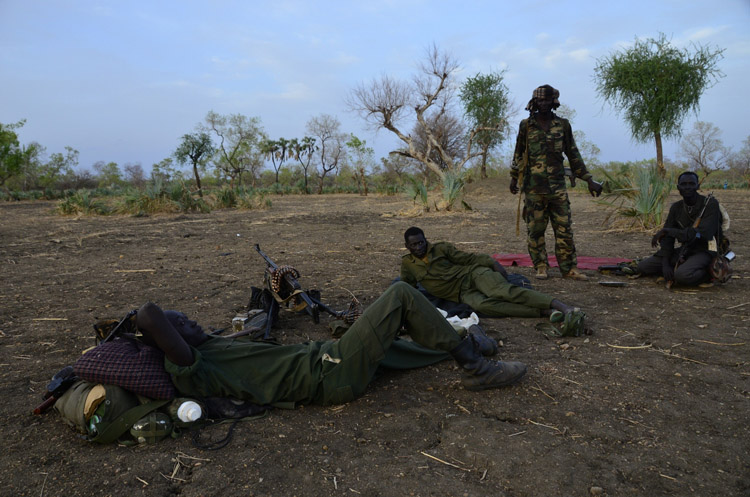
It is hard to say which of the young men has the highest chance of surviving. Most likely the ones who got away and joined the SPLA North under the leadership of Malik Agar. But everyone knows that Malik is losing territories and that at this moment this rebel army does not enjoy any support anywhere in the world. They have the poorest weapons, no training, nearly all fighters are minors in sandals… I saw with my own eyes – in January last year Malik Agar still trusted the Arabs in Khartoum and did not believe a war would come. He was not prepared as the SPLA leader in the Nuba mountains, Abdel al Hilu.
News reached us from the Nuba mountains today that the government army used biological weapons in the biggest offensives to date.
When we stop to take in a young woman and herbaby, just born under a deserted termitarium, we hear a dull rumbling in the distance behind us.
“Antonov!”mumbles the driver through clenched teeth.
“Antonov!” everyone around me seriously nods.
“They are bombing again! Ingassana hills!” says Sadik Ibrahim, who has been studying in El Damazin until September 1st, now an SPLA soldier.
“How much longer? When will the global community finally make a move and stop the exodus from Blue Nile and the Nuba mountains?” asks Mohama Jamous, the only one besides Sadik who, in the group of soldiersprotecting me, speaks any English.
The people of Blue Nile are the most uneducated people on the planet. Ever since the victory over the once greatest sultanate in the territory of today’s Sudan, Funj, the Arabs systematically banished and marginalized the African Muslims. They had the least schools; today there is not a single school active in the region controlled by the rebels.
Experts onSudan have been warning of the approaching war ever since 2005, when foreign peace middlemen ended the 21-year-long war, which claimed two million victims in Sudan and banished from homes five million refugees. The peace treaty achieved the right of former slaves in South Sudan to opt for secession at a referendum in six years’ time. Their fellow-fighters in Blue Nile and the Nuba mountains were left in the hands of the traditional enemy from the north. In January last year, the Sudanese dictator Omar Bashir clearly announced that in the event of secession of South Sudan, he will banish all Africansremaining on his side of the border. The ruling Arab military junta, which came to power with a coup d’état 23 years ago, is now doing exactly what it announced it would do, and we all knew that it would do.
The slavemasters, who are hiding behind politicians in Washington and Brussels, have realized their interests and got what they wanted.Now they are all looking away as if there are no consequences.
It’s not unusual anymore that I and a freelance photographer, Shannon Jansen, are alone with the victims of world politics and diplomacy, which predominantly worships profit, and is much less concerned about the collateral damage.
They’re just a bunch of blacks. Just common black peasants and shepherds. They don’t have any power to defend themselves. They’re the last on the ladder of human development.
By the law of Darwinism – everything that can’t or won’t adapt, must die.
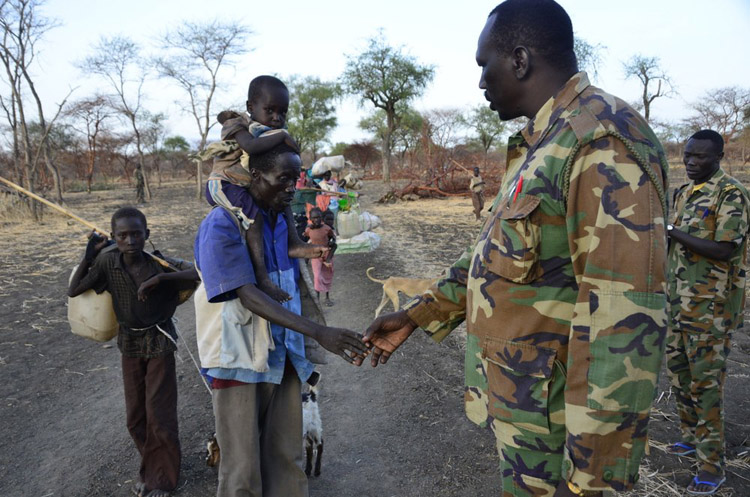
Every day,I shake the hands and gaze deep into the eyes of those that supposedly cannot adapt. When in fact, they have adapted to theirgiven natural environment unlike any other people. They extract the least from nature, cause the least pollution and harm to the planet and to other people. The symbiosis in which they live with plants, animals and all the elements is an example to the rest of us, who are increasingly dependent on excessive consumption.
The masters of the world have distributed the oil of Sudan, the excellent land and water among themselves. It is no wonder anymore that even Al Jazeera failed for the second time yesterday. Its reporter Anna Cavelli admitted heart-broken that Doha will not let her cross the border, because it’s apparently too dangerous.
In reality, it’s not any more dangerous that in any other war from Afghanistan to Iraq. There is just no political interestfor you ordinary people anywhere in the world to find out what the elites screwed up and maybe even intentionally sacrificed. The border between the Upper Nile province in South Sudan and Blue Nile province in Sudan is more than thousand kilometres long, open and unguarded by government army and militias. Nevertheless, since September last year, all humanitarian organizations, seated in Juba, have been forbidding their members to cross to the other side and are also scaring off every reporter who might be interested in the situation there.
Bashir will not allow anyone to enter the zone where his people are banishing and eradicating the last native inhabitants. Foreigners, making handsome profits from concession contracts with Bashir, obey.
Why is it even necessary to ask permission from a government, accused by the International Court of Justice in The Hague of four of the major crimes against humanity – including genocide?
For six years now, activists have been warning that war will come. And now it has.
Watch the documentary “Eyes and the Ears of God – Video Surveillance of Sudan” that I made with Maja Weiss at
www.youtube.com/user/TomoKriznar
Are we going to stop the unbearable suffering or will we all keep pushing our heads in the sand and wait for our turn to arrive…?
Tomo Križnar, in the bushes of Blue Nile, 28 May 2012
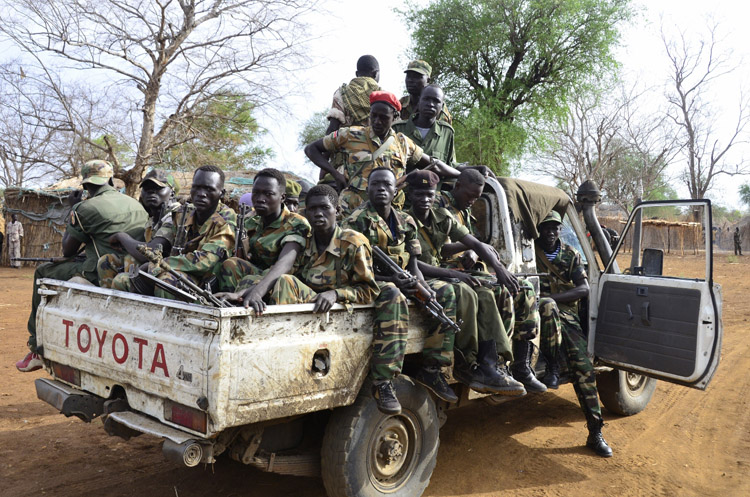
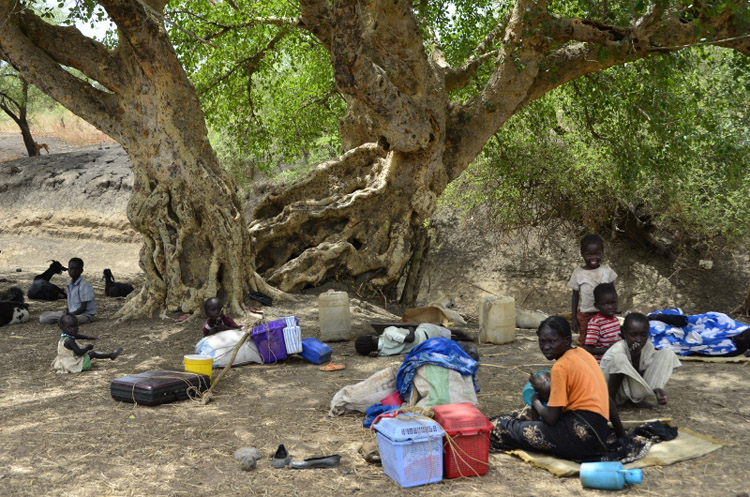
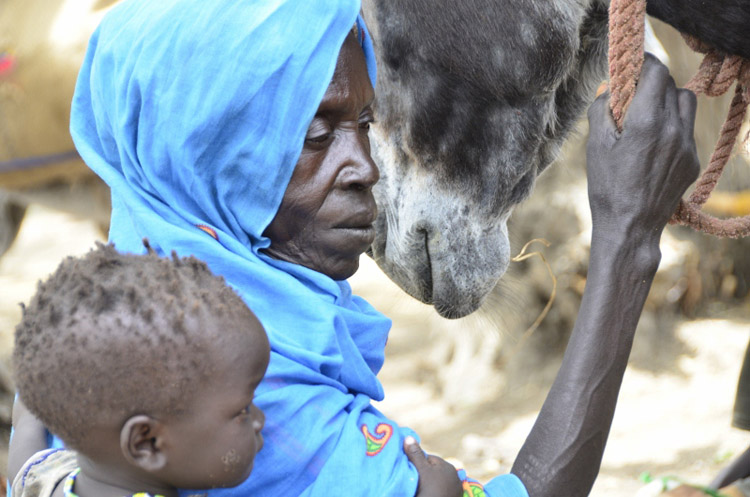
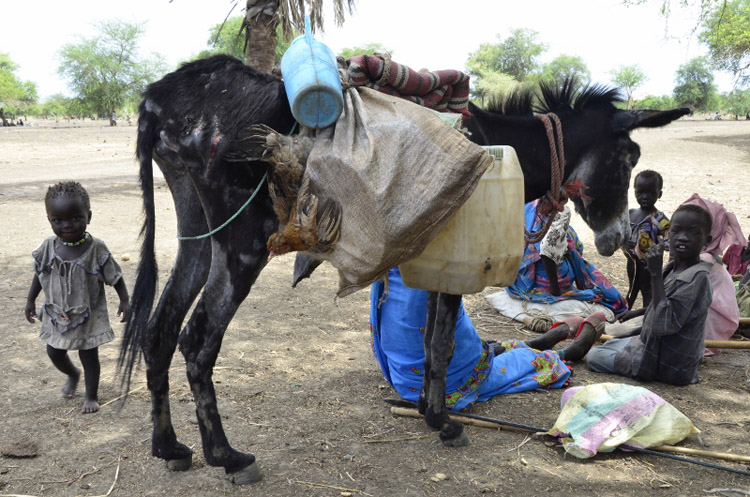
2nd Report from Blue Nile – 28. maj 2012 Read More »
26. May 2012 – Report from the road – Jamam El Fuj
26. May 2012 : Report from the road - Jamam El Fuj
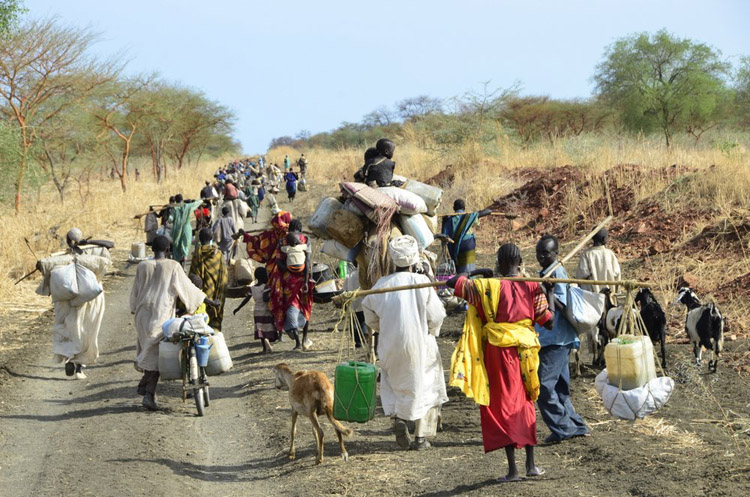
On less then 80 kilometers or three hours by car we counted today more than 30 000 refugees on the run from Blue Nile province, Sudan.
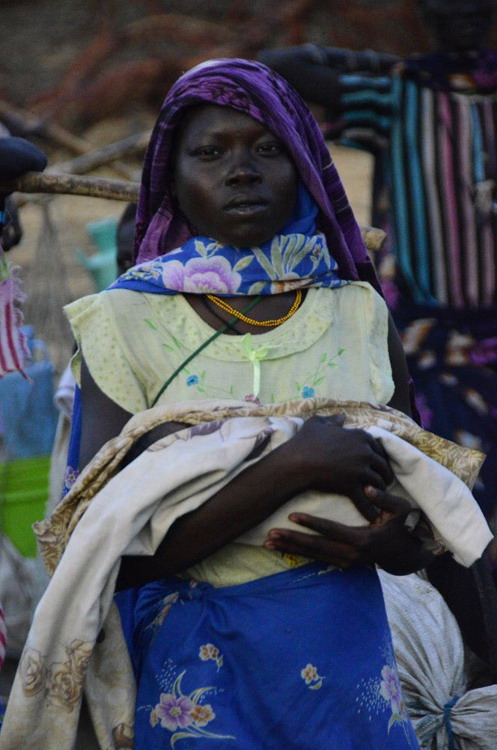
Children of all ages, old people, … men and women carrying kids in baskets, mothers with last night born babies wrapped in piece of cotton sheet, lines and lines after lines of people with most humble belongings marching through the bush, tired, so exhausted … Serious, with not much expressions – except: we are thirsty, we are hungry, we are tired.
Most of them started their journey weeks ago. Somewhere in the villages of Ingassana hills. Although Ingassana hills are famous for its fertile soil similar as Nuba hills, and people are known as great farmers with surplus of food – now indigenous people are all skinny looking like ghosts. No one appears to be fat.
We saw many, particularly old, on knees. Or obviously walking with their last strength.
Some of them sat under tree – not capable to wave salute.
There are no UN agencies on the whole 80 kilometers way from the border. Only Medecins Sans Frontieres greeting members of this great exodus of the time half way from the border, more than 40 kilometers after they cross into Upper Nile, South Sudan.
It is because of politics of UN adopted by all other NGOs which demands that no refugee can NOT get ANY HELP OF ANY AGENCIES LESS THEN 40 KM FROM THE BORDER WITH THE COUNTRY IN WAR.
This is why the victims of international politics must walk now after they walk for weeks another 80 kilometers to settle in refugee camp in Jamam to get water and food and peace and rest.
They can not stay home because of bombardments by Russian made Antonovs constantly scaring them away. Because of Antonovs Sudanese government is using to remove all Africans from the lands of their ancestors they did not succeed to plant enough traditional sorghum last rain season. Omar Bashir declared clearly in January last year that in case of separation of South Sudan, there will be no mercy for Africans who stayed on northern side of the border. Hunger is strategic weapon of Arab government in Khartoum just as it is in Nuba Mountains and Darfur and Abyei. Just like in previous war now also there is no mercy now for indigenous people on disputed border line from east to west.
But why international peace brokers are looking away now? – are asking thirsty, exhausted, hungry people in the 80 kilometers lines with all their belongings from Al Fuj to Jamam. Where are now European and American champions of human rights and democracy?
There are hundreds thousands more to come!!!!
Tomo Kriznar
somewhere in the bush
May 26, 2012


26. May 2012 – Report from the road – Jamam El Fuj Read More »
May 2012: To stop the war on South Sudan, the U.S. should send weapons
Article in Washington Post’s Opinions:
To stop the war on South Sudan, the U.S. should send weapons
by Andrew S. Natsios, George W. Bush’s former envoy to Sudan
May 2012: To stop the war on South Sudan, the U.S. should send weapons Read More »