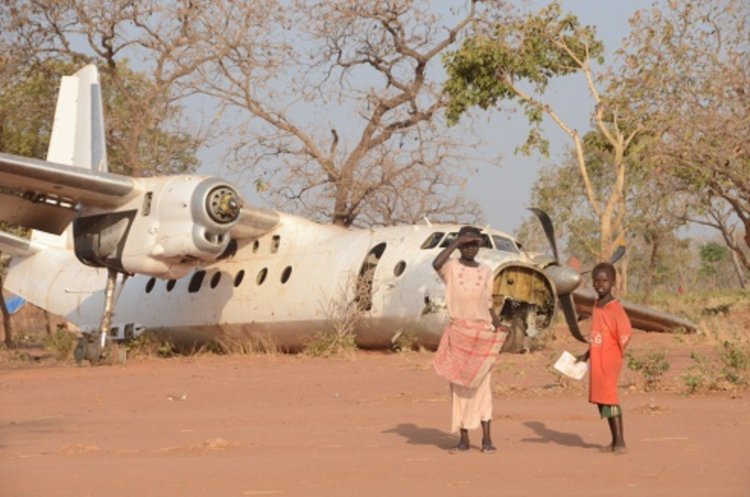
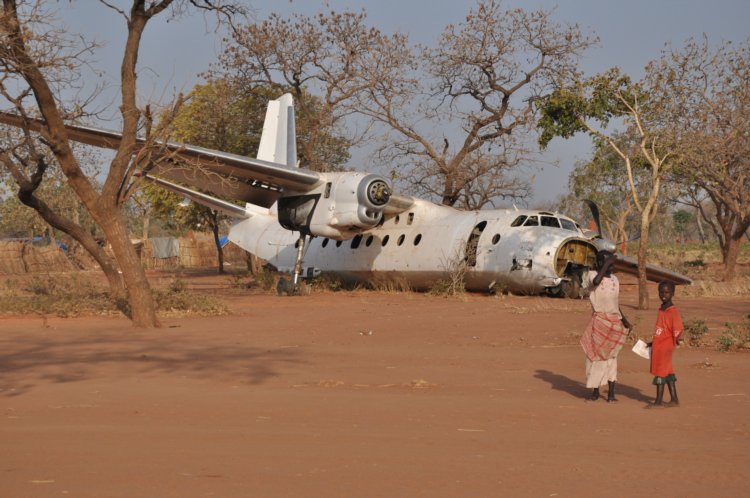
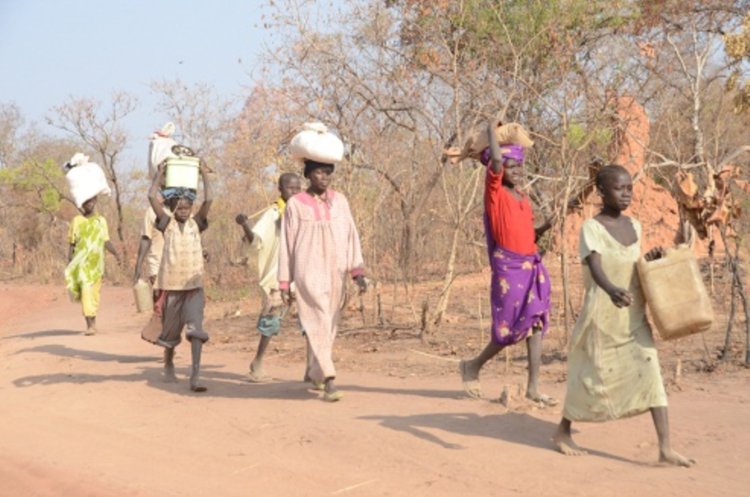
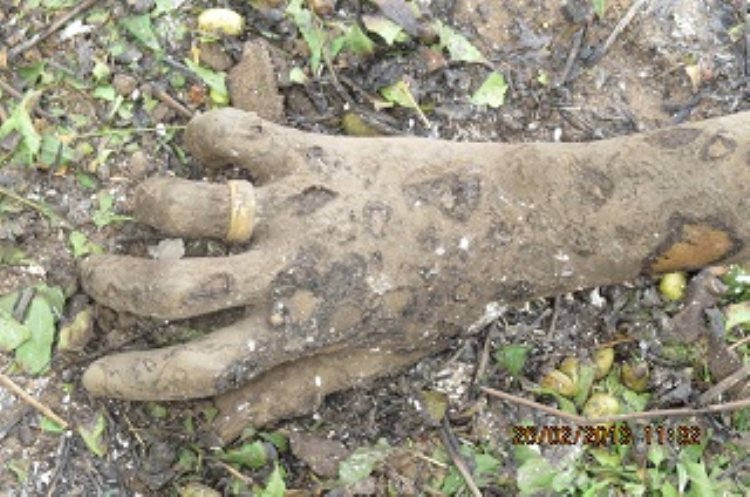
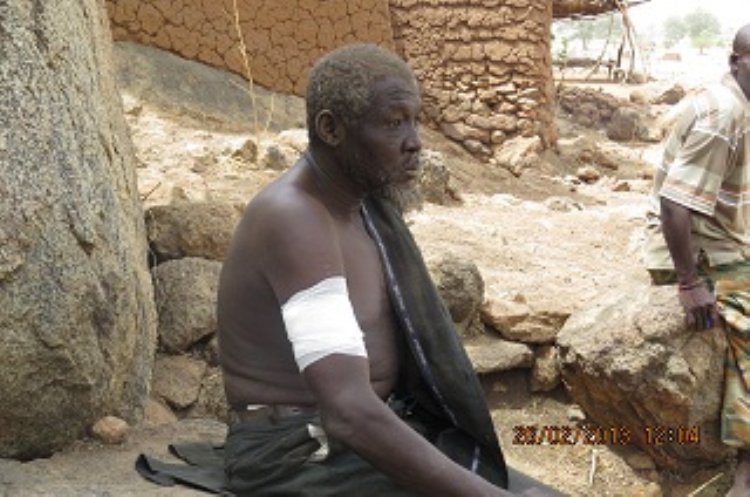
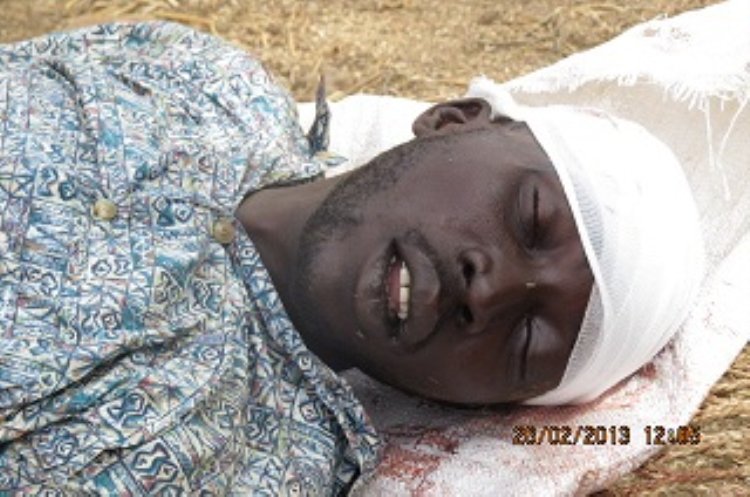
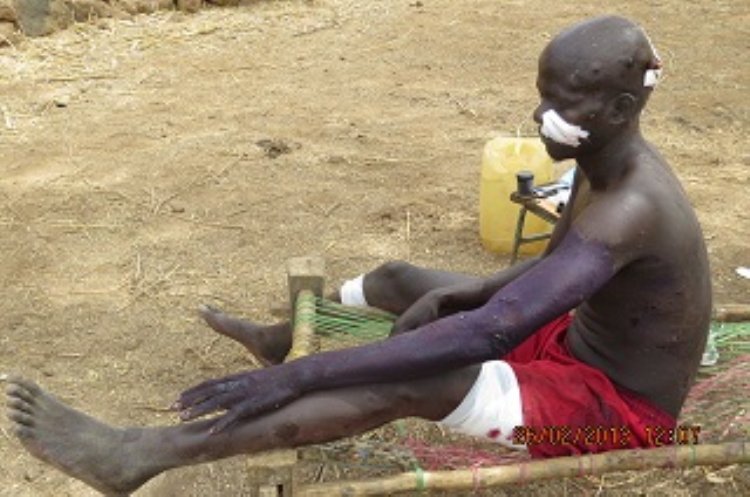
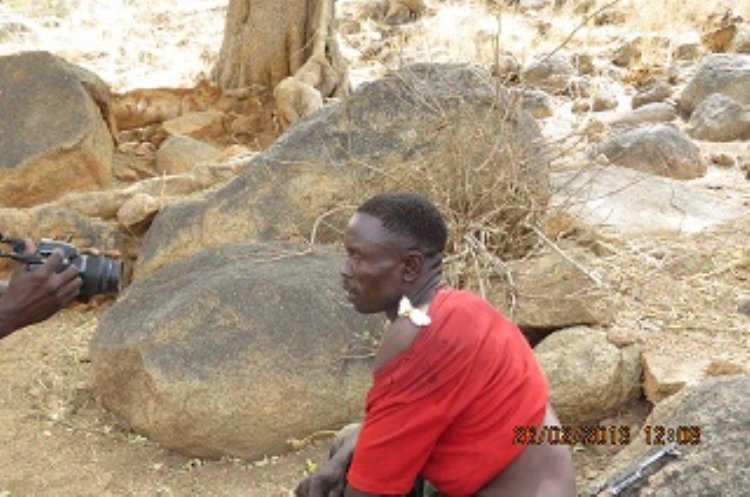
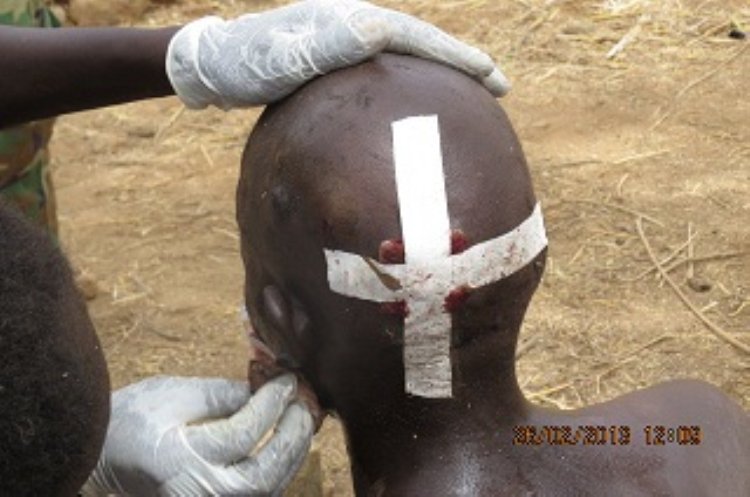
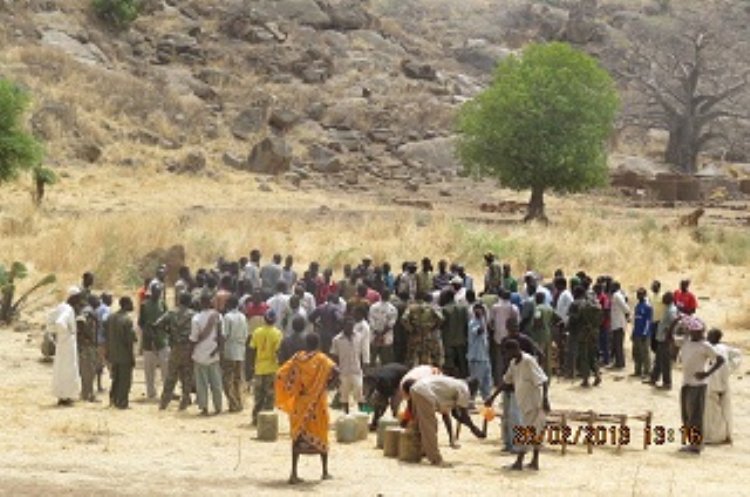
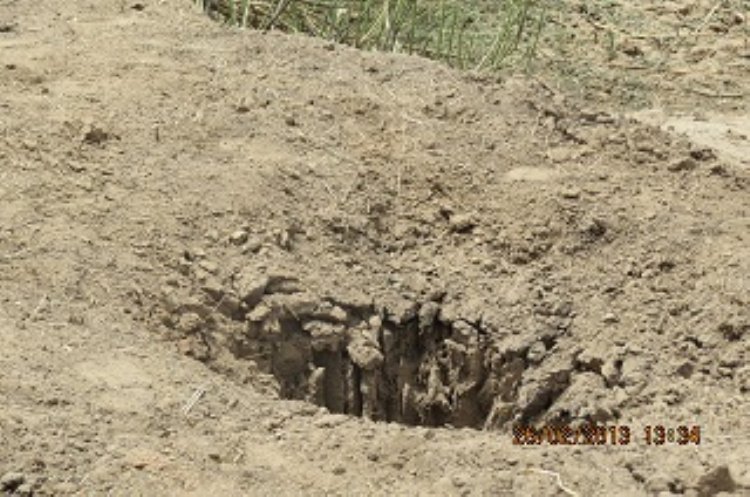
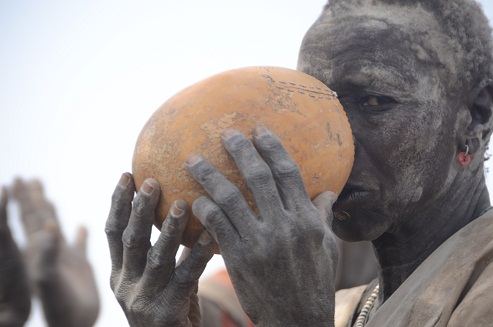
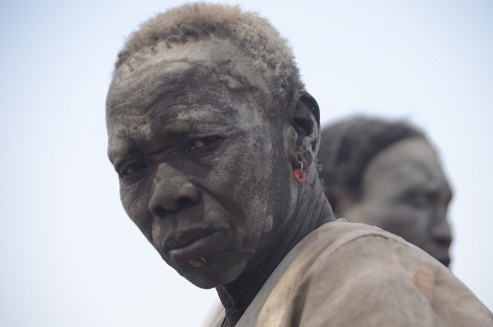
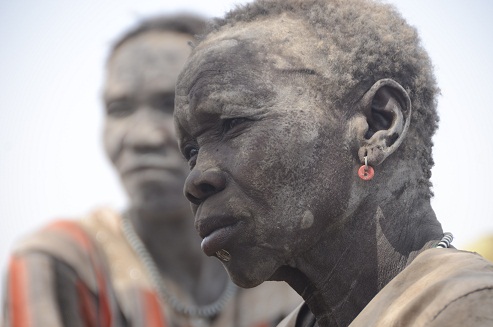
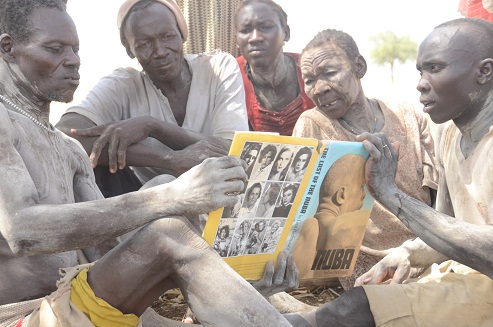
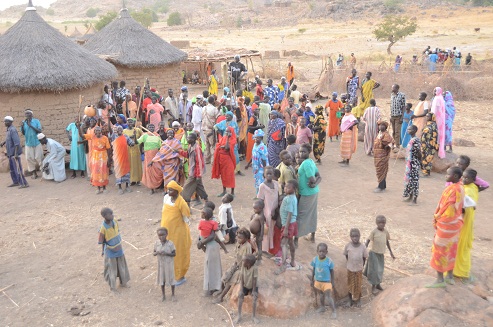
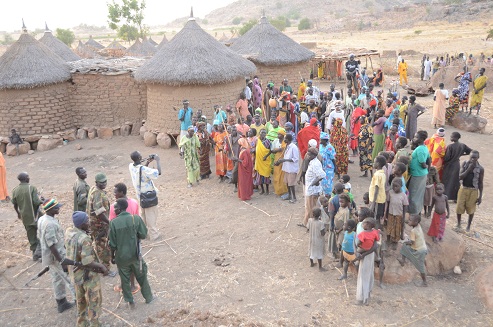
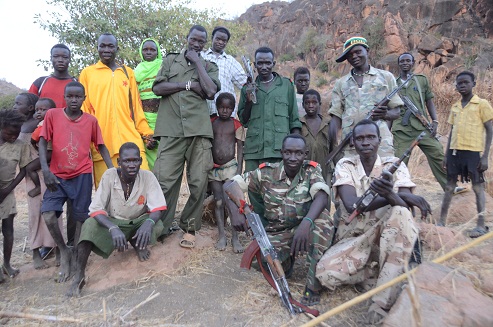
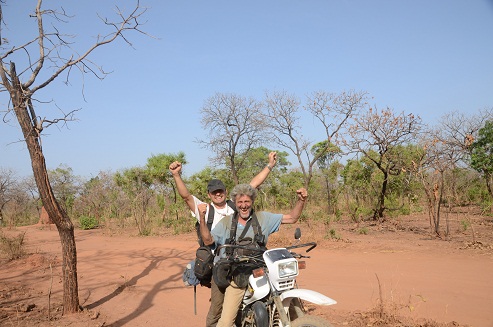
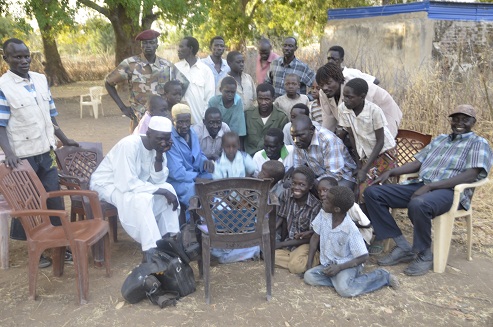
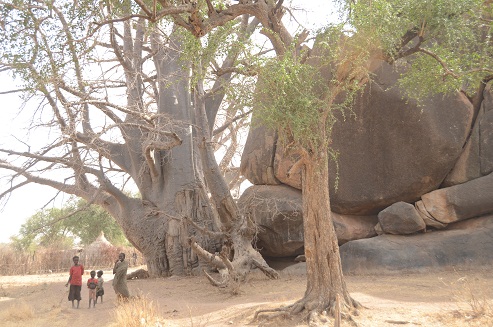
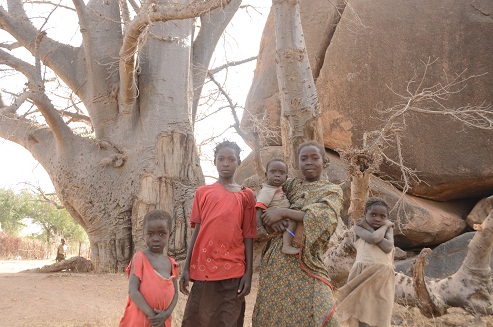
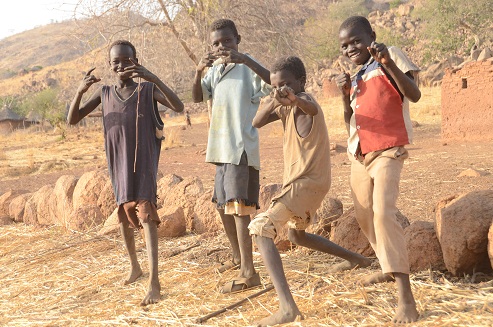
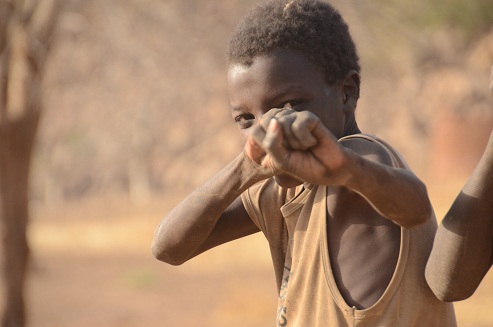
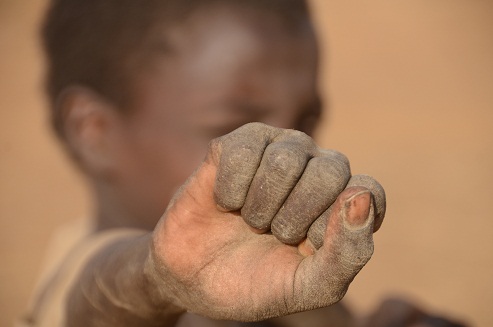
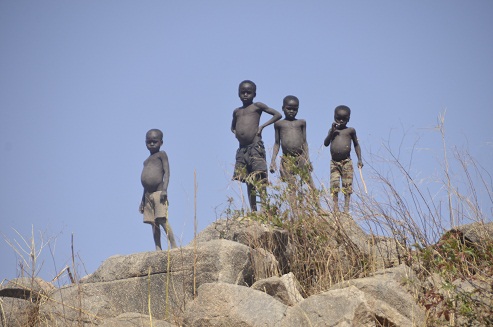
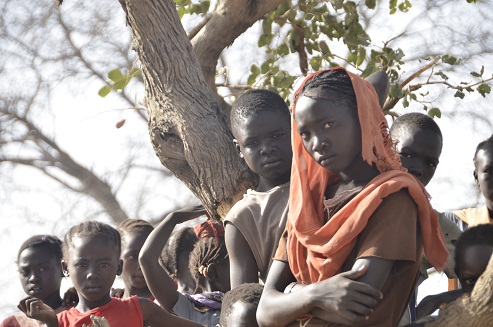
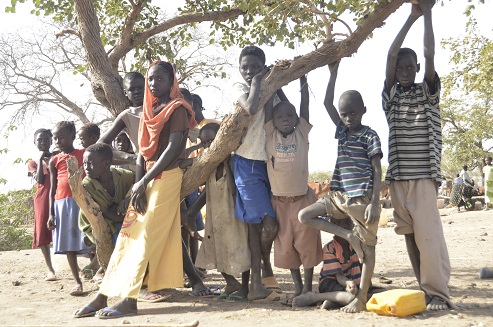
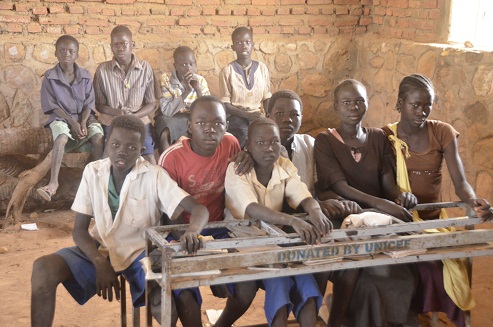
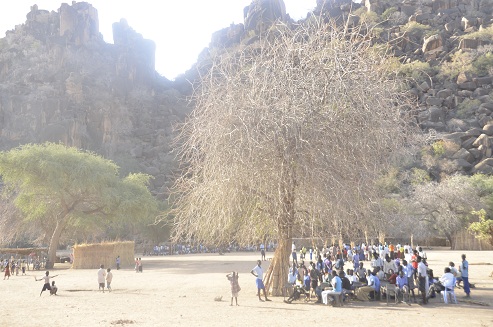
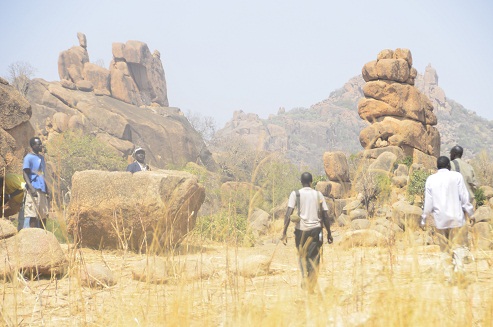
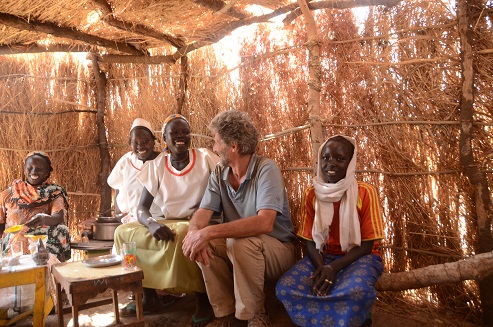
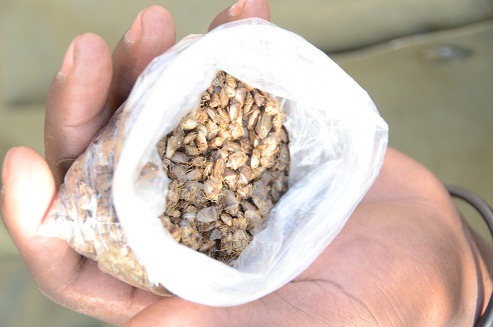
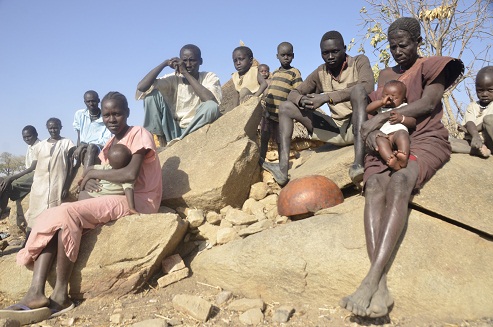
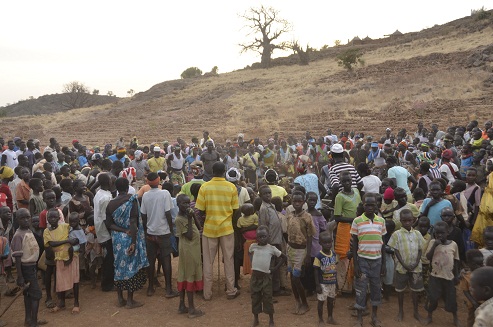
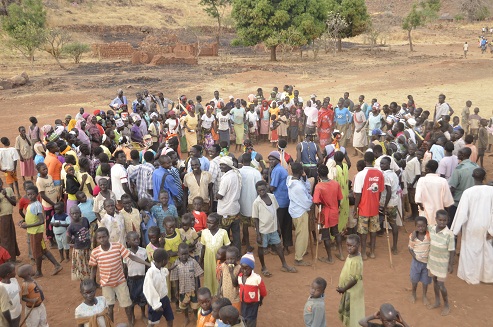
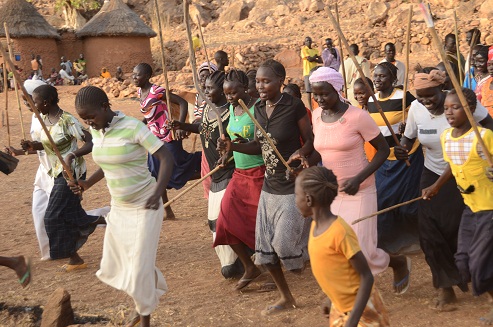
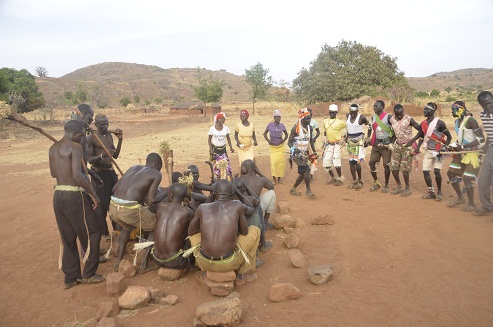
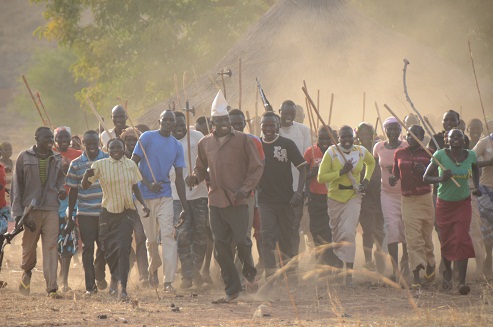
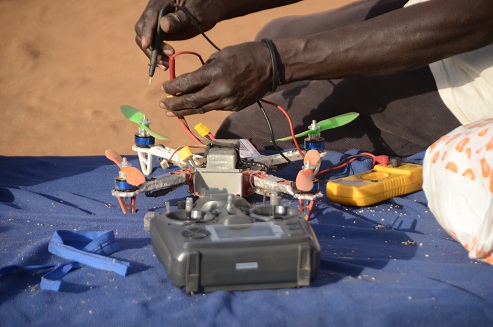
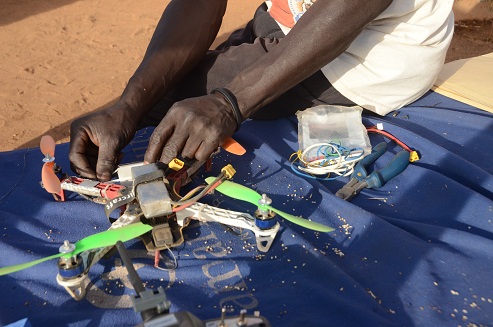
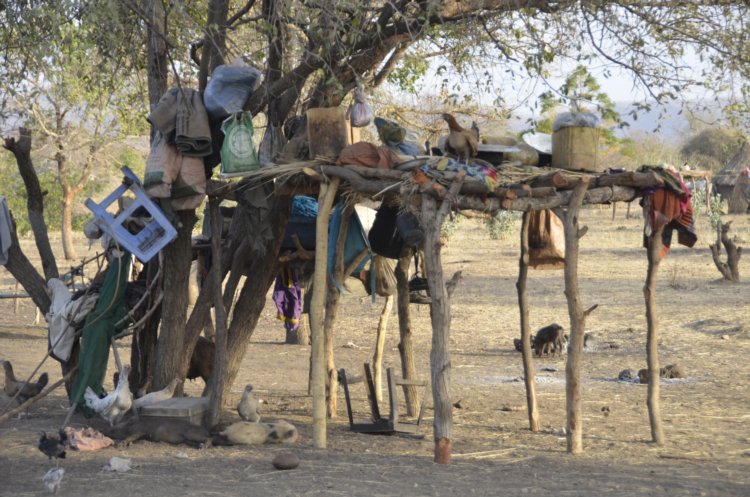
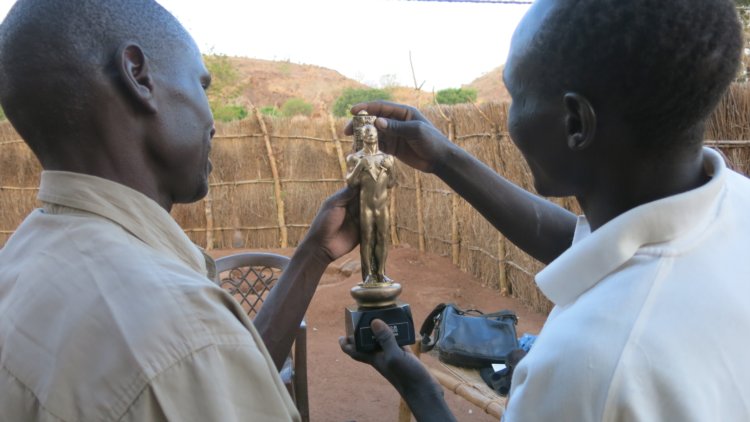
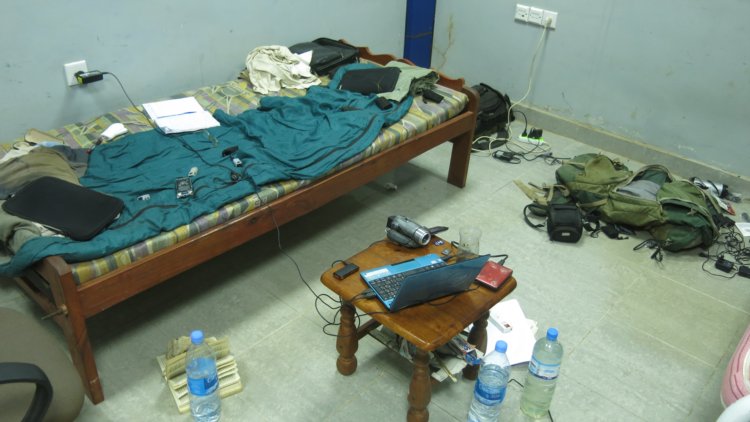
May 2013 – Photos from Blue Nile and refugee camp Yida

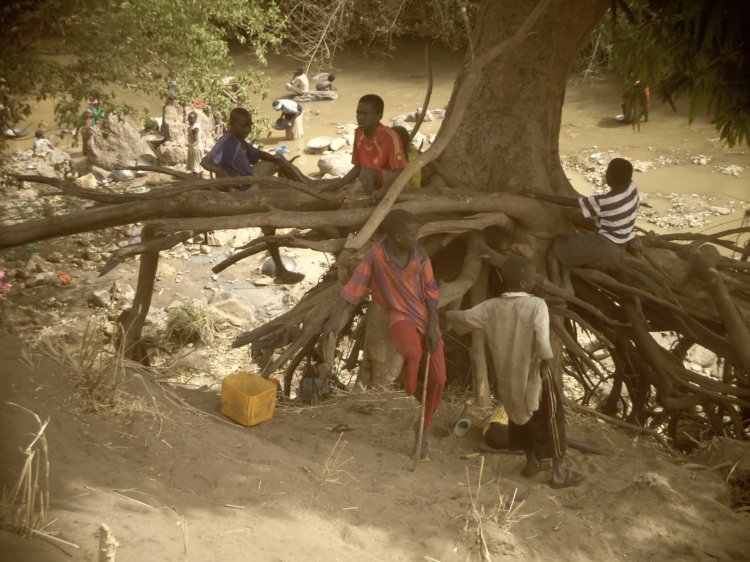
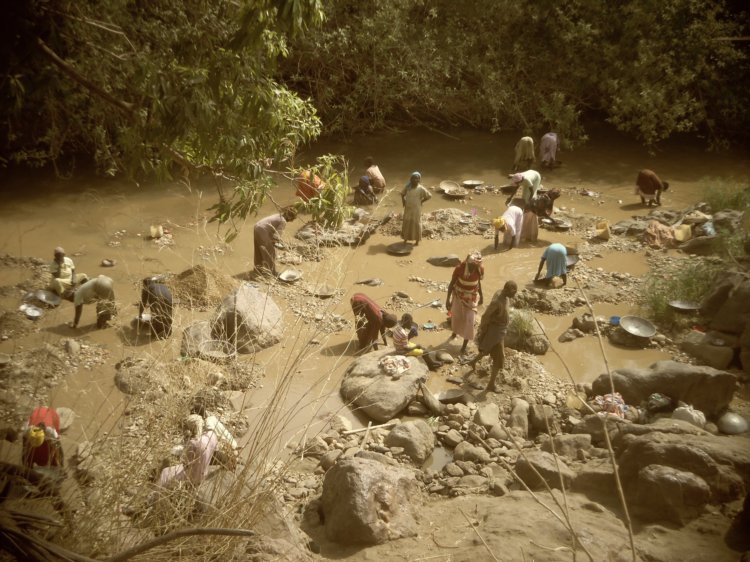




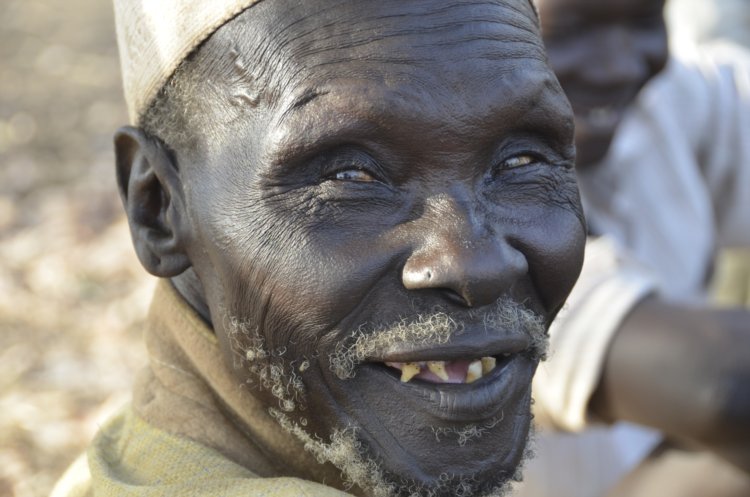
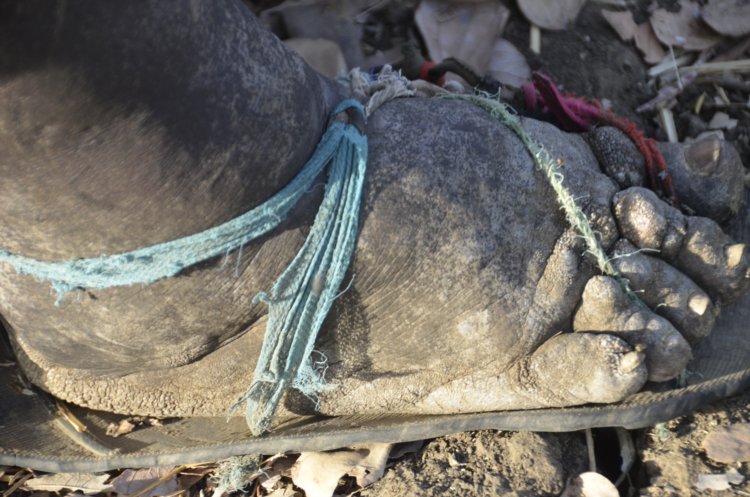
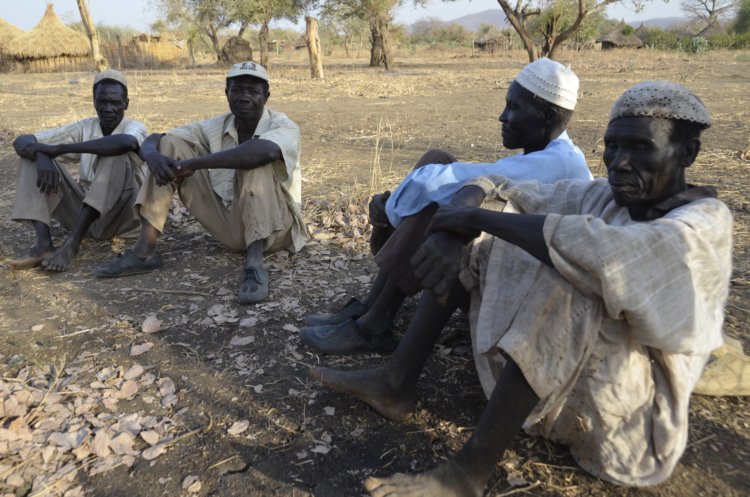
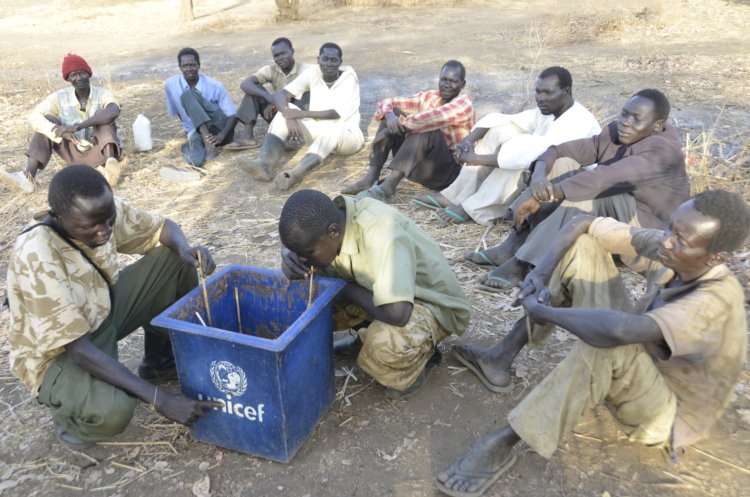
May 2013 – Photos from Blue Nile and refugee camp Yida Read More »


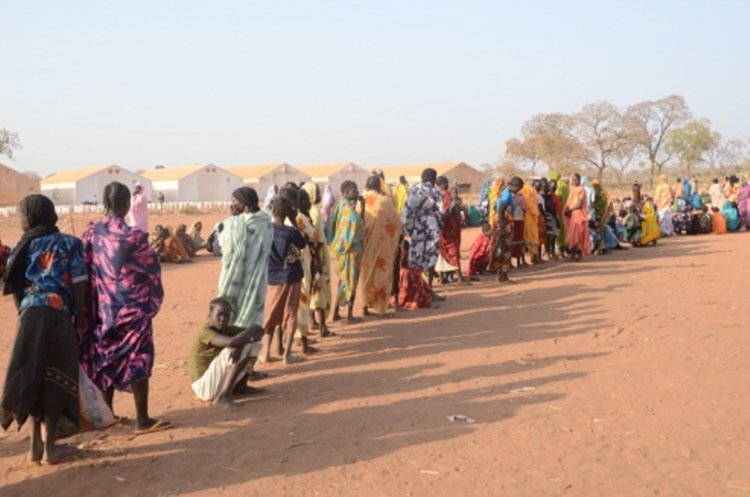
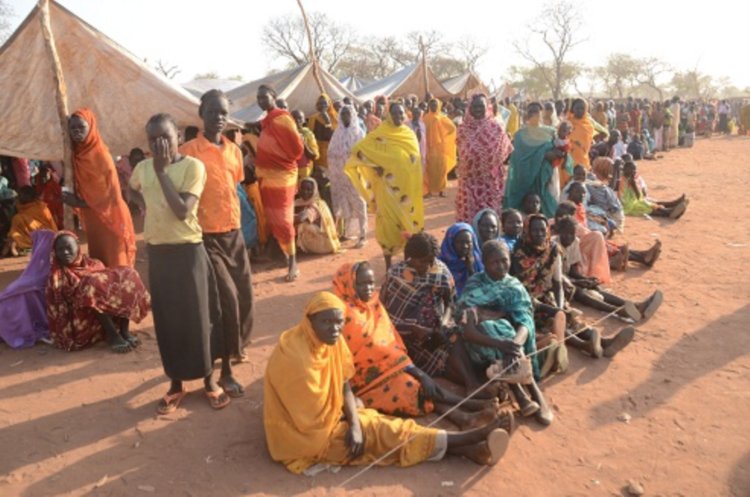
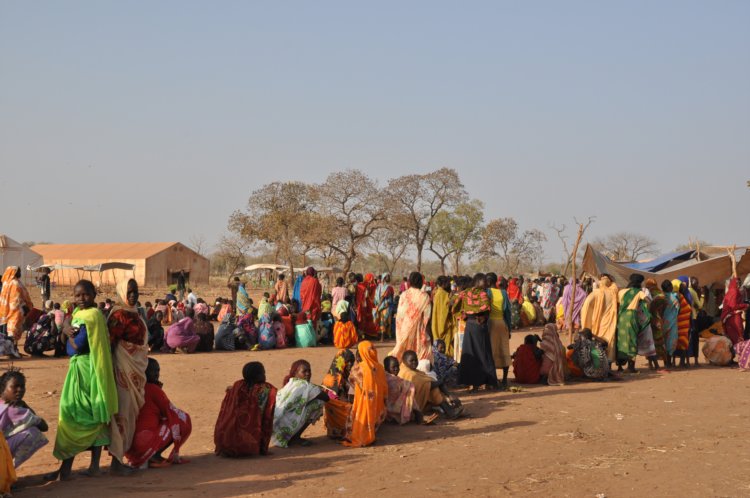
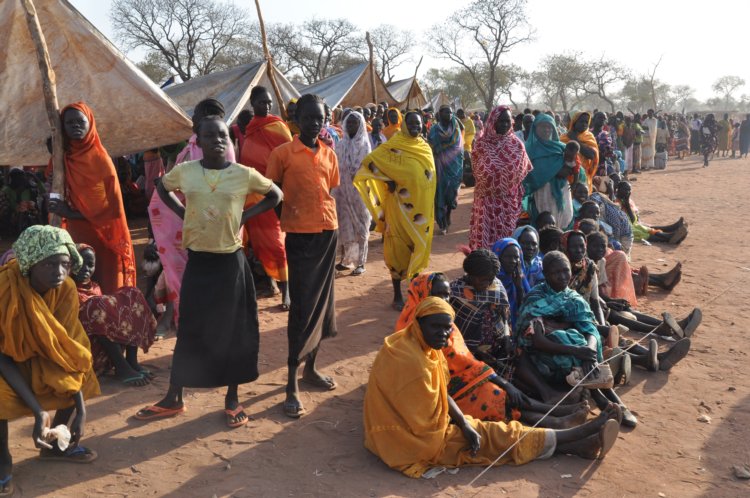
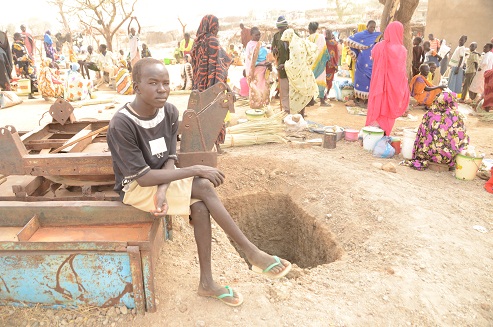
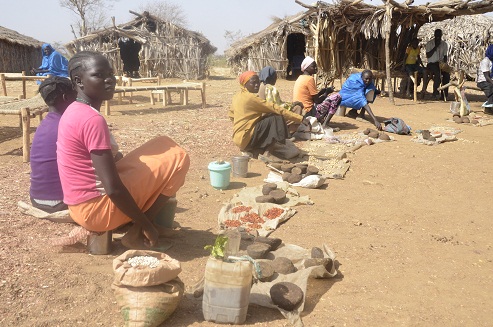
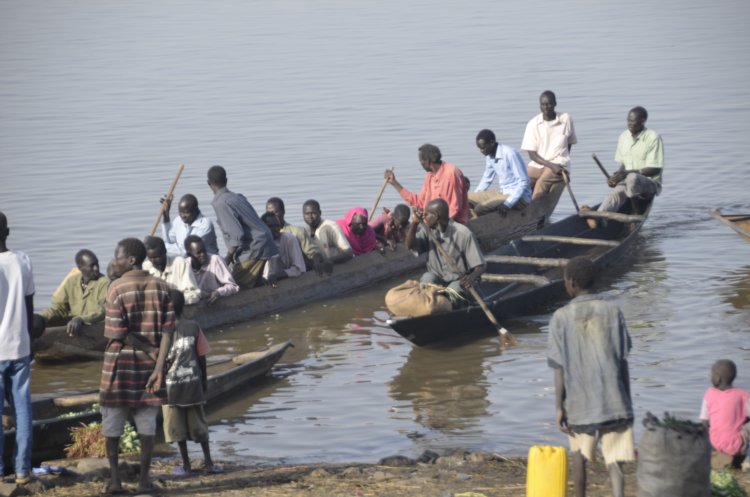
The first thing that gets to you is the congestion. Wherever you look, the Nuba are crowding. In line for food in front of large WFP tents (UN World Food Programme agency), colorfully dressed women holding registration cards wait, several thousand in infinitely long lines.
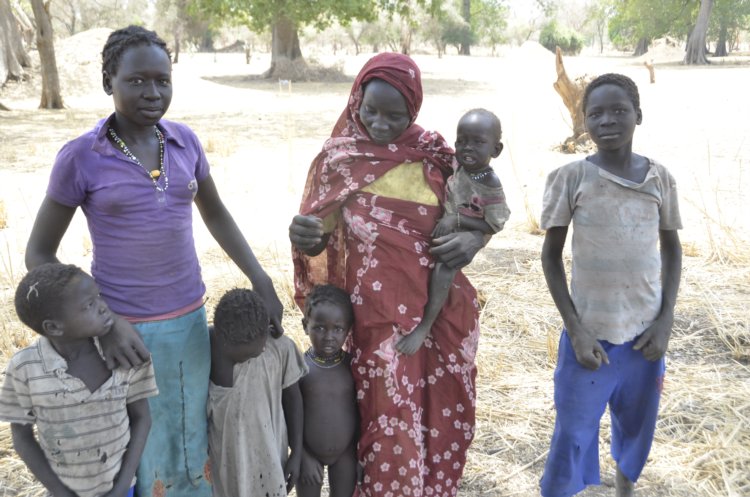
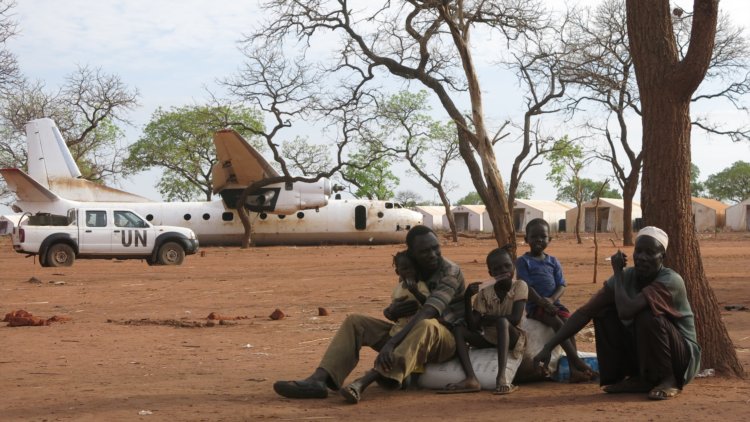
In front of water pipes, most often women also squat, with canisters in front of them and mostly with children in their hands. In front of school blackboards under the occasional tree, in crowds of several hundred pupils without the usual school books, only here and there a girl or boy in worn rags with a blue UNICEF notebook. Or emaciated men that just squat or sit on the ground in front of meager dwellings made of savanna grass, only rarely covered with blue plastic sheets that say UNHCR.
In the mountains you never see the Nuba packed in a crowd
Even if their villages completely lack everything that signifies comfort to the “civilized” us, the round huts built with mud, fortified with animal blood and urine, and covered with straw, like the huts in our nativity scenes, always have a cheerful luxury of space around them, where lonely goats graze, occasional chicken rummage, pigs wallow and donkeys bray freely between slabs of granite under fantastically branching giant baobabs.
“How’s it going?”, I ask the men, who are easier to talk to than the women, because of Muslim and Christian conceptions, forced onto them in recent decades as the only alternative to animism, carefully and systematically persecuted, more than anywhere else in world, by agitators of both kinds.
“It’s going”, they answer thoughtfully, so that you – friend of the former universal elation and enthusiasm among the more than 50 African tribes in the mountains – feel your heart and soul shrink. ” It’s going.”
” How’s it going here, in Jida refugee camp, compared to conditions at home, in the mountains of South Kordofan?”
“You can see our children playing. Our children are safe! That is most important now.”
It reeks of urine, excrements and boredom
At each step, between the crowded homes with aunts and uncles and untold numbers of children, it reeks of urine and excrements. And boredom. And idleness. And general uselessness. And lack of prospects without any future!
Their culture does not permit the Nuba to whine. It is indecent to burden anyone with your own problems. At least not in the way we Slovenes can bear down on each other. Seventy thousand people, once so proud that they could support themselves completely alone, without any means from the technically advanced world – merely in coexistence with the demanding, hot, dry as a bone, in every way merciless nature in the mountainous Sahel, between the largest desert and the largest swamps on the planet. Now they depend on support from UN agencies and a smattering of non-governmental organizations collecting funds for food in the rich industrial world, somewhere in the North and the West.
“Moral foug! Morale is high!” they confirm, in the same way as those that still fight for their homes in the mountains. “But we don’t know what will happen with us. What will be tomorrow?” say the men and women, accustomed to hard work, shaking their heads.
“You have abandoned us”
Something rises in their eyes then that I never noticed before, in all those 40 years since I’ve been interested in these indigenous people, presented to European and American elites, to their amazement, in photographic essays by George Rogers and Leni Riefenstahl. “You foreigners have abandoned us. We don’t know why! Why did you help in Libya? And now you are helping in Syria. We don’t understand why not us, when everyone can see that we are being exterminated from our land by criminals, charged with genocide by the International Court for crimes against humanity in The Hague.”
“But God is with us. We know that. And we count on God. God will help us sooner or later against the Arab traders that bomb us and expel us from our mountains”, I hear from emaciated, leathery men in the marketplace in Jida, waiting for something good to happen to them at last.
Everyone is hungry
Small bags of tea, brown sugar, salt, coffee beans, matches, sliced pieces of soap, a couple of rags, Chinese pens, nail clippers, foldable scissors. That is all that can be seen in the lowly souk. A couple of mangos, several measly tomatoes, unleavened bread, baked in hollowed-out termite mounds. They also serve beans and even goat stew. But only at noon and in the evening. When it is cooked – always fresh, as it was freshly killed. There are no freezers, no electricity, no coca-cola, no ice cream. No bullshit. Everyone is hungry. You feel it at every step and with every hand shake.
Every two weeks they are entitled to only three kilograms of corn and one kilogram of beans each. No flour or oil, sugar, tea and meat, much less vegetables and fruit, which they get in other refugee camps around the world that are also run by the UNHCR (United Nations High Commission for Refugees).
No kerosene for cooking. The refugees must obtain fuel by themselves. I saw how much the woods of acacia and doum palms are already damaged by cutting and drying and collecting, as I rode the 50 miles to Jida in the jeep of one of the commanders, freedom fighters of the SPLA (Sudan People Libration Army), from the undetermined border between the new South Sudan and what is left of the old Sudan and the homes in the Nuba Mountains, several days away on foot.
Why not?
Because they have to leave first. To another camp, being prepared by the UN agency for refugees in Ajuwang, two or three days away to the East by foot. They will get everything there, the whole infrastructure will be built for them there, they were even promised schools, but first they have to leave.
Why is that?
Nobody knows the answer. Not even the Arab and English speaking young students. Not even the representatives of non-governmental humanitarian organizations, who are usually, as a rule, critical of the UN. Not even Simon Kalo, chief representative and leader of the camp inmates in Jida. UN agencies have demanded this ever since refugees began to arrive from the Nuba Mountains. Since June 2011, just before the declaration of independence of South Sudan, when a new attack by the army of the Sudanese government on the SPLA ended a 10 year truce, which enabled comrades in the very same SPLA in South Sudan, assisted by practically the entire international community, after the longest and the most cruel African war, to obtain their own state through a referendum and immediately forget their brothers in arms, already sacrificed to the common enemy in the North by the CPA (Comprehensive Peace Agreement), prepared by the Americans, even as it was being signed in 2005.
Only Munir Tutu, responsible for information, takes my notebook and begins to draw a map. On one side he traces the route of the refugees over the Heiban, Kauda and Buram mountains. At each place of the same name he writes “SPLA” (Sudan People Liberation Army).
“Our soldiers are helping us now along this entire route. They provide water, food, protection and rest to our families, fleeing from bombardments and rocket attacks, hunger and decease.”
Then he draws a parallel route from north to south, writing SAF (Sudan Army Forces) at almost every place to the east. “The UN says that we must move to Ajuwang if we want to get aid like other refugees. They claim that they demand this to improve our safety and that we must move at least 50 kilometers from the border. But in Ajuwang we will actually be even closer to the border and a much greater danger, since there are less than 15 kilometers to the government garrison in Talodi. They will be able to attack our people with rockets, as they do in the mountains, attack them by land and control, murder, rape and plunder all along the way …”
Who wants it to be this way?
UNHCR is behind everything.
But why?
The UN works for the Arab government in Khartoum. Arabs have money. Oil-rich Arab countries are sending it to banks in Khartoum. Everyone is working for the Arabs. Now they don’t need slaves anymore. Now they only need our good soil for the agriculture business. And minerals. And water. That is why they are exterminating us. Relocation is just a new trick.
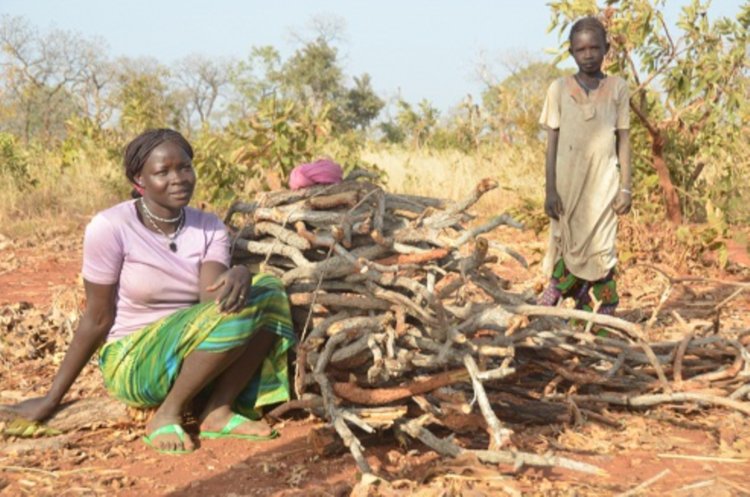
Latest news: Last week, three women were raped as they were collecting firewood in the bush, some 10 kilometers from the camp. Four were only beaten up.
When cattle thieves attacked the camp, the Nuba killed two members of the host Dinka indigenous community. The Dinka allegedly retaliated on Sunday by killing the first Nuba shepherd.
“This has never happened before”, claim, horrified, both the Nuba and the Dinka.
Is this also a new trick to put the Nuba in the new camp?
In the new camp? “Nothing is ready in Ajuwang for the refugees from Jida,” say
Jacob Mahjub and two others that I must not name, humanitarian workers from the American non-governmental evangelical organization that first began to take care of the Nuba in Jida and still works to help them in every way even beyond the border.
“Not only have you, in almost two years since the new war for control over natural resources at the border between the Sudans, not succeeded in doing anything against the daily bombardment of the most innocent people on the planet. Not reached an agreement in all this time with the criminal military hunta in Khartoum about a ‘no-fly zone’, or humanitarian corridors for supplying food and medicines and school materials to those most entitled on the whole Earth. Set the largest and most dangerous trap for the Nuba in refugee camp Jida, where with no schools, no work, no anything that would preserve and stimulate human potentials and capacities, the last most refined and dignified culture is falling apart. Now you even directly and without any shame cooperate with the Arabs in their grand designs!” I confronted with this Denis McNamara, the UNHCR representative in Juba, the new capital of South Sudan.
“I can’t do anything. We can’t do anything. Nobody can do anything against the Chinese and Russian veto in the Security Council.”
“Fuck you! Fuck You! Fuck You!” I let myself go. “Fuck you all! What is it with Obama’s America? What’s with the EU?”
Even before evening, the whole humanitarian diaspora in Juba knew that the person who brought pictures of dismembered children, taken by volunteer Nuba photographers, straight from the Nuba mountains to the Sudanese dictator Omar Bashir and handed them to him on the ceremonial stand when the independence of South Sudan was declared on July 9.th, 2011 – pictures of the victims of all those on the stand and those hiding behind it – has again returned from the mountains with new pictures, this time including ones taken by the first flying cameras – drones.
In eleven of more than 600 organizations of humanitarian business in the country that, despite this army of philanthropists, still ranks next to last in the welfare of its inhabitants, doormen closed in my face gates in walls topped with barbed wire. Only one of the organizations, whose representative I had to promise that I will never mention it anywhere in my reports, allowed me to come in and stay. And even here I feel that they can’t wait for me to leave.
Most of those I called, people I know from the last war in the Nuba Mountains, haven’t responded either to mobile or satellite calls.
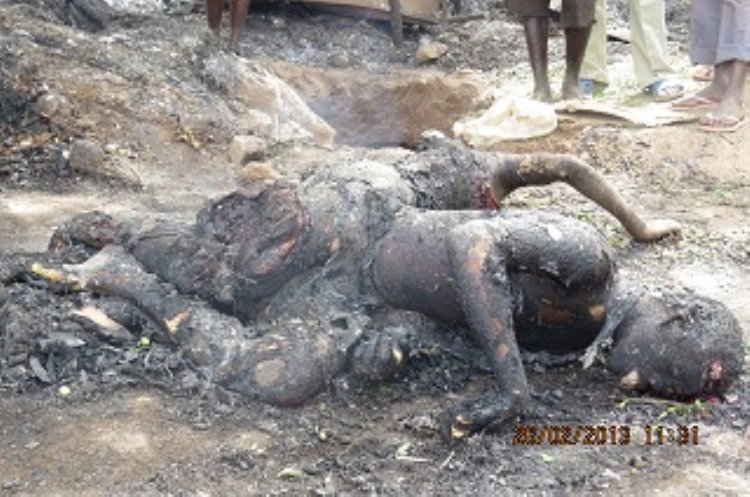
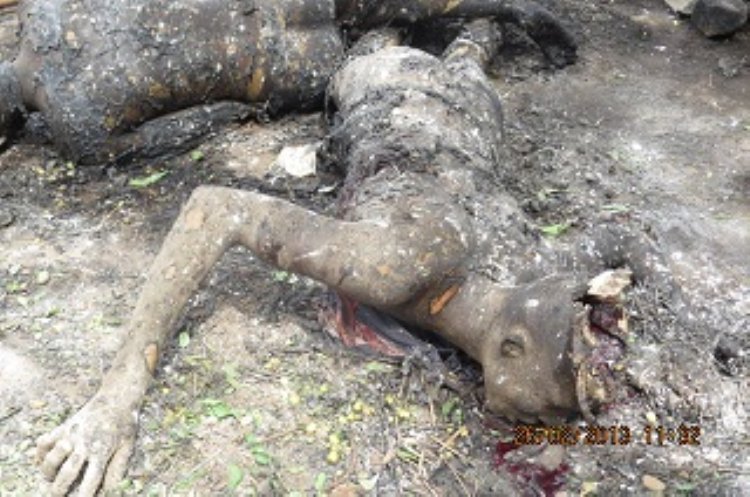
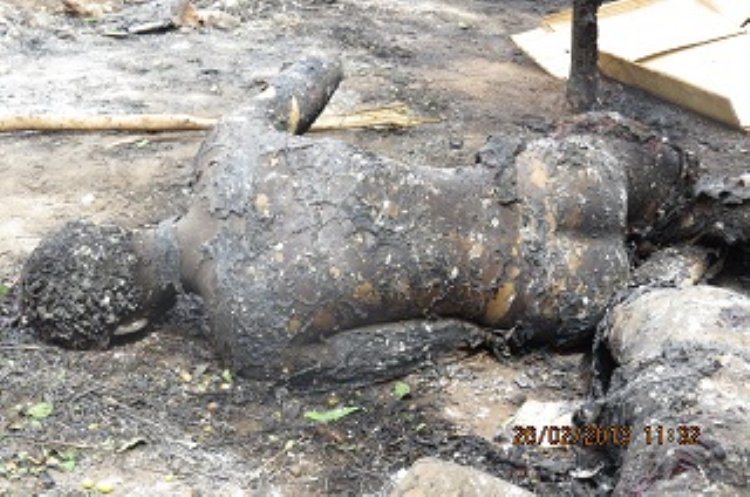
This time, no one is interested anymore in pictures of burned, roasted, fried children, girls, men, on the undefined border between the Sudans.
Yeah, we know, we know everything. The powers that be have made a deal and that’s how it is now and how it must be. Everything is just business. Philanthropy too is only business, with wages and jobs like any others. Amen!
Maybe they would be interested in the Kongo. In Kongo, millions of civilians have died during the last ten years, as a result of rat wars for control over the last natural resources still undivided. The sensitive world has similarly washed its hands and is looking away. The UN has been caught red-handed in arms trading and mass rapes. But neither the government nor the notorious M23 rebel army dare to exile and murder en masse, just like that.
Either I am going crazy from all the grief I witnessed in the mountains during the last two months – or something is very wrong with all my friends and acquaintances, not only at home in Europe but here as well?
I sensed that I must go, at least for a while, somewhere where everything is totally different. I must go “On live”, as the expatriates in Juba say. For example, to Kongo.
Tomo Križnar, Sunday, March 10.th, 2013
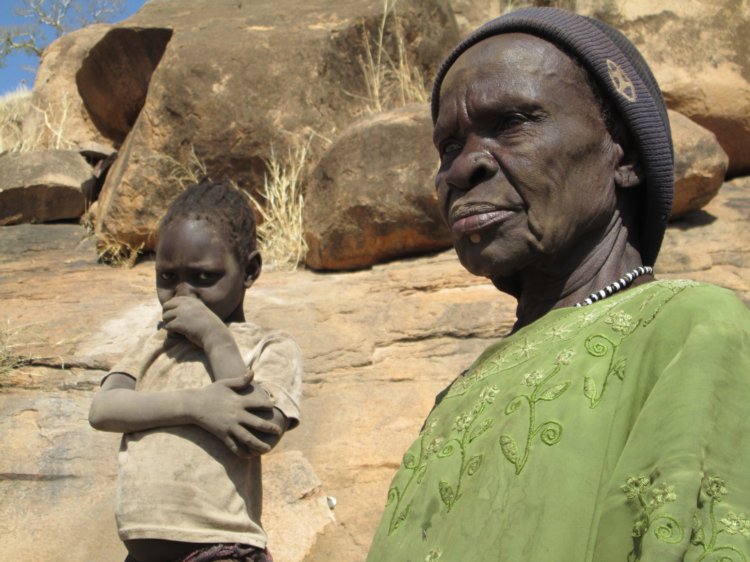
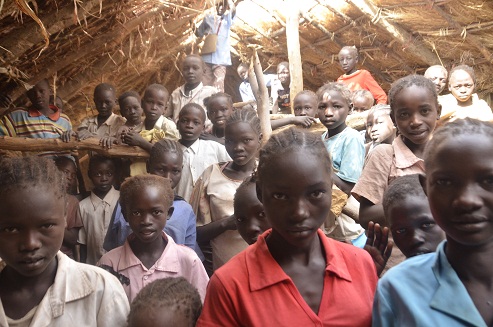
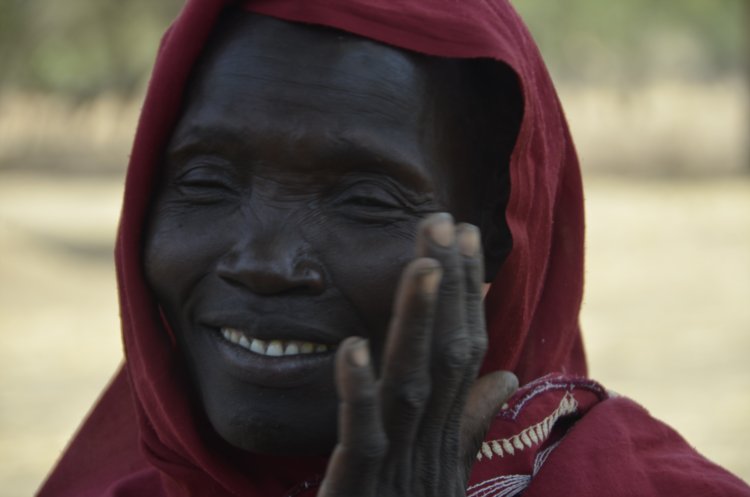
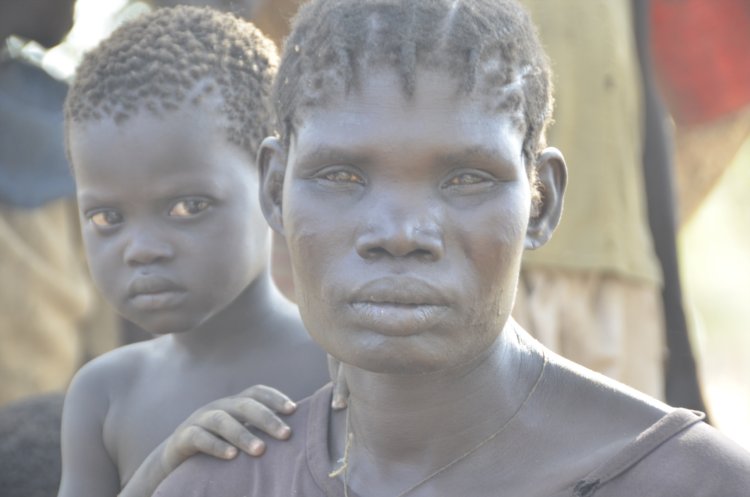
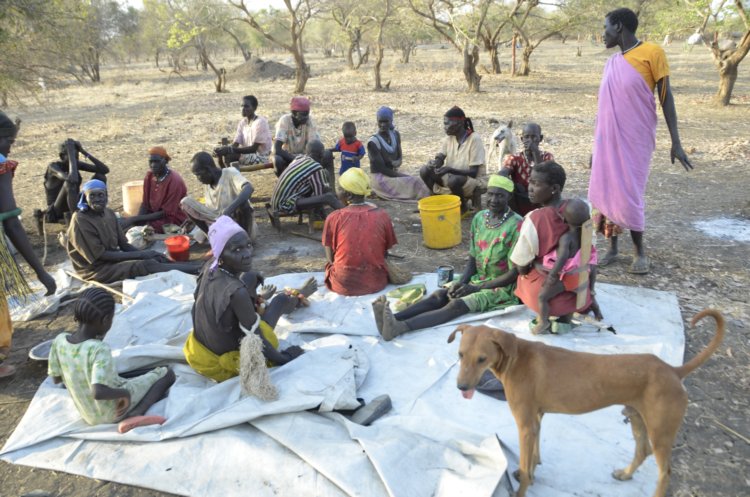
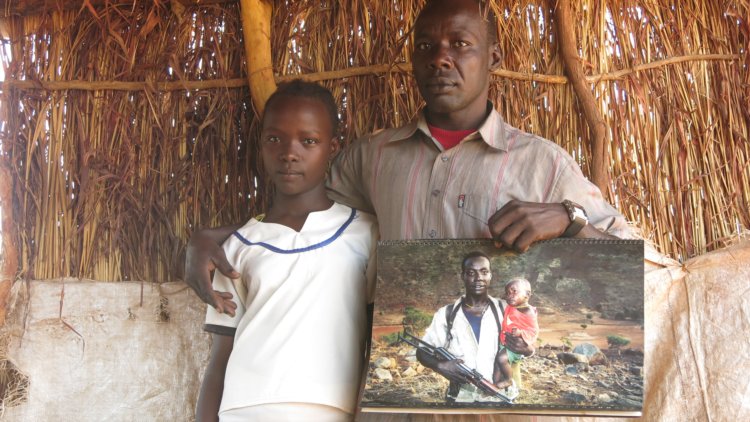
Little girl in refugee camp Jida, South Sudan. Photo: Tomo Križnar
Refugees waiting to be registered in camp Jida. Photo: Tomo Križnar
“What is it with Obama’s America? What’s with the EU?” Read More »
The color of hunger in Sudan is white. It shines, glares, stabs the eyes like blazing fire in arc welding. You can squint, close your eyes or look away. You can ride that way along the track over chalk-like parched mud through villages of golden dry straw under mountains of purple granite, where the Kowalib tribes of Nuba live, without seeing the emaciated black children, women and men who wave greetings at you and call out “Foreigner! Foreigner! Welcome!” Nothing evokes any anxiety, fear, least of all panic that someone will die of exhaustion any moment. Nightmares are black, oily, heavy – but scenes on the northeast side of the Nuba mountains look more like the bright beaches of coral islands in the Caribbean Sea, where dark-skinned people and over-fed tourists also live, and Life sings “don’t worry – be happy”.
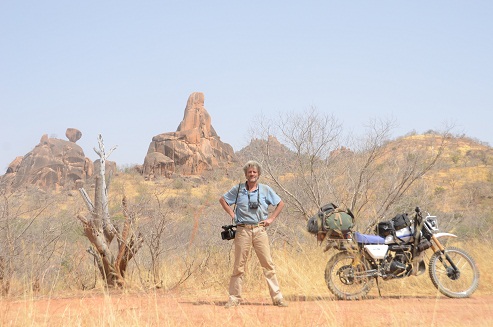
But after several hours on a motor-bike out of Heiban, the last major town, you cannot lie anymore, to them or to yourself – and you finally stop.
Each time they surround you immediately. They gesture toward sunken tummies and teeth that protrude from almost translucent lips and gaze, gaze, gaze at you from deep eye sockets straight into your shamed eyes.
“Nahni janin! Nahn janin!”, repeating one after another and all together, one and the same thing:
“We are hungry! We are hungry! We are hungry!”
During my previous visit last June, that same countryside under the Kowalib mountain had been green from one side of the sky to the other. The rainy season had just begun, there was enough rain. For the first time since war started again in July 2011, the people on the northern front line between the new country of South Sudan and what remained of old Sudan could expect a good harvest. Despite the widespread deprivation and mass starvation, there was a certain hope in the air. As in the previous war (1983 – 2005), guarding against the daily bombardments of Russian Antonovs, people learned to retreat quickly from the fields to caves between giant slabs of granite, whenever the sky threatened hell instead of the promise of heaven. In villages, they used holes in the ground, similar to fox lairs. They did not dance and sing and give thanks for the rain in the traditional manner, as they still did in the seventies, when I first visited them, because Muslim and Christian propagandists and missionaries had in the meantime largely deprived them of the sense of connectedness with nature and the awareness that their rituals can strongly influence the natural environment. They now believe that plants need peace in order to grow. But these hardened, proud people, used to hard work, still trusted us foreigners and asked us for advice as to what to do.
Should we go or should we stay? Will you activists convince your politicians to negotiate corridors for delivering humanitarian aid with Omar Bashir? Will you achieve a no-fly zone? Will you supply us with stingers, so we can make a no-fly zone ourselves? No? O.K.! Even if you don’t, we must only endure one more month, two months, and then we will reap what we have sown. And we sowed well. We will eat!”
But then in the middle of August, the most critical time for growth, there was suddenly no more rain east of the Kowalib mountain and the endemic, already more than a meter tall sirk plants, otherwise well adapted to conditions in the Sahel, dried up.
Climate changes, caused by the comfortable life in the industrialized North of the planet, are affecting not only Darfur, but now also the Nuba Mountains further south and practically the whole Sahel belt between the Sahara and tropical Africa from Mauretania to Ethiopia. Fifty million people can no longer survive on the fruit of their labor. The few of us that still stray into these lands of growing despair and anger have been reporting for decades on the hardships of nomadic shepherds in the savannas and farmers in the mountains. We write about the decaying tissue of society and the wars for water between tribes, skillfully exploited by foreign corporations in cooperation with corrupt local politicians for their own wars for control over natural resources on the backs of cheap native soldiers. Boys and men, outfitted by war profiteers with old Yugoslav kalaschnikovs in exchange for a cow, die convinced that they fight for the right to water for their families. Where two fight, a third one profits: “Divide et empera” and “Kill a slave with a slave” are most efficient strategies.
But the old laced-up Europe with shitsickles of guilt from colonial times is not ready to rush to the rescue with anything more than a few business deals of its humanitarian industry.
The road to the promised Northern lands beyond the Mediterranean closed on the climate refugees even more when Gaddafi made a deal with Berlusconi to imprison them in special camps in the Sahara, in exchange for several million Euros, to prevent neat European cities from turning trashy and black. The peoples of Sahel, who have lost all faith in the white man, are turning against each other in panic and yielding to terrorist agitators. The whole of Sahel is succumbing to wars that, before the intrusion of modern weapons, tribal elders knew how to keep in check in the traditional way, with reparations in the form of blood money. Then, it was known exactly who slew whom with a spear, but now, with 16 bullets per second flying from a barrel, nobody knows anymore who hit whom and who must repay the damage to the neighboring clan with a few camels and goats.
The situation is the worst in Sudan, in the provinces of Darfur, Abyei, the Nuba Mountains and Blue Nile, north of the border that the colonial British drew in their heads before they left in 1956. The indigenous Africans that remained there after the secession of South Sudan in July 2011 are being exterminated for 23 years now by the military hunta, headed by President Omar Hassan Al-Bashir. This is the very same Bashir who is wanted by the International Court in The Hague since 2009, charged with four of the worst crimes against humanity, including genocide. Bashir still calmly promenades across Africa, and from Iran to China. Even at home, the Arab spring has not touched him much, despite repeated student protests against the brutal security service and the pervasive corruption of all levels of society. He permitted the secession of South Sudan, where business lobbies from the US, Europe and now even scavengers from Asia whole-sale concessions for exploiting the best soil. And Bashir still remains at the trough.
The secession and independence of South Sudan on July 9th 2011, so vehemently greeted on the ceremonial stand by foreigners from all over the world with predictions that economic interests will prevail over local tribal passions, did not solve anything. The “Comprehensive Peace Agreement”, signed in Tanzania without representatives from Blue Nile, the Nuba Mountains and Darfur, could not bring anything to anybody in Sudan, because it was actually not comprehensive, but served only the foreigners that direct the events, not from the stands but from somewhere far away, using their economic hit men”.
It was simply no challenge to screw over uninformed, severely undereducated Africans and Arabs, lacking any infrastructure, accustomed only to permanent war, though they claim, both in North and South Sudan, that they were not that stupid; that both the Bashir people and the Garang people in the SPLA spoke with forked tongues. Better something than nothing. After 21 years of war of attrition on both sides, which neither could win anyway because of the balance of forces. Profits from oil were halved, but we will make up for them after the intermediate 6 year period till the referendum. We will not gain the whole of Sudan, which was Garang’s vision, but just wait a little for the SPLA in the Nuba Mountains, Blue Nile and Abyei. Attack a bit, as much as you can, soon we will come to assist with a huge army and conquer Khartoum.
This could not happen, because John Garang was killed in 2005, only three weeks after becoming vice-president of Sudan in accordance with the Comprehensive Peace Agreement, in an airplane accident on the way back from Kampala.
Most people I’ve spoken with in the African part of Sudan believe that he was killed by the CIA.
The game was over.
Even before the referendum on the secession of South Sudan in January 2011, Bashir publicly stated that if independence of South Sudan is declared, Africans remaining within Sudan will not be shown any mercy. Remnants of African peoples will be forcibly arabized, sharia will be implemented and rebels of the SPLA North will be disarmed or pushed into South Sudan. These rebels fought – shoulder to shoulder with African peoples in the South of Sudan in the same SPLA – against former slave hunters from the North in the longest and cruelest African war (1983 – 2005), which took more than 2 million lives and chased from their homes more than 5 million people.
Not one of the international godfathers of peace raised a voice, although everyone could understand that Bashir’s words were a declaration of war.
Foreign peace brokers did not uphold the basic rights of African indigenous peoples even when the Sudanese army exiled the Ngok Dinka from Abyei in May 2011, or when it undertook military operations in the Nuba Mountains on June 5.th that year, and then not on September 1.st, when the army moved against Blue Nile. UN forces that, as in Darfur, did not have a Security Council mandate to protect the local populations, but only an observer function – and they did not perform even that – retreated from the Nuba mountains three weeks after war began, with the excuse that their contract had run out. They have not returned to this day. In southern Blue Nile, where fierce battles now rage between government forces and SPLA North, led by Malik Agar, they were never present. On demand from Omar Bashir, victims of international politics were also abandoned by all UN agencies, including UNICEF, whose statute obliges it to take care of the most endangered children. All non-governmental humanitarian organizations also obeyed Bashir, as did practically all of the major mainstream media.
The Nuba Mountains and Blue Nile province have almost completely disappeared from addresses of public opinion shapers in the West. This year, even Julie Flint of The Guardian and Nicholas Kristof of The New York Times stopped their efforts to attract attention to the greatest shame of international politics and the largest global conspiracy against indigenous peoples on the planet. The former allegedly because the leader of SPLA fighters, Abdel-Aziz al-Hilu, had joined forces with similar liberation movements in Darfur and Blue Nile, whose case is supposedly not as clear-cut. And the latter because editors complained that the Nuba have already been given enough space and that readers are no longer interested in genocide reports. The effects on the international public of the “illegal” visit by movie star George Clooney in March last year wore off long before his next movie …
After the independence of South Sudan was declared, the Sudanese military hunta immediately went after the refugees with full force, bombardments from the air, simultaneous attacks with the heaviest weapons on the ground and with cavalry, recruited from similarly marginalized nomadic Arab tribes. Some humanitarian organizations, previously active in Blue Nile and the Nuba Mountains (Samaritan Purse, MSF, …) hurriedly began to organize refugee camps. For refugees from Blue Nile in Jelam and Doro in the Upper Nile province in South Sudan, and for refugees from the Nuba mountains in Yida, in the Unity province of South Sudan. Thus, in both cases, several tens of kilometers over the border, in a newly formed African state. UN agencies joined in only later, and then on the condition that the refugees be moved further from the border, deeper south. UN regulations supposedly demand that refugee families must not remain connected with their fighters in the SPLA North, who are continuing the fight in what is left of old Sudan. And now, united and strengthened in the joint SRF (Sudan Revolutionary Front), represent a growing threat to the regime in Khartoum.
Not only the UN, non-governmental organizations and influential reporters, but also most human rights activists think that the only solution for natives of the Nuba Mountains and Blue Nile in the present adversity is to retreat from the besieged provinces into refugee camps.
But that is precisely what the Nuba suddenly don’t want.
The most novel element this year is the fact that the Nuba realized en masse that the Yida refugee camp is more dangerous for them than the Russian Antonovs, Chinese Migs and Arab cavalry put together. These independent, previously self-sufficient indigenous people, accustomed to hard work, now suspect that in the lowlands, at the edge of the largest swamps on Earth, their children will grow soft and corrupt. Sooner or later, foreigners will also organize schools for them, with practically the same ideology as in colonial times, in which they will hook them on foreign values (they have not organized them yet, because they are preparing migrations deeper into Sudan, moving the Nuba even further from the homes they are willing to protect at any cost). The Nuba will lose the new generations, as they did in the last war – those who surrendered themselves to the chain of more than fifty “Dar es Salam” camps, cities of peace, as the Arabs called them. There, the mountain savages were supposed to calm down and accept Arab civilization and Islam as the only true faith. In 1998, I managed to sneak into such camps in Talodi, Turoji, Buhram and Rekha on a bike, and convinced myself that everything that Alex de Waal reported in his book “Facing Genocide: The Nuba of Sudan” was indeed true (Alex was the first to organize the locals to systematically collect reports of human rights violations, and distributed the first cameras to volunteers already in 1996). The aid that was sent to these camps by UN agencies was only the bait, the trap in which families in the mountains were getting caught, then as now under attack from both the air and the land. Nowhere did the hope for survival seem greater than in the camps. But their schools and feeding centers made the boys, entrusted to these shelters by their parents, into janissaries – which Arab officers then sent to hunt their as yet unpacified brothers in the mountains – and the girls into prostitutes and concubines for bearing Arab children. With this trick, the Arabs were changing the demographic structure in the mountains, even under the logo of UNICEF, which then supplied food to the camps and supported schools, collecting contributions for this, even in Slovenia! When the legendary leader of the Nuba rebels, Yousif Kuwa, then commander of the SPLA, accused Unicef and other UN agencies, in our documentary “Nuba, Pure People”, of cooperation in genocide (because they did not make the effort to do on the rebel side what they were doing on the government side), Unicef in New York produced the excuse that, as a UN agency, they can only work with government organizations, no matter how terrorist. They claimed that the government in Khartoum would not let them to the other side and that it was simply too dangerous there for their workers.
Everything that goes on cannot be blamed merely on the fact that bureaucrats are not familiar with recent findings in anthropology.
For the Nuba, mountains are like natural fortresses, to which they had been retreating for centuries, from Arabs, Turks, Brits and other slave hunters. In the mountains, you can notice the approaching enemy from afar and light warning fires, as we Slovenes used to do in times past, to ward against Turkish incursions. Mountains are safer, cooler and healthier, with fewer white ants, termites that devour anything man-made. Mountains keep the bones of ancestors and preserve magical legends tied to natural characteristics that sustain the identity of indigenous peoples and transmit ethics and morality, as the Bible, the Qur’an and humanist literature do for city people. The Yida camp, into which the Nuba are now being forced, is for them a trap that will corrupt the purest of people with false comforts, as comfort has spoiled and prostituted all of us, wherever it reached us. What the Arabs in Sudan could not achieve, in any way and with every kind of violence, may now be achieved by Americans, Europeans and all others that hide behind humanitarian agencies and secretly cooperate with the criminal organization in Sudan (as the Nuba believe) in order to participate in the misfortune and large booty of oil, water and excellent soil.
The Nuba have finally stopped believing in us white foreigners in the middle of the last rainy season at the end of August, before the ripening of the wild fruits that help them survive before the millet harvest. The World Food Program decided not to drop aid from airplanes directly into the mountains, which the Nuba asked for and waited for it there, but instead to make drops near camp Yida in South Sudan.
Nobody has yet documented how many starving people have collapsed while trudging down the mountains in those days and weeks – over soaked, greasy black soil in which every vehicle gets stuck during the rainy season and feet sink in to the knee and above – a hundred or two- or three hundred kilometers to the largest swamps on Earth (in South Sudan) to get a sack of corn from Uganda. There are no bureaucrats in the Nuba Mountains to count and write down sums – diligent office dwellers sit in offices in big cities, most of them without any knowledge of the environment in which the people whose destinies they decide actually live.
In 1998, OLS (Operation Lifeline Sudan) dropped millet from planes – without landing or taking any risks – to the hungry in the south of Sudan, worth about two billion dollars. They called this the largest humanitarian action in the history of humanity. Last August, however, their excuse was that something like that was not even remotely possible any more, arguing that the Chinese and the Russians in the Security Council would not permit it.
Since last year, the Nuba have also realized that during the entire ceasefire period, from 2002 to 2011, they have actually not benefitted much from all of the 23 western humanitarian organizations that were allowed to “rush” to their aid during that time. The ceasefire was signed by Abdel-Aziz al-Hilu in 2002 in some castle in Switzerland – The Nuba Mountains Agreement, sponsored by “friends of the Nuba from the US and Europe”. During the nine years it took for another war to break out in 2011, the ceasefire was monitored by the JMC (Joint Military Commission) – a hybrid body of observers, consisting of representatives of the SPLA, the Sudanese government and western nations (US, Canada, Australia, New Zealand and the EU). The result was that some of those employed by the JMC grew big stomachs. In those years, the number of fat handles around waists was a good indication of distance from the landing strip in Kauda, where they all aggregated. The people in the mountains were left to fend for themselves, as before.
Today it’s still the same. Of course, to realize that you need to travel on a bike or on foot with the locals, away from those few white Toyotas with long radio antennas now rusting along the only road, laid for them to leave the mountains and settle on the plains, built by the National Congress Party under leadership of Omar al-Bashir.
Hunger in Sudan has no smell. Smell is characteristic of overfed regions. The more we people and animals eat, the more we excrete. In the Nuba Mountains, the strong sun immediately disinfects the sparse human and animal excretions; thank God, there is at least no cholera and other epidemics of infectious deceases. Although water in the dry season is scarce almost everywhere (hand pumps, set up in some places in the lowlands by foreign organizations, are mostly broken; spare parts are not available) people do not stink or look dirty.
What really does stink is the shame. The shame that children are the first to die in mass hunger. Because of malnutrition and because they don’t know how to control themselves, they easily swallow something that gives them diarrhea. Their resilience sinks, little heads suddenly drop and they are no more.
If you are there even once when mothers begin to cry, nobody can convince you anymore that what happens to these people is their own fault. If you are there more than once, you feel the infinite need to throw every ignorant sap, who doesn’t react to your reports immediately, in the face that he is a war profiteer.
Mass hunger is the strongest weapon that the Sudanese dictatorship uses, with insidious support by the whole world, to persecute the natives of the mountains.
The only reasonable explanation of why all this can happen is probably the same as the one used for the 16.th century, to try to explain why educated and cultured inhabitants of the Earth did not react to desperate reports by the Spanish priest Bartolomeo de las Casas about the systematic extermination of the Maya in the Yucatan peninsula. It was supposedly not clear to the Spanish what these “newly discovered” people were, people or animals? The Holy Scripture does not mention the Maya in any genealogy, so …
“They are only savages, shooting off from the mountains. Gorillas that sometimes know a little Arabic. Because of these savages, there are no highways, shopping malls, railways … in Sudan. You can only live comfortably in those places where you have killed them off long ago”. A Sudanese officer told me that, in Croatian, in one of the “Dar es Salam” camps in 1998. He had graduated from the military academy in Split and grew to like the local kebab and beer …
In traditional market places under fantastic baobabs, frayed Sudanese pounds can only buy you a handful of crushed mineral salt, a fist of chili, lumps of local tobacco pressed together with honey and plastic bags with tea leaves and coffee beans. Only few markets offer brown sugar – 5 dollars for a quarter kilo – and half-liter plastic Coca Cola bottles with gasoline for 4 dollars. The blockade on the roads from the North is absolute. The Nuba must be prevented by all means from getting access to any energy. If smugglers from the Arab Baggara tribe (with whom the freedom fighters sometimes cooperate, and sometimes fight) are caught, they supposedly get the death sentence. I found electricity for my camera batteries only in accumulators in SPLA headquarters, where top commanders power their satellite phones (with one exception that I am not at liberty to divulge).
There is only one doctor in the mountains. Dr. Tom from America, an enthusiast that the Nuba have taken in completely as their own. In the modest catholic hospital he is helped by sisters of mercy from Mexico, but this year they are all “on leave”. The mountains also hide, since 1998, in the least accessible place, medics from the German Emergency Doctors. They are hard to reach from any direction, which gives them some extra time to escape to safety, higher up in the mountains, in case of invasion by the Sudanese army. Each time I meet a different crew; for me they are the best example of European philanthropy, which I relate to the experiences of violence in World wars. Then there is another group of doctors, whom I had to promise never to mention them anywhere …
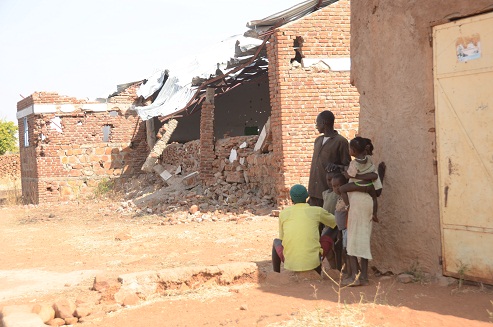
The SPLA is everywhere and controls completely the liberated area, 3 or 4 times the area of Slovenia. That is why travelling around the mountains and savannas under the protection of the SPLA commander in the Nuba mountains and supreme SRF commander Abdel-Aziz is safer than anywhere else in the world, even on a bike. You only have to be careful not to veer too close to those six government army garrisons, from which they bombard with artillery areas up to 60 km around them. That is why you need to ask the locals all the time where you are. That is how you drink and sleep and eat, if at all. If anyone does, it is you. If anyone does not go to sleep hungry, that is you, the traveler, rahala. Rahala is a messenger from God, bringing news of the world to where there is no Internet. It is unusual that openness, manners and hospitality can be measured by the distance from everything we consider a sign of civilization. The same applies to the readiness of the locals to protect you from the common enemy. Nowhere is the camaraderie greater than a shot away from the government mercenaries, who even now, in the dry season – when they have the advantage, since, in contrast with the rainy season, they can use the heaviest military hardware, armored vehicles and tanks – do not actually dare to go outside the mine fields with which they have surrounded themselves, in the face of fierce resistance from SPLA fighters. Bashir has the upper hand only in the skies, so you have to monitor carefully first and foremost what goes on above your head. Every now and then it is advisable to stop and listen, to hear where some government Antonov thunders on that particular day. Painted silver, they fly very high, so high that they are barely visible and you only see them after a time and only when they are already exactly above you. You realize that it is really high time to lie down by the characteristic “shushh” sound. You then have really just a second or less to hug the ground. I experienced what it is like afterwards in the courtyard of the NRRDO (Nuba Relief, Rehabilitation and Development Organization), after the attack on the only autochthonous organization that tries to help the natives with funds mainly obtained from the Nuba diaspora. In June 2011, a bomb that fell close by hung the flesh of a pregnant woman on the thorns of an acacia tree. Two months ago, a bomb set on fire the cabin in which I usually sleep when I stay in Kauda, and in it the hard disk with recordings from our volunteers. Anyway, the stastical possibility that pieces of iron from cassette bombs will hit precisely you, a foreigner, is very small, since in relation to the natives you are obviously in a tiny minority. And even the natives get hacked mostly when they run away in panic. Even in bombardments, women and children suffer the most. The more innocent, less calculating they are, the harder it is for them to anticipate where it will blow. So, at the first sign of the devil in the sky, they retreat in panic into caves and holes in the ground. And every time they remain there till evening, which is also why they have neglected the fields. Which is what the military hunta counts on.
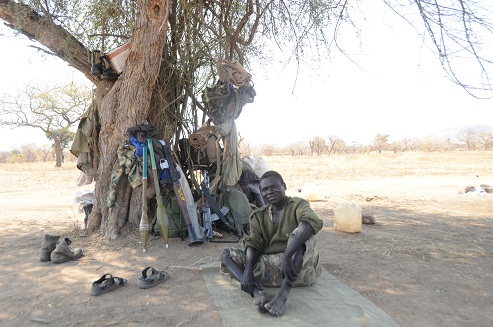
I’m looking for the fighters all the time, because the young men in uniforms with battered Kalashnikovs and older men in rags and old colonial or home-made rifles eat not only fried roaches from caves, but also meat that you are accustomed to. Once a day, usually around 10 in the morning, when it’s breakfast time in Sudan, as they also say. Goats, cows, camels. Excellent meat, not poisoned by any preservatives, so natural and strong that all day long till evening you passionately suck remnants of taste from your teeth. But the fact that animals are quickly disappearing is also not good news.
What is most worrying is that you cannot buy any sirk anymore, anywhere, not from civilians and not from the army. This traditional kind of millet is strategic food for the locals. It cannot be bought – it can only be given as a gift. This is a gift of life, as in the previous war, when we twice (in 2000 and 2003) brought salt, millet and school notebooks on a hired plane directly to those most in need, with the help of then director of Caritas in Ljubljana, Stane Kerin, and the Italian missionary Kizito Sesana. Despite the same danger that also threatens now. In those years, the British Christian Aid, the Dutch Novib and the local NRRDO also landed in the mountains. I believe they would do so in this war too, if the Russians with Antonovs and the Chinese with Migs were not helping Bashir to an even greater power in the skies this time around.
Last week I saw, as I did 13 years ago, hundreds of mothers with children on their backs and pregnant young women (that practically all women are pregnant is also a special sign of that member of the human body getting ready for a long war), wandering from place, holding empty tin cans of US AID in raspy hands. The cans are from last year – this year, US AID is also not prepared to pay Kenyan and Ugandan drivers to secretly supply at least symbolic quantities of corn to the mountains with run-down trucks, as they did last year. And that is the worst sign of all. It means that it makes no sense to help the Nuba anymore. That they are truly written off. That China is already too strong. That it does not pay anymore to invest in Sudan. That everyone in the West only cares about himself. That in the West, rats are already fleeing the ship …
Mass hunger threatens the most a hundred kilometers down from the mountains, between Hajar Bako, Jumizai, Ardekanan, Nyakomo, Nyukur, Tujur and on all the way to the last town of Tujur on the northern front.
“God is with us”, they kept saying, one after another, sitting on the roots of trees without leaves, where once local markets used to be. “We have nothing to offer you except God!”
They do not dare to help themselves, because the rich black soil further North is intended for the mechanized cotton plantations. In November, the party that dared to move towards Kortala to get palm fruits did not return. Sudanese militias, recruited from the Arab Baggara tribe of nomadic shepherds – with whom the Nuba used to exchange millet for meat, and who are themselves similarly marginalized, but try to survive by offering their services to the government – slit their throats with frayed knives.
When SPLA fighters captured 23 Chinese technicians last March in Abasy near Kortala, who were laying the ground for a mechanized cotton plantation, the whole world demanded their release. The Chinese ambassador from Khartoum himself flew to the handover to Kauda, the largest city under SPLA control, with representatives of all major world media. The news that the “rebels without a cause” treated their prisoners in a very civilized, not at all savage manner, circled the globe that very day. In spite of that, on the following day the mountains already vanished again from the consciousness of humanity.
Our local photographers, volunteers to whom we distribute cameras since January 2011, collect and send in horrible pictures. A healthy dose of arrogance helps in getting used to hacked and burnt children and mothers. What still makes you angry the most are the children left to fend for themselves. On the plain between the caves in Tungole I ran into a multitude – at least seven thousand children in rags.
Every morning around seven they come without notebooks, pencils, erasers or sharpeners. They sit down on stones under the trees, which pass for elementary school classrooms, and wait for teachers. Eleven teachers for seven thousand pupils. Eleven volunteer teachers: not one has finished elementary school. Only two speak some English. Those who have the luxury of a piece of chalk, dutifully write out the date on blackboards nibbled on by goats. Then they sing Christian songs from Uganda and Kenya. Till lunch break without lunch, the droning hum in the sky scares them off two or three times into caves between the granite boulders nearby. Then they come back to the classrooms, some glad, others silent, somehow proud and with dignity.
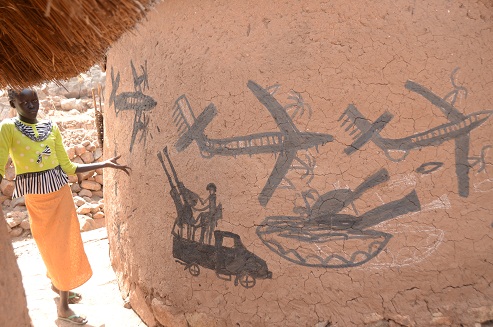
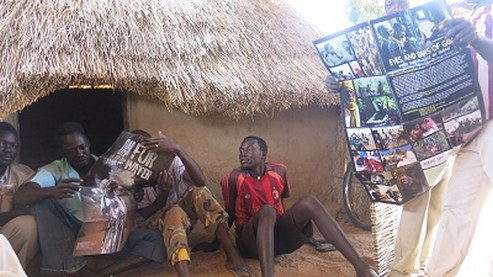
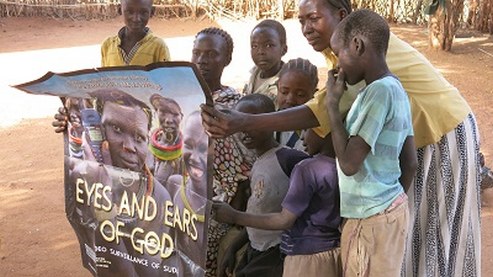
To cheer them up, one of our volunteers from “Eyes and Ears of God” and I pasted fifty drawings by their peers from another planet, specially entrusted to me for that occasion by Miha Lišanin, over a derelict truck. After they took in the scenes of rich schools, foreign parents in luxurious living rooms, skyscrapers, cars, horses, dogs and cats, I tore out pages from ten notebooks, cut pencils into pieces, because there were not enough for all, and asked those who got both to draw what they see around them. Almost all drawings show the same images. Antonovs with long barrels sticking out from the wings, representing bombs, burning huts, killed animals and people. And right at the edge they would draw themselves. Thin, emaciated figures with short straight lines and tiny dots where smiles and happy eyes should be.
When I accompanied them with the camera, just before the worst heat, as they were returning, again proud and dignified, to their parents in the caves, five or ten kilometers away, they could not really explain to me, and neither could their fathers and mothers, what they survive on. Last year, they were helped in some measure by relatives to whom they fled from Delami and Kortala. This year, because of the draught, they were also left with empty granaries.
The first rain will soak the thirsty and hungry country in May, at best. The first more or less ripe fruits can be expected in August. The millet harvest is more than half a year away. But first it must be planted. And the seeds are long gone.
Of more than half a million Nuba, not more than 65.000 have retreated to camp Yida.
“If we don’t get food within two weeks … we will die en masse!“ quietly declared to the camera Mohamed Naroun, mayor of Jemisai, on Thursday, February 14.th. “You foreigners have two weeks left to get food over here … Not to Yida, but here in the mountains! We’ll rather die here than surrender our land to the Arabs!”
That same day at 15:35, an Antonov bombed a parking site in the town of Jao, claimed by both South Sudan and Sudan, killing three drivers from Kenya who were preparing trucks with humanitarian aid for the journey to the mountains, to our side. Before the bombing, the Antonov did not circle back and return, as usual, but attacked directly. Which means that the target was betrayed.
Antonovs from Khartoum do not bomb SPLA soldiers, but civilians. Although we all know exactly where the headquarters are and where top commanders tend to stay and where novices are trained, the bombs do not fall on them, but on children, mothers, girls and boys. Day after day, every day, and today too. We got three bombs till evening, right in the middle of the market place in Buram. Fortunately, only a cow was killed this time.
The Nuba are the roots of mankind that the whole world together cannot extract. Some will always survive in caves high in the mountains, where underground reservoirs in the rock hold water even during the longest draught. Till the sirk harvest among the rocks, they will eat roasted cave roaches, snakes and monkeys and defend themselves, each and every one and all together like shells in the stone, even if we go after them with vacuum bombs.
We will not succeed – we will only continue to cause senseless, infinite suffering.
The Nuba are the seeds of mankind for some post-cataclysmic time.
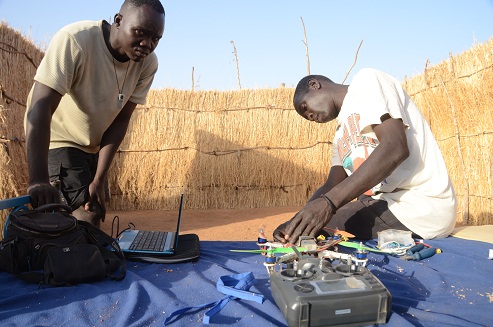
Only a few of us realize that. That is why we are developing a video surveillance system with several kinds of cameras and satellite links to the Internet, which may enable all of you to see and hear what we do. At the moment, we are testing the usability of “flying cameras”. They are similar to the action-cams that motorists and parachuters mount on their helmets, except that ours are mounted on model helicopters and remotely controlled by computers. They are not “drones” that kill with surgical precision according to plans by intelligence services. They are toys for children, but they can record where obviously no diplomat, humanitarian or activist will venture.
Please help. Join in and donate for cameras on the border between the Sudans through our site www.HOPE.si and www.TomoKriznar.com
Tomo Križnar, February 20.th, 2013, somewhere in the Nuba mountains.
Please open the photographs attached; please see them! It is nothing special. It is happening day after day. Today again in Buram, a small market town in Nuba Mountains, where we we used to sit in wonderful cool shade under mango tree, drinking coffee or tea and chat. Antonov arrived at 9.15 in the morning and bombed the center of the market – straight without circling. It killed three men (names with the photographs) and wounded another four. Two man died roasted on the spot, and the third one on the way to small clinic. All are civilians.There are no military camps around.
The same Antonov bombed today also Kowalib and Degheba. At the moment we do not have report on victims.The regime in Khartum count that you will not open the photographs too.
It is happening again and again because most of the world is looking away. Thank you for your attention.
The photographs have been taken by local Human Rights monitors and Nuba reporters. Please support them with internet so they can brake the darkness.
Donate for satellite internet. Please donate for cameras. Please donate for so called flying cameras – so that Nuba volunteers will be able to film advancing enemy. Learn more and donate via www.hope.si and www.tomokriznar.com All donations will be delivered – we are 100% volunteers.
Please see our documentary films on my channel on Youtube
We support indigenous people survival because we believe in life before death. Please join for life!
Tomo Kriznar – KUKU, somewhere in Nuba Mountains – 26.2.2013
Aerial bomb attack on Buram, 26. February 2013 Read More »
New short documentary by Tomo Križnar:
Blue Nile – Sudan (recorded in 2012) Read More »
Not even complete uncertainty caused by missile attacks and bombardments, not even mass hunger and complete absence of everything considered urban and civilized, not even the most dangerous baits and traps being set by the global community headed by the UN and some governmental organizations in the camp for Nuba refugees in the city of Yida, some fifty kilometres across the border in the new country of Southern Sudan, will force more than fifty African tribes to actually abandon holy places where the bones of their predecessors rest.
In the old Egyptian language, Nuba means a slave, and “jabal el nuba” in Arabic means mountains of slaves. Here, since the dawn of first civilizations along the Nile, Tigris and Euphrates, in the granite remains of former volcanoes was the hiding place of those that refused to be subdued and conquered by the hunters of shapely girls and boys.
Not the Arabs, who are eradicating the Nuba culture, not the Chinese nor the Russians, who support them with the Antonov bombers and MiG aircrafts, not the Americans nor the Europeans, who are predominantly looking after their own economic interests in the South Sudan, nor the rest of the world together with its bureaucrats in international organizations – no one is aware of the tenacity, vitality and power of resistance of these unyielding people, who are now, a year and a half since the new war for the control of their mountains has started, more than ever before aware how very alone they are and how they really cannot trust any representative at all.
Everything that will be achieved and has already been achieved will only bring new and new suffering to the people, who can teach us how to resist general corruption of the fragment of the population addicted to comfort and prestige!
Lift up, masses of new and new slaves in the industrial world, who are being kept on a tight rein by these same masters of the world with their modern entertainment and oblivion strategy! You are the ones I still have faith in, as I was growing up with you and I learned to understand you and respect you nevertheless. Please, stand up for your most innocent ones, who want nothing more than to remain on their land. No oil, no automated agricultural business, just enough water and crops grown with sweat and blood as their children need for basic survival. Please, make a stand for the pure, unsold victims of the corrupted global order. Please, demand a stop to banishment, exodus and genocide of your most unspoiled brothers and sisters.
Please, please, now, not tomorrow!
Before it gets too late. Before nothing more could be done. And before even you get run over by the increasingly growing machine that grinds and breaks everything natural and valuable. I believe you still remember that quote from the Schindler’s List: “When they came for my neighbour, I did not speak out, when they came for another neighbour, I did not speak out either, and when they came for me, there was no one left to speak out…”
Please, don’t suppress your own feelings. The ruling enterprises that have grown in global power centres don’t need people any more. Not the Nuba people, not other native inhabitants, not even most of you who work for them and pay their taxes. Slaves mean nothing any more, they have no value. Physical labour has long ago been replaced by machines and oil. The ones occupying the world and assuming all power need only natural resources and energy and some oil for power and machine lubrication.
No place makes this more obvious than this corner of the world. Here, in the most hidden place in the world, heavily accessible to the consciousness and conscience of the world, in the mountains between the largest desert and the greatest swamps on the Earth, takes place the greatest humanitarian crisis on the planet. There is no other place where media failed so heavily. And there is no place where so many treacherous evildoers pick on the natives, who live in ecological villages, pretty much similar to our Christmas cribs, almost fully independently and self-supporting, than here in the Nuba mountains in the South Kordofan province of Sudan. Let me remind you that three years ago the military junta in Khartoum was convicted by the International Criminal Court for crimes against humanity of committing four of the greatest atrocities, including genocide – but the president Omar Bashir, who came to power with a military coup twenty-three years ago, remained fully intact. He keeps proclaiming that the freedom fighters in the Nuba mountains are some sort of an insect. The principal butcher Mohamed Haroun keeps ordering his Janissaries to bury – not shoot, for waste of ammunition – cut throats of everyone they catch, no prisoners, no survivors… And it’s happening right now. Even before the declaration of independence of South Sudan in July 2011 they announced that if mediators for peace achieve separation of south, they will show no mercy to other Africans in Sudan. They will sooner kill the last of them so that foreigners with referendums don’t steel another piece of Sudan in the Nuba mountains.
The Yida refugee camp is the most dangerous bait and trap because the entire global community is sending help south across the border to South Sudan and not directly to villages, where the whole world is shutting their eyes in unison to the greatest violence. Of course, locals are tempted to enter camps for food and relative safety and allegedly to help their children get to schools very soon. But by now the majority knows that in the camp their children will assume another culture, much like our children do when they move to cities. Yida is a bango, the Nuba elders say. Yida is heroin we will no longer be able to go without. Our fitness will worsen after a year or two of lying around with scarce food quantities, with no improvement prospects at all, we will become lazy, forget about our cults of body and libido worship. We will even fail to procreate – while our fighters in the mountains will keep losing the support of their families, wives, children, love, the mightiest power of all. The Sudan army will populate our fertile black soft soil of mountain valleys with Iranians, Iraqis and Saudis, with bulldozers and modern agricultural machinery that will level the cribs into huge plantations and farms. And that is exactly what Omar Bashir wants. This way the Arabs and foreigners, aided by a fully legal support of humanitarian organizations, will achieve their purpose.
So far, only 65,000 refugees from the Nuba mountains have retreated to the Yida camp. Even a short walk reveals that these people are losing their culture rapidly. And their identity. They are less kind and open; it won’t be long before they become just like the rest of us…
So I beg of you, please, please, please, support us! This might be the only thing that will help us force the institutions that were founded with the purpose of performing their mission to actually do what they were founded for. UN agencies will release themselves off bonds of their godfathers of crime and start acting as provided in their statutes – similarly to what we already achieved in the last war (1985-2002). Only after they are pushed against the wall and the bureaucrats become afraid that our donations will dry up… Politicians will pull chestnuts out of the fire, when we blow their cover and perhaps throw them off the pedestals that we’ve placed them on… Academicians we are giving high education to based on the “Emperor’s New Clothes” idea will side with us and start serving only after we spit in their bowl telling them that they actually know nothing – because they keep burying their heads in the sand… Please, help us make the greatest evil deed of all be seen and heard.
Please, help us equip as many locals in the Nuba mountains, the Blue Nile and Darfur as possible with cheap cameras, satellite modems and satellite connections, so their cries for help and direct messages of what is truly going on can reach you.
We started in 1998. Two years after Omar Bashir, at the request of the then Slovenian president, Janez Drnovšek, pardoned me after being convicted of spying and giving false reports of Sudan, I returned with the first cameras and internet connections, well aware that no one is reporting about the continuation of the war and massacres of civilians, because no one is no longer interested. All contributions were collected by the civil society on concerts, fine art auctions, and donations after the viewing of the documentary Dar Fur – War for Water that I made with a film director Maja Weiss with this purpose in mind. In 1999 we were joined by Klemen Mihelič, who is one of the founders of the HOPE humanitarian organization, together with friends, that adheres to the fully new principle of action on a fully voluntary basis, with the concept of miniature cameras, which helped stop reports on rapes as the main tool for banishing native tribes from regions, rich with natural resources. Since then we have regularly been present along the line of battle, where families of the African race disappear between the devil and the deep blue sea. From the equipment owned by every human rights organization and the training of local volunteers this year we progressed to airborne video surveillance systems. For the second month we have been field testing how to use the so-called airborne cameras, unmanned remote controlled small aerial models, drones, whose destination, instead of killing actual and imaginary terrorists in the Middle East and elsewhere in Asia, is to film from the air where least expected and where it is too dangerous for any person to go.
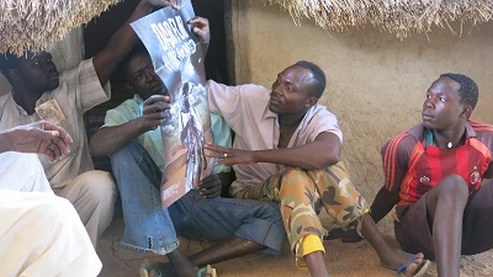
There is not many of us. Everyone has not been shown in our documentary “Eyes and Ears of God”. We are still afraid that we will be finished off by those whose toes we’ve stepped on, before we manage reach you.
But the suffering I am witnessing around me now, worse than during the rainy season last summer, scenes of mass hunger, day-to-day bombings, missile attacks from Arab garrisons between mountains, children with practically no schools to go to and no teachers to teach them, the elders dying behind the bushes, pregnant women – my god, all women and girls are pregnant, which affects me the most… and is now, for the first time, urging me to speak to you, who still have feelings and who have not yet turned into machines… Please, make your donations on our website HOPE.si and TomoKriznar.com. Don’t exaggerate, donate only as much as you can afford.
And I undertake to make sure that everything, with no cent spent on salaries, travel arrangements or insurance, will get to those who need it the most. I am sure this way we will lessen the most wrongful and the most senseless suffering of the most innocent and at the same time the most enthusiastic inhabitants of this planet, who still believe in ideals.
More on why and how our campaigns were organized can be read in my book “Oil and Water”. Thank you in advance for your trust in a time when trust and hope are vanishing most rapidly and their places are being taken over mainly by apathy and collective depression.
Tomo Križnar,
Somewhere in the Nuba Mountains,
17 February 2013
A Plea for Help from the Nuba Mountains! Read More »
After Sudan armed force (SAF) captured Mofo on the 17th .feb.2013, SPLA kept on defending the area in response to civilian’s protection call from SAF affiliations.
However Sudan ground and Arial bombardment that kept on attacking civilians in Blue Nile, in Mofo and around, was on the top of the areas targeted by the humanitarian intervention. And as government’s attacked Mofo it created a massive humanitarian situation & civilian’s situation turned to crises.
After 20 hours fighting in-between SAF and SPLA, was able to recapture Mofo from SAF as war transited 17 KM closer to Kurmuk town.
Although SPLA\N forces are launching victories over SAF, yet it’s still viable to call for humanitarian cessation of hostilities and delivery of aids to the needy.
And as SAF Arial bombardment continuous on civilians and innocent people in areas south, and west of Kurmuk, the SPLM\N Humanitarian wing urges all international and the national organizations for an urgent & immediate cross border operation in the region to save lives .
February 2013 – Urgent statement from the SPLM/N humanitarian wing(SRRA) Read More »